





Rivernotes
ASF Rivernotes 17 Sept 2021
asf
September 17, 2021
COMPILED BY TOM MOFFATT ~ TMOFFATT@ASF.CA

MYSTERY OF RETURN FROM GREENLAND
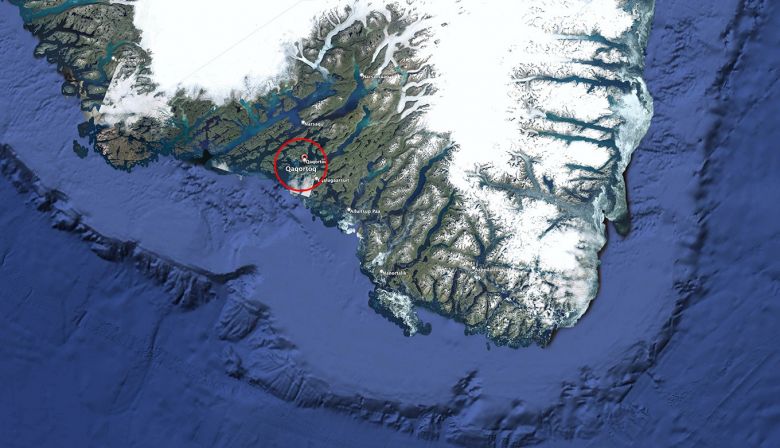
As you read this, two ASF biologists are in Qaqortoq, a town located on an island in southwest Greenland. They are about to attempt one of the most difficult challenges of understanding the migrations and at-sea mortality of Atlantic salmon at sea.
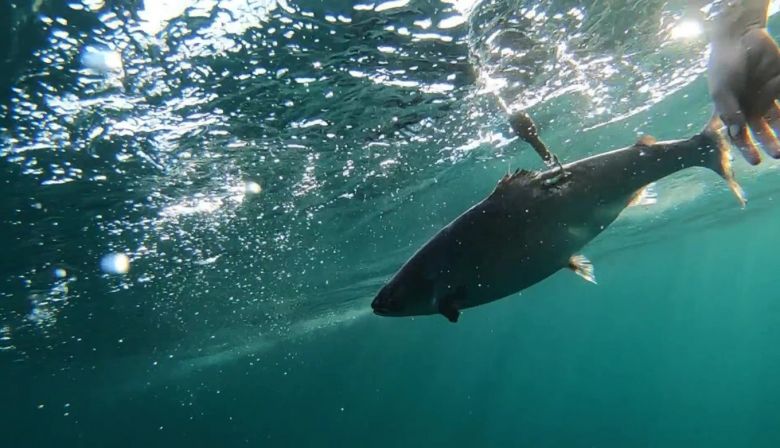
In collaboration with local boat owners they will attempt to catch Atlantic salmon and place on them pop-off satellite transmitters that will later pop off the fish, transmit data to satellites circling the globe, and allow us to better understand what is happening to these magnificent fish.
Nothing is easy.
To reach Qaqortoq they needed to obey all the Covid-19 protocols, including not just vaccinations, but tests along the way, filling out of online forms ahead of time, and travelling by way of Copenhagen, before bouncing back to the main airport in southern Greenland, at Narsarsuaq. Then by boat out through the fjords to Qaqortoq.
Although the work is being done in collaboration with the National Oceanic and Atmospheric Administration of the U.S. and DFO in Canada, circumstances have not allowed researchers from either of them to take part in the field work this year. It is up to ASF’s staff to get this done.

ASF has been part of this collaboration for the past few years, and some of the results so far have been revealing.
Atlantic salmon do not just remain in the surface layers of the ocean, but dive to depths of 800 metres. Although the reasons are uncertain for these deep excursions into the ultimate darkness of the ocean depths, it is most likely for finding sources of food, although evasion of predators has also been suggested.
When the ASF biologists attach their transmitters, some of the Atlantic salmon will be of European origin, headed back to rivers in Scotland, Ireland and elsewhere in the eastern Atlantic Ocean. And some will be finding their way through the Labrador Sea, and by unknown route around Newfoundland, to native rivers in North America.
In each case there is no single route of return, just as there is variety on their way to Greenland. In that case we have seen some hug the Labrador coast for a long distance, others head up the middle of the Labrador sea, and still others head directly towards the southern tip of Greenland.
For returns, we still have no idea on the range of routes.
NEWFOUNDLAND AND LABRADOR
Don Ivany, ASF Director of Programs in Newfoundland and Labrador writes:
The recreational salmon fishery on the Island of Newfoundland officially closed on Sept. 7, with the exception of a Fall catch and release fishery which remains open on the lower sections of the Humber, Exploits, and Gander rivers, until Oct. 7.
The fishery officially closed for all rivers in Labrador as of Sept. 15, thereby bringing the regular angling season in the province to an official end.
Overall, returns to most rivers throughout the province this year (with a few exceptions) were pretty encouraging.
See DFO’s latest Fishway Counts up to Sept. 12 below.
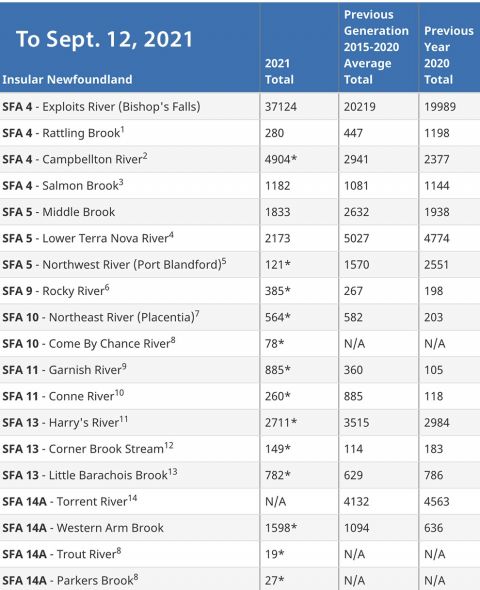
1 Fence began operation in 2014, no division of sizes prior to 2020
2 Fence began operation in 1993
3 No data for 2014
4 No data for 2000
5 Fence began operation in 2017, no data for 2020, previous year references 2019
6 Fence began operation in 1987
7 No data for 2003-2014
8 Fence began operation in 2021
9 Fence began operation in 2015
10 Fence began operation in 1986
11 Fence began operation in 2003, no data for 2020, previous year references 2019, no division of sizes prior to 2021
12 Fence began operation in 2009, no division of sizes prior to 2021
13 Fence began operation in 2019
14 Monitored via continuous video and will be reviewed at the end of season
* Partial count (fence removed during part of the season)
** Fence no longer operational
Despite stretches of low water levels and warm water temperatures experienced on many rivers throughout the province this year, most anglers reported having good success on the rivers they fished, especially during periods when angling conditions were good.
With respect to the three catch and release rivers that remain open to angling on the Island of Newfoundland, the passing of Hurricane Larry this past week-end brought some heavy rain which caused water levels to rise, and high winds, which combined to keep many anglers off the ‘Big Three Rivers’. The opening of the big game hunting season in the province this past week-end also contributed to reduced angling effort as many anglers hung up their rods for the season and took down their firearms. However, now that water levels are starting to recede we expect to see a few of the die-hard anglers back on the Big Three Rivers shortly.
Kim Thompson, Executive Director with Environmental Resources Management Association (ERMA), on the Exploits River, reports that there are now just a few fish being counted at the Bishops Falls fishway on the lower section of the Exploits River, as the run as all but officially ended. She indicates that fewer fish are being seen in the lower section of the river currently as the main run of fish have now moved to the headwaters. As a result, angling activity virtually came to a stand still on the lower section of the river this past week.
But angling on the Lower Humber has been excellent so far this season with many large fish being hooked and release. Water levels are still a bit high but are now dropping, and as such, angling activity is expected to pick up again in this area over the next couple of days.
On the Gander River, rain in the area during the past week is maintaining water levels at about 50 cubic meters per second, which is ideal for angling.
Matt Rompky, proprietor of Gander River Lodge, reports…
The water has cooled and fresh fish are still coming in but are moving through. Still seeing a good many jumping and only hooking a few. Compared to other years fishing is slow but lots of fish about.
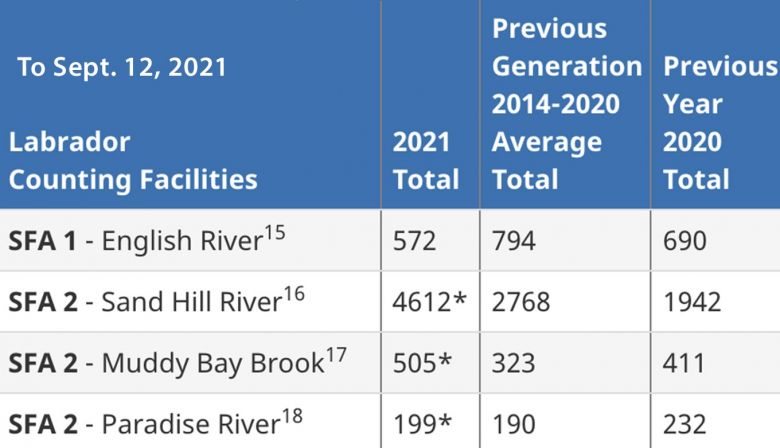
15 Fence began operation in 2002
16 No data for 1988-1993, 1997-2001, 2020 – previous year references 2019
17 Fence began operations in 2003, no data for 2010
18 Fence began operation in 2003
* Partial count (fence removed during part of the season)
** Fence no longer operational
Don Ivany ends this weeks report with this note:
With respect to Labrador, we have received very few reports from this past week other than that water levels were good and water temperatures were cool.
Mike Crosby, proprietor of Flowers River Lodge, reports that they did not have any guest at their lodge during the last week of the season. Most other outfitters in Labrador have already closed their operations for the season as well.
But by all accounts it has been an excellent season in Labrador this year with good returns and great fishing.
QUEBEC
Il restera moins de deux semaines avant la fin de cette saison quand ce rapport paraîtra. Les décomptes de fin de saison auront lieu (si les conditions le permettent) bientôt et vont révéler les derniers détails d’une saison qui fut difficile pour les saumons et les saumonier(e)s dû au manque de précipitation jusqu’à tout récemment.
Dans la région des rivières à Gaspé, la première semaine de septembre fut marquée par des précipitations plus qu’abondantes.
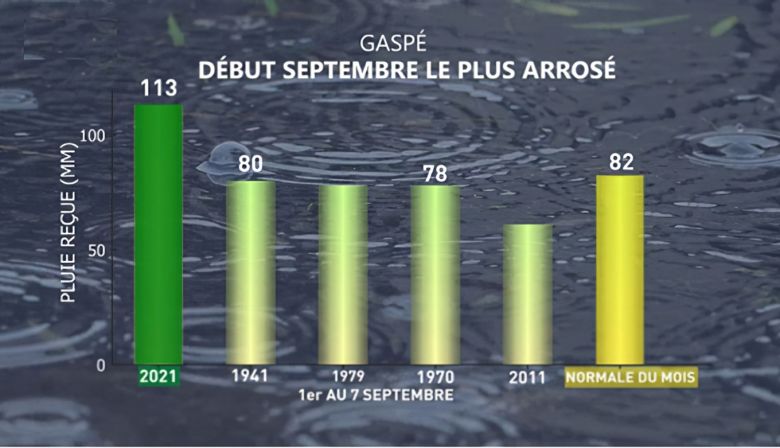
Les données utilisées dans ce rapport proviennent de divers sites web, des médias sociaux et des sources gouvernementales québécoises. Les informations peuvent changer sans avis au préalable en ce qui concerne les comparatifs des saisons précédentes.
Voici les résultats affichés au 5 septembre sur le site de la Zec Gaspé jusqu’à ce jour en 2021.
York 552 captures (incluant les remises à l’eau) 4 618 jours-pêche (3 715 en 2020)
Dartmouth 211 captures (incluant les remises à l’eau) 1 357 jours-pêche (1 091 en 2020)
Saint-Jean 170 captures (incluant les remises à l’eau) 714 jours pêche ( 650 en 2020)
Rivière Matane
Au 14 septembre, 2 291 poissons ont franchi la passe migratoire (944 saumons et 1 347 petits). Le succès de pêche se ventile comme suit : 186 saumons et 158 petits relâchés, 50 saumons et 399 petits récoltés.
Cumulativement au 13 septembre 2020, 2 660 poissons (1 652 saumons et 1 008 petits) ont été dénombrés à ce jour en 2020. Les pêcheurs sportifs ont déclaré la capture de 789 poissons, dont 295 saumons et 95 petits relâchés, 134 saumons et 305 petits récoltés.
Au 17 septembre 2019, 1 926 (1 212 saumons et 714 petits) ont cumulativement été comptés par le biais de la passe migratoire. À la même date, 217 saumons et 45 madeleineaux avaient été relâchés, ainsi que 125 saumons et 271 madeleineaux récoltés pour un total de 658.
Rivière Matapédia
Parmi les 723 poissons enregistrés à la CGRMP jusqu’au 14 septembre, 368 ont été graciés et 355 récoltés.
Au 13 septembre 2020, un total de 1 247 poissons avait été déclaré capturé par les pêcheurs sportifs. Parmi ceux-ci, 742 ont été relâchés et 505 ont été récoltés.
Comparativement au 16 septembre 2019, au total, 1 170 poissons avaient été capturés dont 721 saumons relâchés et 449 petits récoltés). Il n’y a eu aucune récolte de grand saumon en 2019.
Rivière Mitis
Le nouveau piège à saumons installé avant la migration de 2020 s’est avéré très efficace encore cette saison et a très bien fonctionné pendant les différents niveaux de débit.
Cumulativement au 12 septembre 2021, 1 753 poissons furent comptés, soit 751 saumons et 1 002 petits.
Au 13 septembre 2020, cumulativement, 760 saumons et 758 petits ont été dénombrés pour un total de 1 518 poissons.
Pour la saison 2019, au 16 septembre, 885 poissons (457 gros saumons et 430 petits) avaient franchi le piège de comptage.
Rivière Bonaventure
L’APSB fait rapport des statistiques de pêche suivante jusqu’au 11 septembre 2021, parmi les 1 191 captures, comprenant 742 saumons graciés et 449 petits récoltés.
En 2020, au 12 septembre, 1 001 captures furent enregistrées dont 689 saumons graciés et 312 petits récoltés.
Également en septembre 2020, les conditions de débit étant favorables (n’étant pas le cas en date du 15 septembre 2021), le décompte de fin de saison fut complété le 11 et 12 septembre, résultant d’un dénombrement de 1 531 saumons et 303 petits totalisant 1 834 poissons.
Le résultat du décompte en fin de la saison 2019, dénombrait 1 047 saumons et 365 petits totalisant 1 412 poissons.
Rivière Rimouski
Jusqu’au 14 septembre 2021, 708 poissons (269 saumons et 439 petits) ont été dénombrés. À pareille date en 2020, 680 poissons (478 saumons et 202 petits) avaient poursuivi leurs migrations vers leurs rivières natales.

Charles Cusson, Director of ASF Programs in Quebec notes:
By the time this report is published, less than two weeks will be left in the season on most rivers.
It will be interesting to see results of the season ending assessments to ascertain abundance (if conditions are amenable) which will reveal a good snapshot of this seasons’ challenges both for the salmon and the anglers due to the lack of precipitation until very recently.
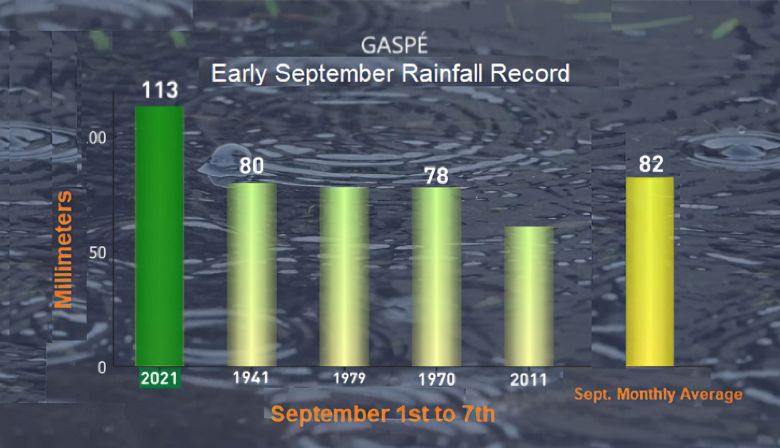
The data used for the Quebec River notes are sourced from various river websites, social media, and Quebec government sources. Information can change without prior notification regarding prior year comparative figures.
York, Dartmouth, and Saint-Jean Rivers
Please find listed below the latest cumulative statistics to September 5th which appear on the Zec Gaspé website.
York 552 captures (including releases) 4,618 rod days (3 715 in 2020)
Dartmouth 211 captures (including releases) 1 357 rod days (1 091 in 2020)
Saint-Jean 170 captures (including releases) 714 rod days (650 in 2020)
Matane River
Cumulatively to September 14th, 2,291 fish have been counted through the fishway, made up of 944 salmon and 1,347 grilse. Anglers have landed 793 fish, comprised of 186 salmon and 158 grilse released, as well as 50 salmon and 399 grilse harvested.
As of September 13th 2020, 2,660 fish (1,652 salmon and 1,008 grilse) had been counted. Anglers had reported landing a total of 789 fish comprised of 295 salmon and 95 grilse released, 134 salmon and 305 grilse harvested.
To September 17th, 2019, 1,926 (1,212 salmon and 714 grilse) were counted through the fishway. To the same date, 217 salmon and 45 grilse have been released along with 125 salmon and 271 grilse reported harvested for a grand total of 658 landed.

Matapedia River
Of the 723 fish registered by the CGRMP up until September 14th, 368 have been released and 355 harvested.
To September 13th, 2020, for the season, a total of 1,247 fish were reported landed by anglers. Of those, 742 had been released and 505 harvested.
To September 16th, 2019, cumulatively, 1,170 fish had been reported landed (721 large salmon released, and 449 grilse harvested). That season, there was no harvest of salmon.
Mitis River
The new fish trap installed prior to the 2020 migration continued to be very effective and has performed very well during the different flow levels this angling season.
As of September 15th, 1,753 fish have been counted comprised of 751 salmon and 1,002 grilse. Sport anglers have landed
As of September 13th, 2020, 760 salmon and 758 grilse were counted for a total of 1,518 fish. On the angling side, 328 fish had been reported landed comprised of 133 released and 195 harvested.
To September 16th, 2019, 885 fish (457 large salmon and 430 grilse) were transported up above the natural waterfall. Also, to date, 104 large salmon have been released and 112 grilse had been reported harvested for a total of 216.
Bonaventure River
The Bonaventure ZEC (APSB) is reporting 1, 191 fish have been landed to September 11th (742 salmon released and 449 grilse harvested).
To September 12th 2020, 689 salmon had been released and 312 grilse harvested for a total of 1,001 landed.
As water conditions were very good, an in-river count was performed on September 11th and 12th 2020 (not the case as of September 15th 2021) resulted in 1,834 fish (1,531 salmon and 303 grilse) being observed and counted.
Compared to 1,412 fish counted (1,047 salmon and 365 grilse) resulted from the 2019 late season assessment.
Rimouski River
For the season on September 14th, 269 salmon and 439 grilse have been counted for a total of 708. At the same date in 2020, 680 fish had been counted made up of 478 salmon and 202 grilse migrating back to their natal river.

NEW BRUNSWICK

Paul Elson Jr. gives an update from last weekend:
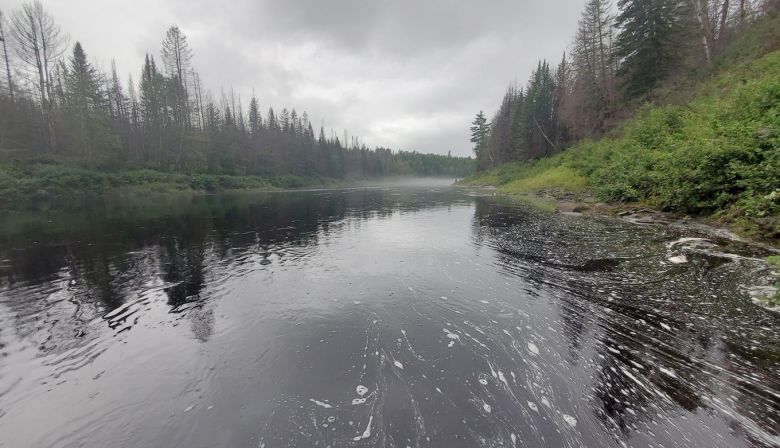
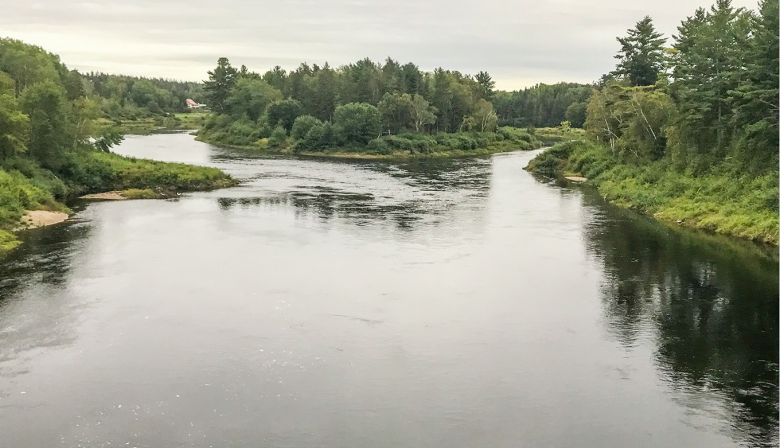
We had the Sinclair North Pole Crown Reserve on the weekend. The North Pole stream is a tributary of the Little Southwest Miramichi, and the crown reserve is a stretch of 15 km.
The river was pretty much blown out from “Larry”.
Most of the pools were unfishable or at least the main parts of them were. We were able to find a few spots to cast from and pick off some fish while they were moving up into the spawning grounds.
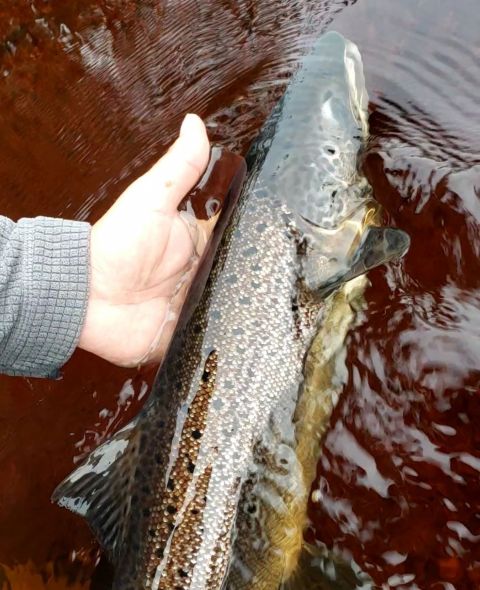
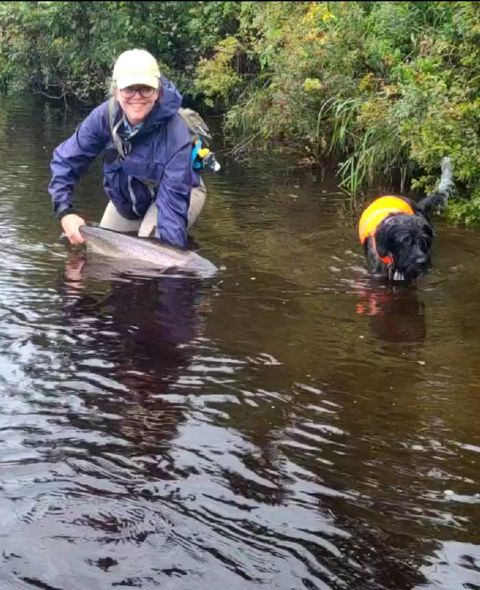
Our party managed to land 13 fish and hooked/lost/missed just as many. The fish never stopped moving and were just plowing through.

St. John River
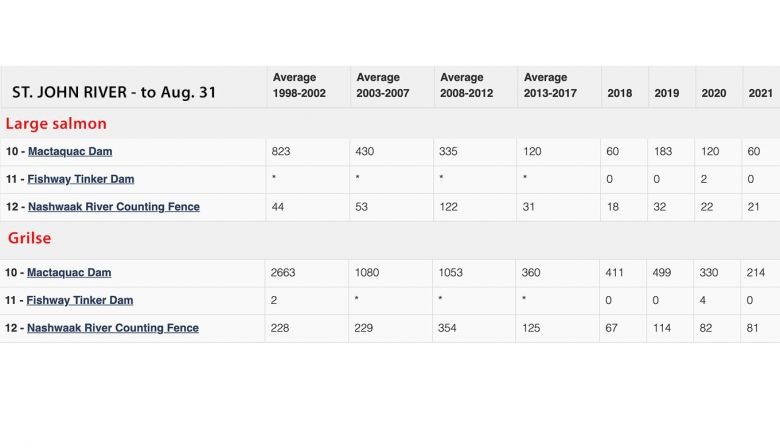
All Atlantic salmon conservationists should be looking with concern on the situation of the St. John River salmon. The numbers are now down to pathetically low numbers when prior to the Mactaquac Dam’s construction it had a robust and healthy ecosystem.
Jean-Daniel Savard of the Restigouche River Watershed Management Committee notes:
In September the water levels have been increasing and temperatures falling to a better range for fish health.
RRWMC is continuing to finish our projects and contracts for this year, including
- Warden contracts, going well
- Maintenance contracts are now successfully completed for 2021
- Restoration projects are under way
- Beaver dam removals are due to take place in October
LATE SUMMER AND AUTUMN ASF RESEARCH IN NEW BRUNSWICK
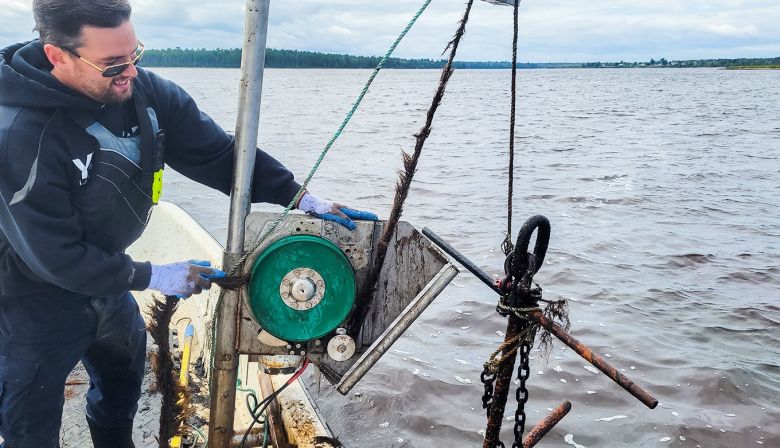
The key to ASF’s Atlantic salmon research in New Brunswick is collaboration with other ngo’s, First Nations, and government.
Graham Chafe, ASF research biologist, says:
The ASF Research Department has been hard at work in the field recently, work
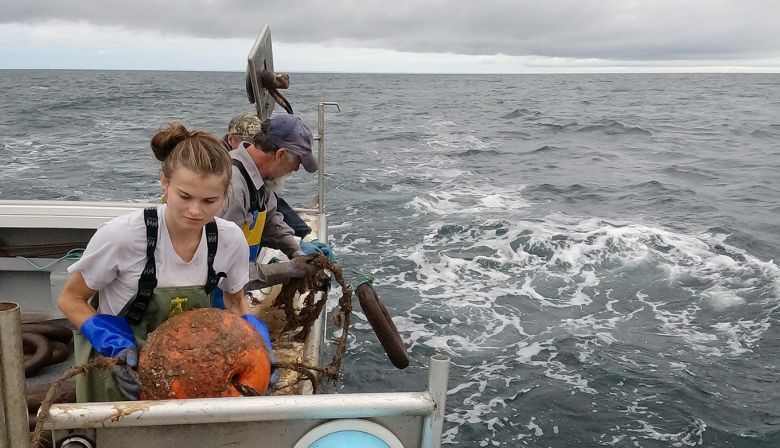
In addition to helping with the four other partners in the smallmouth bass eradication project, we have been conducting electrofishing surveys for juvenile salmon using our own staff and retrieving or “rolling over” acoustic receivers in Miramichi and Chaleur bays with partners.
Miramichi Bay receivers are pulled out for the fall and winter.
Baie des Chaleurs receivers are year-round installations.
When staff inspect this line, they bring the bottom-mounted receivers to the surface, download the data, re-battery and re-deploy them immediately.
Thus, this line monitors for tagged fish with only a 3-5 minute break over the entire year. Staff will continue electrofishing and receiver retrieval in the coming weeks.
Magaguadavic
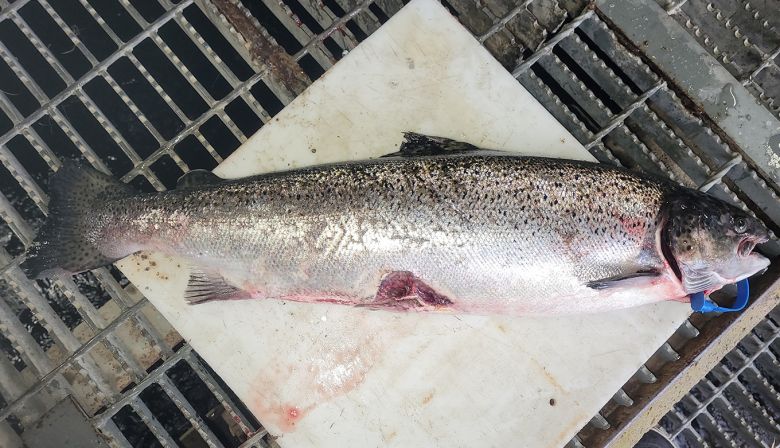
ASF research staff tend to the St. George fishway, as an index river of wild/escapee aquaculture. This Atlantic salmon 83 cm. long attempted to ascend the fishway and enter the Magaguadavic River this week. It was the second to do so in recent weeks.
NOVA SCOTIA
Northumberland Strait Rivers
Matt Dort, well known salmon communicator and conservationist in Nova Scotia, says:
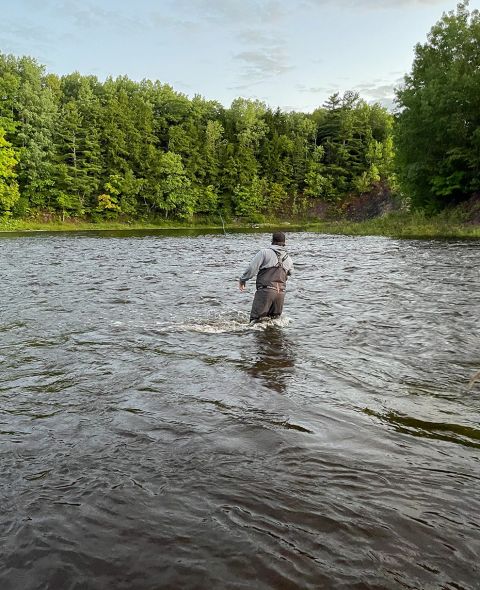
On Friday we received 5.5 in. of rain in Pictou County. It brought the East River and West River Pictou up significantly. However, that is as far as the rain extended. Barneys River, West River Antigonish etc. only got 10 mm and those rivers didn’t rise.
Since the rain, there have been a few fish hooked and spotted in the main Pictou County rivers, with the water now at fishable levels.
The same holds true for other Northumberland Strait Rivers like Waughs, Wallace and River Phillip. The welcomed rained has officially kicked off the Fall Atlantic Salmon season along the Strait.
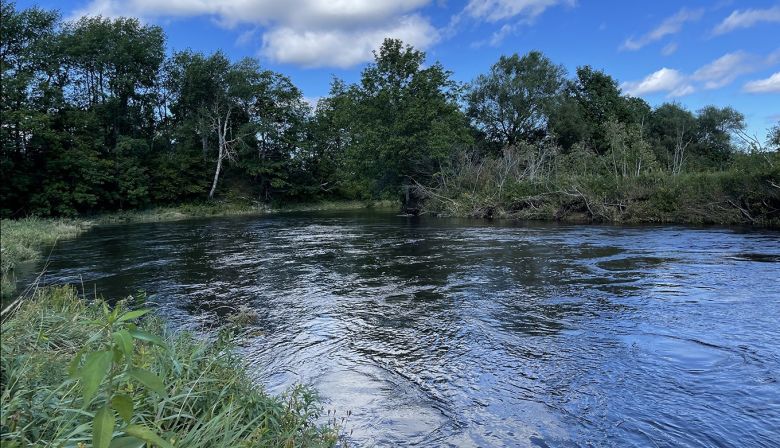
The Margaree and other Cape Breton rivers did not see much from the passage of Hurricane Larry. Low flow stil, with small amounts of rain forecast. Not much salmon action.
Patrick Poirier says:
The run of salmon has pretty well stopped, awaiting the rain – as the rest of us are.
The odd fish is moving in on the tide, but most fish hooked now have fall colours.
The water level has dropped back down to around .350 m3. Alas, no significant rainfall is predicted for the near future.
PRINCE EDWARD ISLAND
Taylor Main updates us:
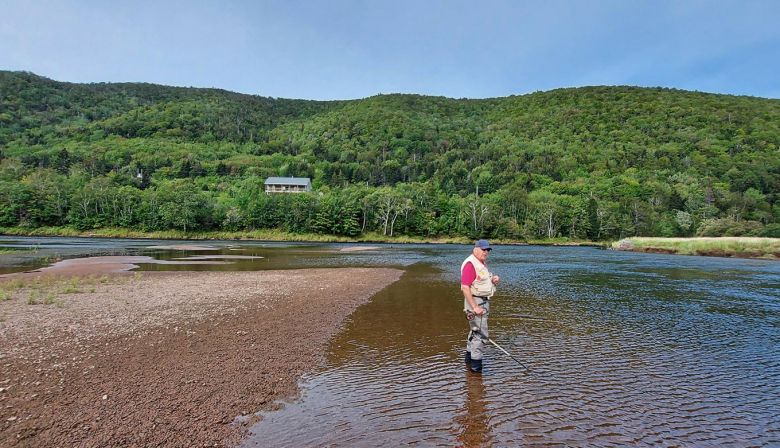
Water levels continue to drop a bit with each passing day across the province after more very heavy rains late last week.
I was told that everywhere was blown out for the weekend after the heavy rain last Friday.
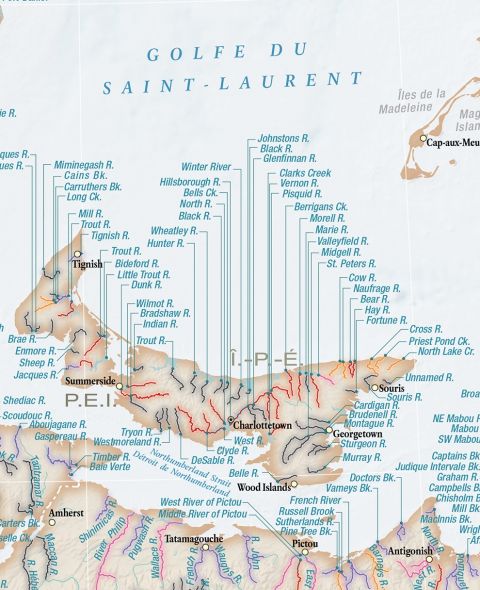
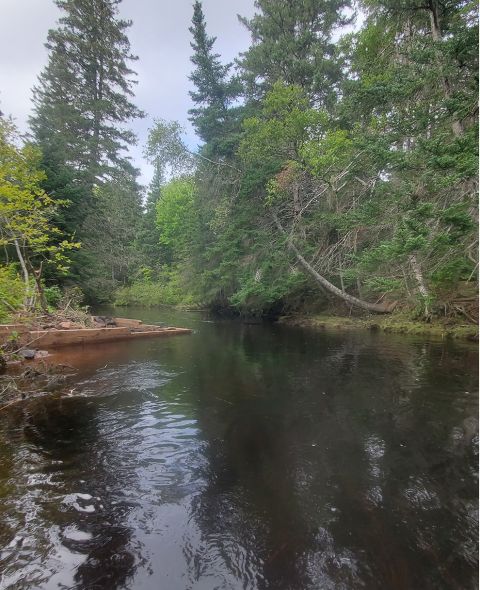
Judging by the scumlines on the alders, water levels had come down roughly sixteen inches on the Morell by Monday, giving near perfect angling conditions.
Water conditions were largely perfect on Monday and Tuesday of this week and should remain higher than normal through to the end of the trout fishing season on Wednesday.
It should be noted that we aren’t talking about huge numbers of fish here, but rather numbers in the single digits to mid/high teens.
Most are hopeful this is a sign of good things to come for both systems. I have no data at this time for the Mill River.
MAINE

Jennifer Noll of Maine DMR writes on Sept. 15:
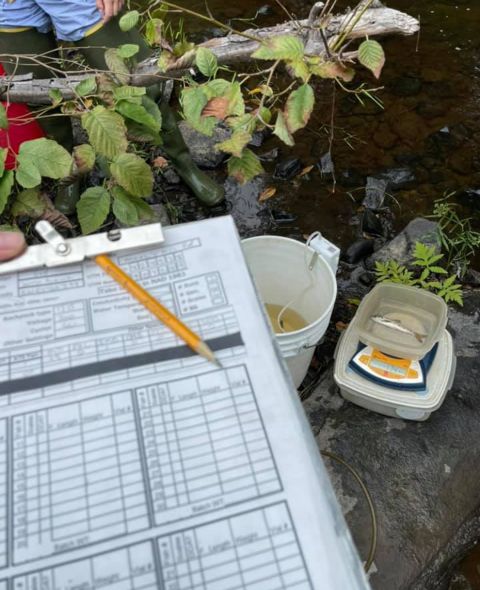
We had two crews that finalized parr broodstock collections today.
A total of 215 parr were collected throughout the Sheepscot River drainage from eight sites yesterday and three sites today.
These are salmon that have been stocked as eggs/fry or are from wild spawning and have spent 1 1/2 years in freshwater. They’ll be spawned in the hatchery in two years and sent back to the wild. We are also taking relative density data and biological data (length, weight) from sites along the way.
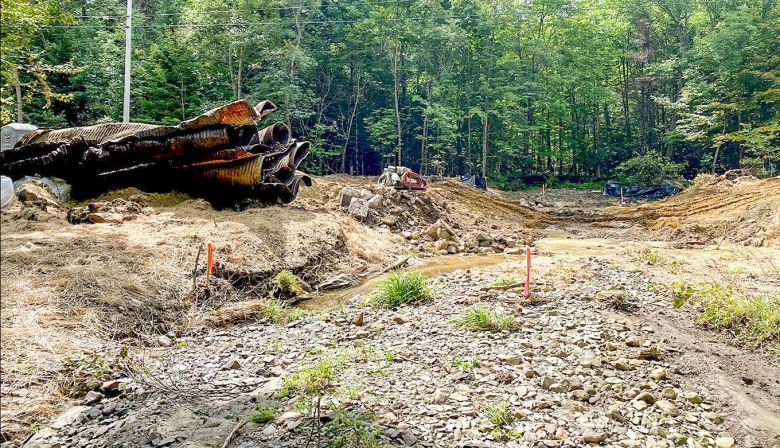
Cummins Brook Road Culvert Replacement
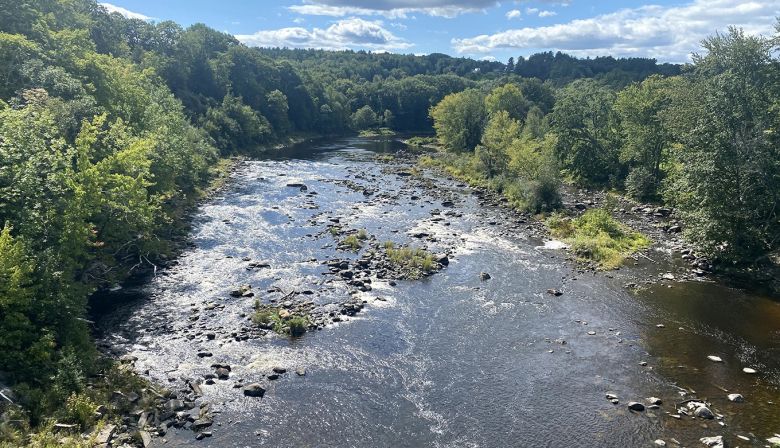
In Maine headwaters of systems like the Sandy River, tributary of the Kennebec, there are many culverts that block migratory fish, including salmon, rather than helping them reach good spawning areas.
The culverts on the Cummins Brook Road are being replaced as part of this Maine Headwaters Project.
THE FINAL WORD
That includes the science of eradicating invasive species that can destroy entire populations. It also includes the science of restoration, including vast improvement of both upstream and downstream fish passage, past roads, dams and forest plus industrial activity.
It also includes literally plumbing the depths of the ocean and following the migrations of Atlantic salmon at sea. Not just in the surface regions, but when they dive to 500 m., 800 m. or even deeper. We need to know what the issues are for these salmon whether on their outward passage or overwintering, and inward passage past Newfoundland and elsewhere.
Science does not mean knowing all the answers. But it means bringing to bear the best real-world thinking we can to address the issues confronted by this charismatic species.
We need to be working together to see this gets done.