





News & Blogs
“Mahogany,” by Andreas Buttimer
Phil Monahan
May 19, 2026
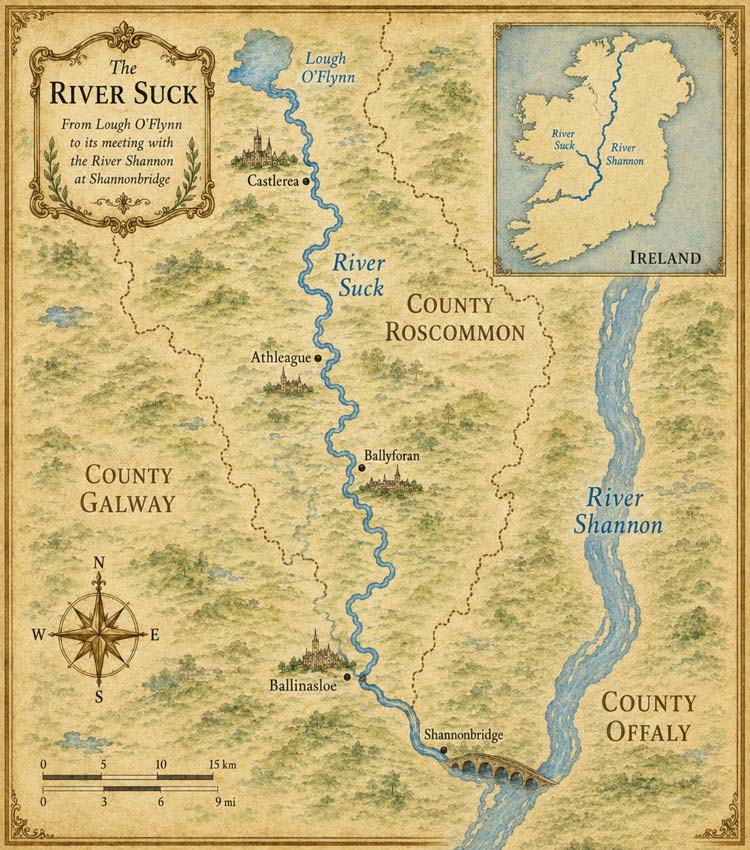
He was born an angler in Ballinasloe, Co. Galway and was frequently found on banks of the Suck River, a tributary of the Shannon and a big river in its own right. Salmon held at fords-shallow, gravelly areas-below the town, and some spawned there. These had been some of the world’s finest breeding grounds prior to the erection of Parteen Dam (part of the Shannon Hydroelectric Scheme of the 1920s), which blocked the salmon’s ascent.
Still they came, but in much smaller numbers. Grilse were still fairly numerous in his youth, enhanced by Parteen hatchery. Springers were scarce, but could be big, a relic of Shannon monsters of old, and his days were spent dreaming of them. He was shy, a social outcast who did poorly in school, but he didn’t much care. His family loved him, and he loved the river.
The Suck is 83 miles long, and he always wondered about exploring upstream, like his beloved fish. What was up there? It would be wild country, hardly a house, and probably boggy, judging by the water’s hue. He asked his father to bring him there, and one Saturday, they drove upriver to Athleague, where the Suck charged through the sluice gate of an old mill, and impressive sight and sound.
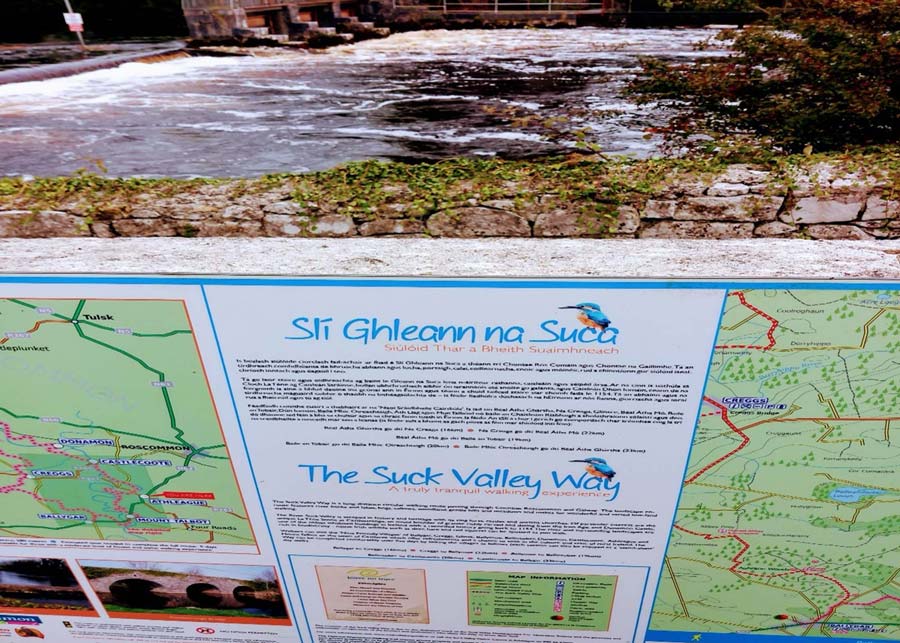
Caramel water sang, bubbling over the weir. Although it was his first time there, the boy was lost in the joys of old recognition. He fished for a time, and then they continued upstream to Castlestrange. It was a place of peace and purity, the river less spectacular yet still itself, quietly determined, ideal highway for salmon. Next upriver was Castlecoote, bijou of valley villages, the place his father had wished him to see. The boy’s eyes were wide with it: a tiny park, singing waterfall, flowers, birds, perfection. He had fallen in love.
He fly-fished there, caught a small, well-shaped trout, dark from the peat, and spotted like one from Lough Mask in his angling book. A girl playing in the park came down to admire the fish, her hair red and mahogany in morning sun. Her face was pale and full of life, her eyes big and blue.
He never forgot that place or the girl. When he was older, he was allowed cycle there-two hours, each way. One day, he saw her again and spoke with her. He told her he loved it there. He said fishing, just to be on the river, was his favourite thing. At school during the week, he dreamed of Castlecoote.
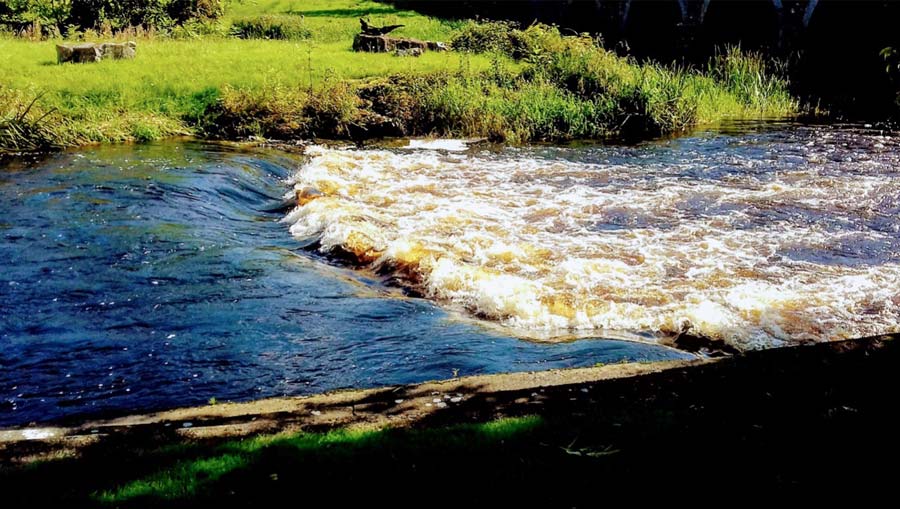
They met most days he visited. Once, she brought him across the bridge, over a stile, under the bridge, and upstream through a field with old trees. The river rushed by, inspiring. Near the top of the field, they came out of the trees, and she pointed. Across the river was an elegant garden, and above it a huge house with a red door.
“I’ve always wanted to live there,” she said. “I could be a princess!”
She smiled at her folly. Bordering the garden and stream was a low wall. He imagined sitting on that wall and fishing: a perfect dream. Then something came to him:
“If I bought that house, would you live there with me?”
“You’re just being silly,” she said.
“No,” he insisted, “I mean it.”
She said she would, but only a millionaire could buy the house. It wasn’t for the likes of them.
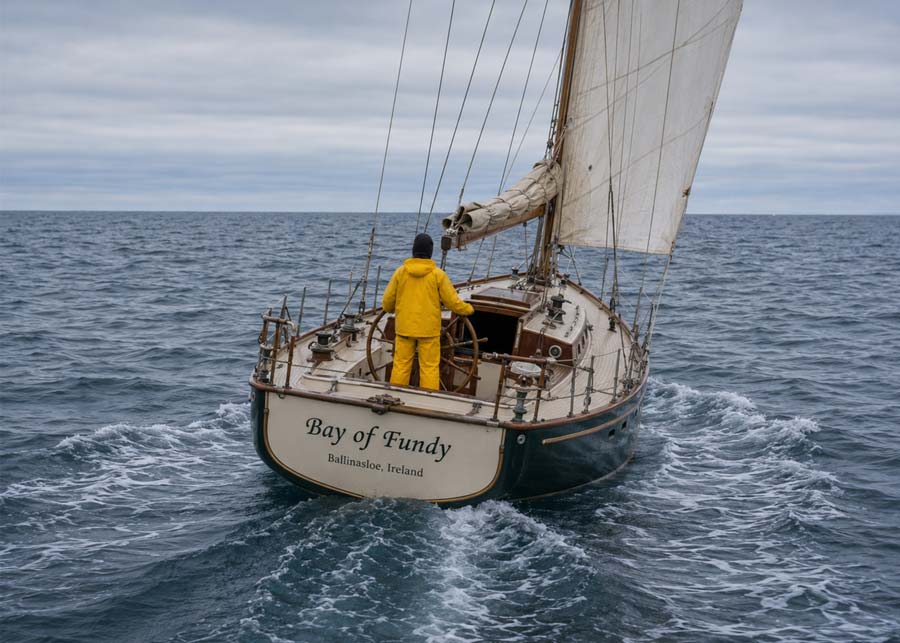
The years went on. He continued to do badly in school. His teachers and parents worried what would become of him. Still he dreamed of the river and the house and the salmon. After he left school, he noticed a sailboat for sale. No one wanted it. For years it had bobbed in Ballinasloe Harbour, untended and unloved. To him, it was a work of art. Mahogany and teak and named Bay of Fundy, it was said to have sailed from Canada. It was going for a song. He bought, rehabilitated it, set sail downstream. The Office of Public Works had opened this navigation by removing the fords where salmon spawned, with predictable results for their runs. He found the Shannon, its estuary, and then the ocean. Somehow he crossed the Atlantic and entered Bay of Fundy. The boat had come home.
He got a job working on salmon farms, became known for his toughness, tirelessness, and reliability. No weather was too much for him, even in that climate. He hated slaughtering the fish, seeing them suffer from sea lice and other pestilences. These had caused severe collapses of wild runs in rivers of the area, the first of which was called Irish.
The industry tried to “greenwash” its activities by funding conservation work. With his love for the salmon, he became its lead player, improving streams, reducing stock densities, and fallowing farms. Eventually, he formed his own company, exemplifying these ideals. He became wealthy, sending funds to Ireland with strict instructions as to how they should be used: to preserve and enhance Suck salmon.
At the peak of his powers, he sold his company and sent two letters to Ireland. He embarked in his old sailboat, re-crossed the ocean, mooring in Ballinasloe Harbour and continuing upstream in his dinghy. He ascended the Shannon and the Suck like a salmon. Surprisingly, this last leg of the voyage was the most difficult, negotiating weirs and fast floodwater. Weather worked against him, too. Perhaps he had planned badly, coming in November.
The final stretch of rapids was barely possible. He had great difficulty making any progress. Inch by slow inch, he mounted the torrent, outboard complaining bitterly, then finally failing. He took to the oars-lashed by rain and wind, the river hissing-and tried to find anything in him to continue. Inch by slow inch, he recovered lost ground and made some more.
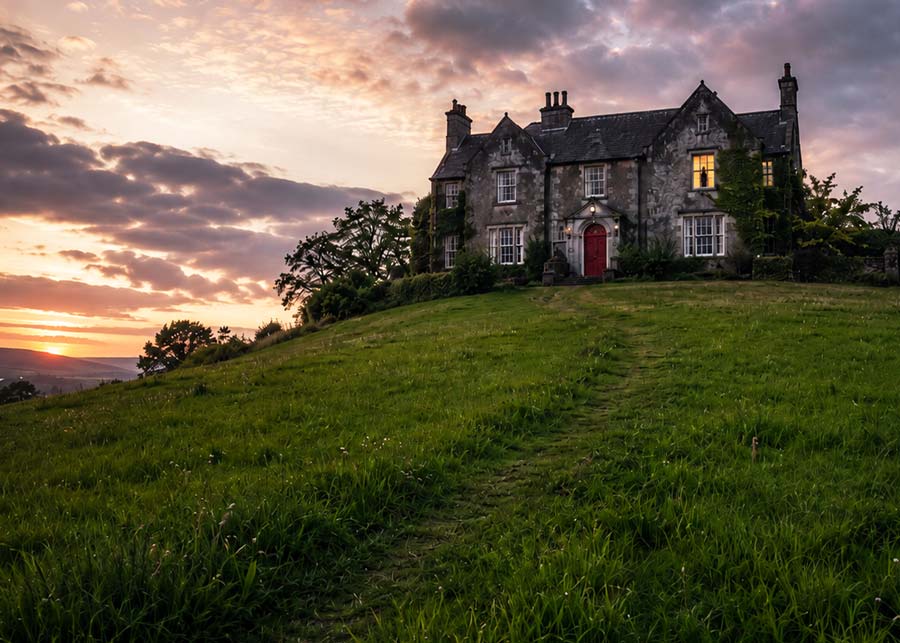
He was close now. At last, he grabbed a low wall and disembarked, letting the stream take the boat away. Its job was done. The last light of day caught the golden gleam of a salmon, digging her redd below the wall. He looked around. Beyond a beautiful aspen was a huge house, a single light in an upper room. There was a woman there, hair mahogany and red.