





Rivernotes
Rivernotes May 28, 2026
Phil Monahan
May 28, 2026
Editor's Note
by Phil Monahan, ASF Managing Editor
Welcome to Rivernotes, our weekly roundup of news and information from around the world of Atlantic salmon—Québec, Atlantic Canada, and Maine.
Reminder: The row of buttons you see above will help you find exactly what you're looking for. Simply click a button and be whisked directly to the section you want to read first.
Salmon Season is Here (or almost here)!
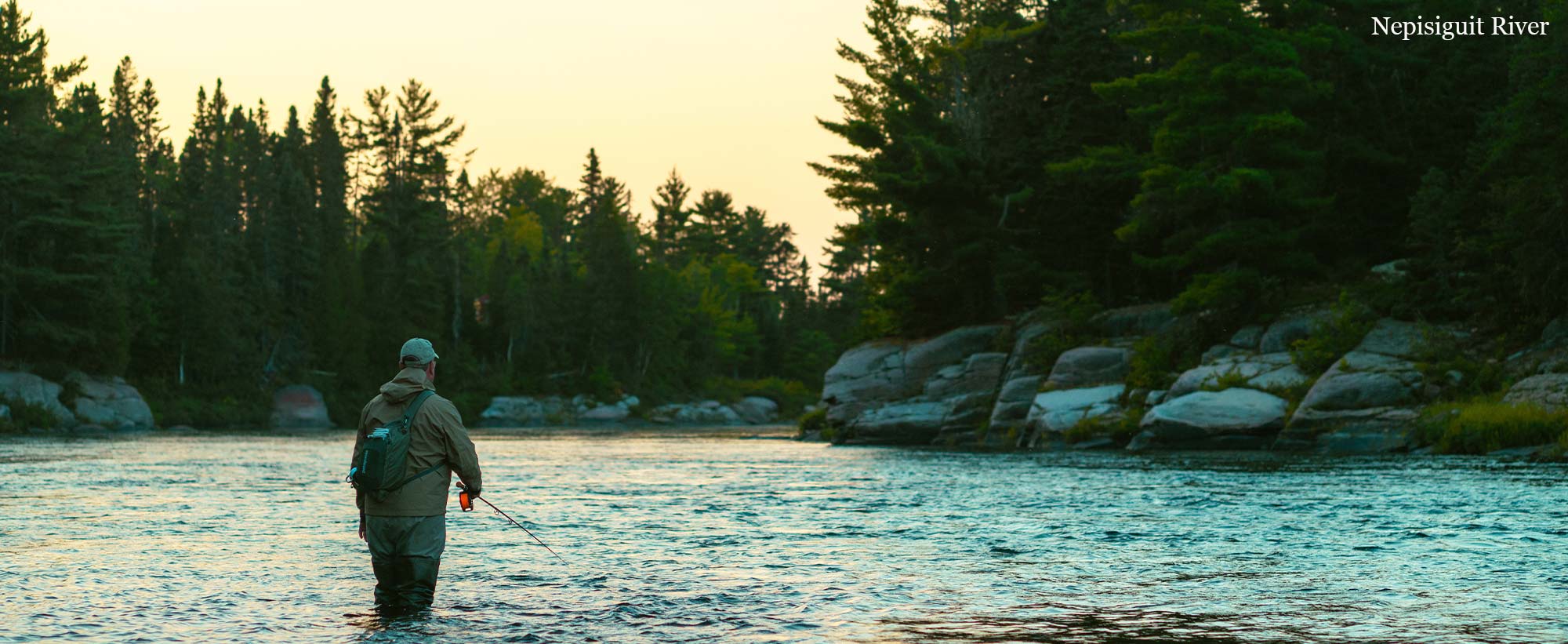
As the photo below demonstrates, the first bright salmon of the year are beginning to enter rivers.
Chris Sinclair of Restigouche River Lodge says they've landed one salmon and lost a few more—including some big ones—over the past couple days. He describes river conditions, both height and temperature, as the best he's seen since 2022, so he expects prime water for the first week of June.
Brad Burns reports that fresh fish have been sighted entering the Miramichi as well, and "conditions are quite good to catch one of these fish."
Several of the province reports below share Chris's optimism for when seasons open region-wide in the next few weeks.
First Matapédia Salmon
The first salmon of the year on any river is a cause for celebration. Check out this beauty landed by young Matthieu Ouellet on the Matapédia River last Friday!
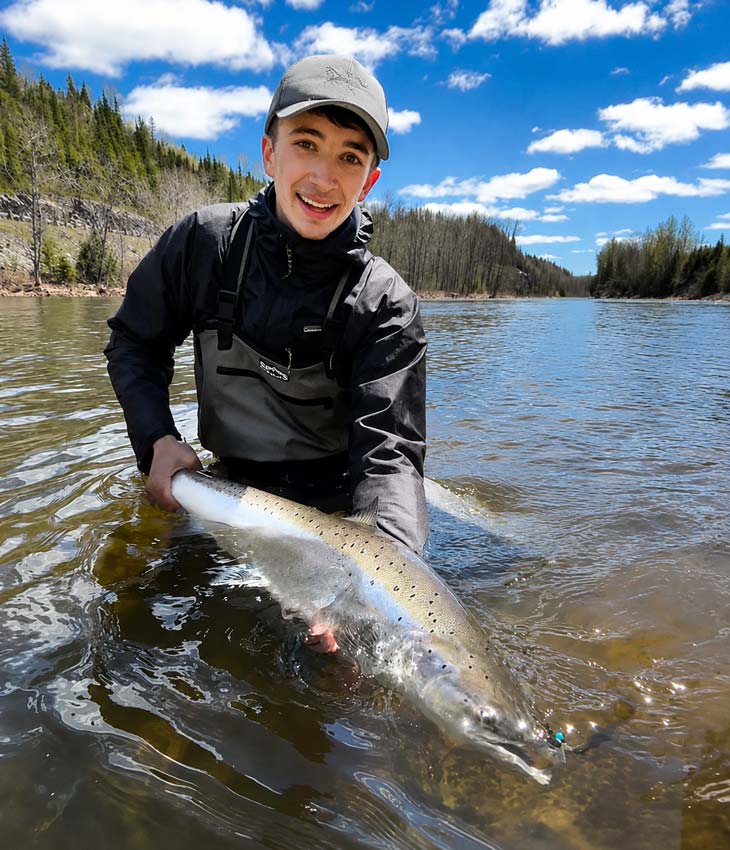
Mathieu described the action:
"We had been fishing for eight days in a row in really rough conditions—high water, cold, and windy. On Friday, we went slower than on the previous days, starting at 9 a.m. and not pushing a high pace. At the second pool, as I was approaching the tail with a black-and-blue winged tube fly, the line went crazy tight and the fish immediately ran towards the rapid, jumping twice. From that point on, the fight was pretty much about preventing the salmon from leaving the pool, and we landed it after about ten minutes."
Wild Salmon Day 2026
Wild Salmon Day is almost upon us! On Monday, June 1st, Wild Salmon Day brings people together across the Atlantic and Pacific to celebrate wild salmon and raise awareness about the challenges they face. This year’s theme, “Restore Salmon Rivers,” highlights the importance of healthy habitats and the collective effort needed to protect and restore wild salmon for future generations.
We also want to hear from you. Share your thoughts on the importance of wild salmon and salmon conservation by taking a short survey. Click here to start.
Reality Check
“Silent Waters,” a film by Oskar Pall Sveinsson and produced in Norway, was recently broadcast in Iceland where there is a battle underway regarding aquaculture legislation. The film investigates how open-net salmon farming and ecological degradation are decimating Norway's wild Atlantic salmon populations. Watch the full film below.
To learn more about ASF's work on open-net pen salmon farming, click here.
New Brunswick
New Brunswick Program Director David Roth describes working with filmmakers to document the Trap and Transport project on the Miramichi, which includes some new tools.
This week, I had the pleasure of welcoming Hooké founder Fred Campbell and outdoor film director and cinematographer Nathan Plamondon to one of our research sites on the Miramichi River. The two visited the Trap and Transport project to document this year’s work for the next round of the Scale of Change film tour. The Trap and Transport project collects smolt upriver from where mass predation by striped bass occurs and transports them downriver, to increase the number of smolts entering the ocean. Click here for more information on the project.
It was a great opportunity to share the story of the project, now entering its third year, and to showcase several important additions to this season’s operation. Alongside the five smolt wheels deployed across the watershed, the team introduced specially designed fyke nets—which use a series of increasingly narrow funnels—to increase capture efficiency and improve the number of smolt collected for transport. Another major addition this year is the integration of a boat into part of the transport journey, allowing the fish to be released even farther downstream near the mouth of the river.
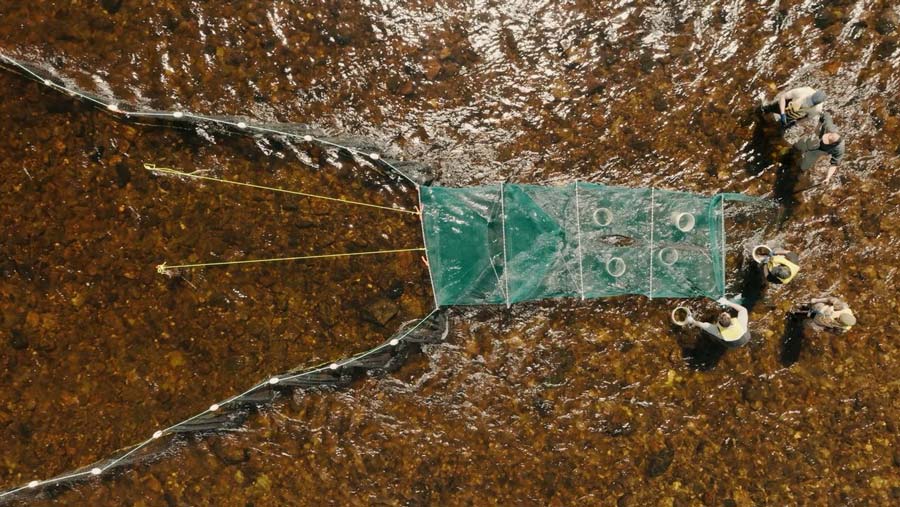
These adjustments are the result of lessons learned during the first two years of the project. Monitoring efforts identified opportunities to further reduce the risk of striped bass predation on outmigrating Atlantic salmon smolt by moving the release site farther downstream. Transporting the fish by boat also allows them to remain in flow-through tanks during the journey, helping the smolt continue imprinting on the river water in hopes that many will successfully return to the Miramichi as adult salmon in the years ahead.
Together with our partners from the Miramichi Salmon Association, Anqotum Resource Management, and the Canadian Rivers Institute, the team has already tagged more than 4,000 fish this season to monitor the effectiveness of the project. Additional support from the Department of Natural Resources and Country Haven Lodge has also helped transport thousands of additional untagged smolt so far this spring.
As the operation now moves toward the final week of the season, everyone involved is hoping for a strong finish to this year’s run before the collection wraps up for 2026.
Maine
Vice President of U.S. Conservation John Burrows describes how anadromous fish species are starting to pour into Maine's rivers, and the new Jed Wright Fellow introduces herself.
They're Hee-ere!
The spring migration of millions of river herring (alewives and blueback herring) is well underway in rivers across Maine. More than 3.2 million have passed the Milford Dam on the Penobscot River, while more than 2.1 million have been counted at sites in the Kennebec and Sebasticook. Atlantic salmon are beginning to arrive, as well, with 60 adults passed at Milford.
Water temperatures remain seasonably cool, and flows are currently a bit higher than normal due to significant rain last week. Rivers should be approaching near optimal conditions, so we anticipate significant increases in river herring counts in the next couple of weeks.
American shad runs are beginning to pick-up, and we expect to see excellent angling conditions for these fish in the coming weeks. The Kennebec has become Maine’s crown jewel for shad over the last dozen or so years, as the population has rebounded since the removal of the Edwards Dam back in 1999. The Penobscot River has a growing shad population and the river below Milford and is also becoming a popular area for angling.
In Downeast Maine, the Narraguagus River has long had an excellent little shad run. Following the removal of the Cherryfield Dam later this year and the construction of a series of weirs across the river, shad, river herring, and salmon will have unfettered access to hundreds of miles of habitat throughout the Narraguagus. ASF is working with the Downeast Salmon Federation, Maine Coast Heritage Trust, and The Nature Conservancy in Maine on this project, which has been in the works for more than 15 years.
Meet the New Fellow
Hello everyone! My name is Josie Cornell, the new Jed Wright Fellow* here at ASF. I recently graduated from Husson University with a bachelor’s degree in biology (environmental science concentration) and certificate in conservation law. I will be working with the Maine Team this summer, supporting ASF's Headwaters work and ASF's project partners to restore salmon across the state.
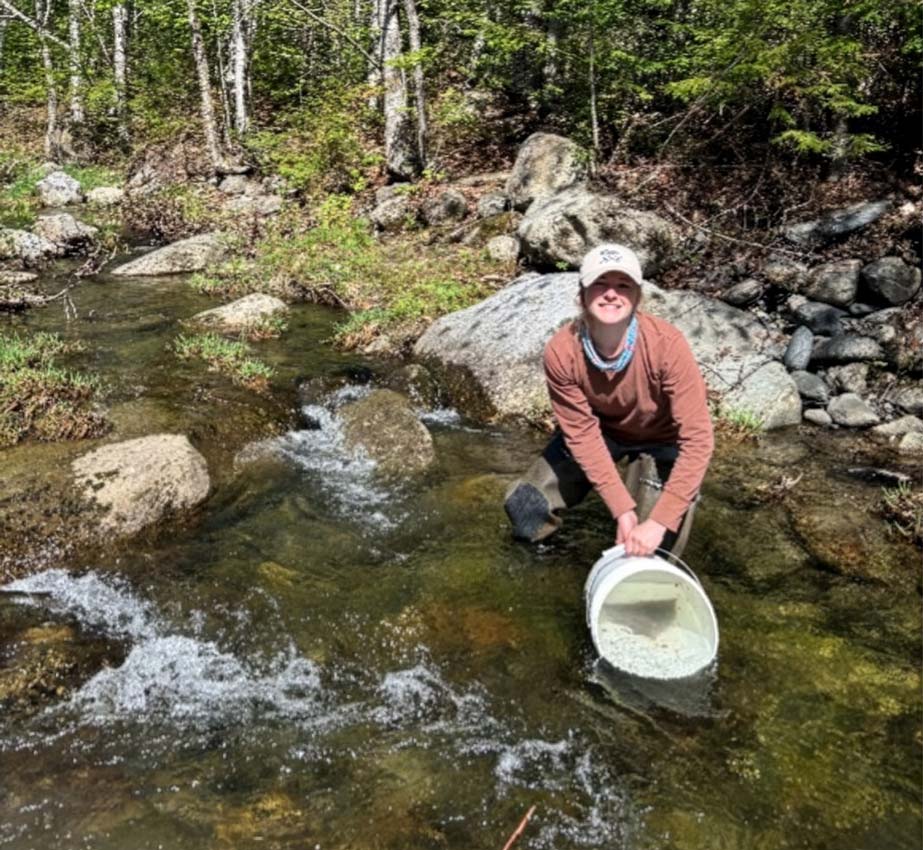
My first week was extremely eye-opening, as someone entirely new to fisheries and habitat restoration. I’ve been learning all about each of the sea-run species here in Maine, as well as the procedures for dam removals and fish passway projects. On Wednesday, I was able to go up to Brownville with Habitat Restoration Project Manager Jeff Reardon to the KI Jo-Mary Forest for some fry stocking with partners from Maine Department of Marine Resources, NOAA, and USFWS. Habitat Restoration Project Manager Cat Morse and I have also visited some of ASF’s previous project sites on the Sheepscot River—Coopers Mills and Head Tide, both in midcoast Maine. We even saw alewives passing at Coopers Mills! We also visited the Damariscotta Mills fish ladder, where there was an extremely positive number of alewives working their way up the ladder.
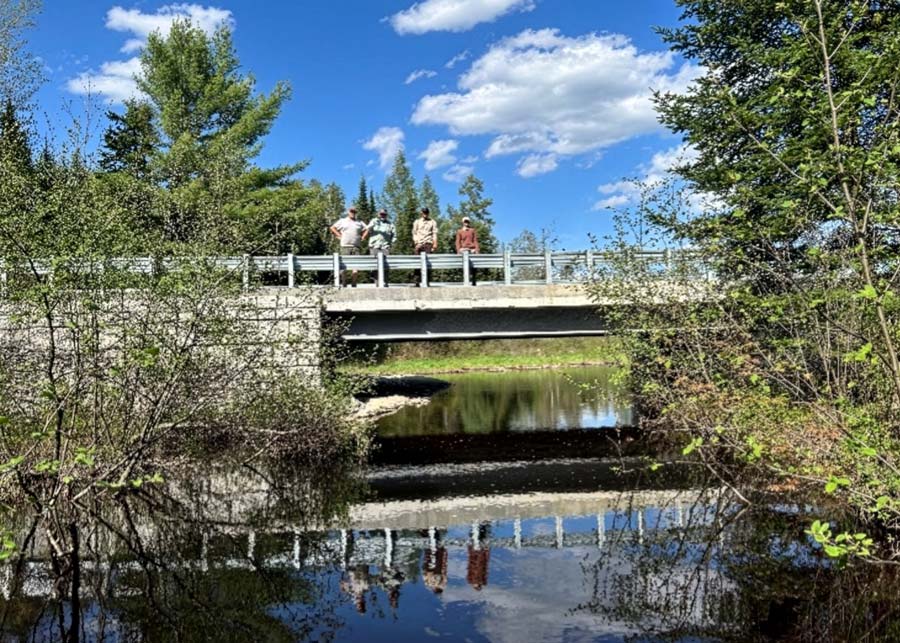
My passion is conservation biology, therefore protecting Threatened and Endangered Species like the Atlantic Salmon is a venture I’m very excited about. I’m looking forward to an amazing summer!
*Jed Wright worked for the U.S. Fish and Wildlife Service in Maine as the project leader for the Gulf of Maine Coastal Program. Jed cared deeply about rivers, fisheries, and partnerships and finding solutions that made the world a better place. Through the Jed Wright Fellowship for River Health, we can instill Jed’s conservation ethic in future generations while providing a pathway for a cohort of future graduates from underrepresented backgrounds to learn firsthand about conservation work to help Maine’s rivers and communities.
Nova Scotia
Nova Scotia Program Director Matt Russell says all signs point to a successful start to salmon season, and describes a difficult smolt-collecting effort tempered by some great educational experiences.
Angling Forecast
With salmon season on Cape Breton Island just around the corner and a heavy rain of over 25mm scheduled for May 31, anglers across the province and beyond are getting geared up for what could be a great start to the season. All signs are positive—or at the very least, an improvement from the previous two seasons—but as always, only time will tell. All I know is that I’ll be trying my luck early this year!
Research
Our smolt tagging in Nova Scotia hasn’t gone exactly to plan, but our staff and partners have tried every creative method we can to try and catch as many smolt as possible. Passive integrated transponder (PIT) tags are used to evaluate the long-term survival of the smolt to returning adults.
Our partners on the St. Mary’s River—Fisheries and Oceans Canada, Nova Scotia Salmon Association, Antigonish Rivers Association, and the St. Mary’s River Association—continue to check smolt wheels and nets daily, as the run has begun to slow down and summer conditions approach. We will soon be removing our wheels and nets from the system, but not until we are absolutely sure there are no more smolts headed down river. The team at the Chéticamp River Salmon Association (CRSA) is making the most out of a difficult year for smolt tagging by taking the opportunity to instill the passion of conservation into the next generation.
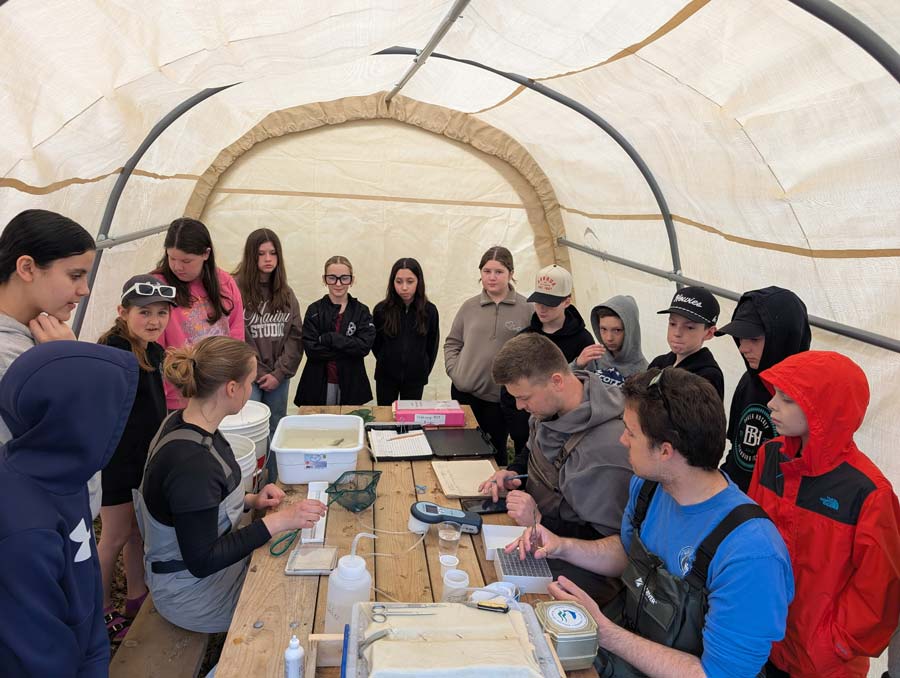
Jillian Baker of the CRSA said, “The Chéticamp River Salmon Association recently welcomed students from école NDA to the smolt wheel on the Chéticamp River for an engaging hands-on learning experience. On May 25, fifteen Grade 5 and 6 students and their teachers were able to see the smolt wheel in operation and learned about the ongoing tagging and mark-recapture study being conducted by the CRSA and ASF.
Students were eager to learn about the project and were excited to observe CRSA staff and volunteers with Parks Canada collecting data—including taking fin clips and scale samples—as well as tagging smolt. The visit provided a valuable opportunity for students to connect with local conservation efforts and gain a deeper understanding of Atlantic salmon research and stewardship in their community.”
Québec
La directrice du programme du Québec, Caroline Côté, discute des problèmes causés par l’eau froide et l’eau chaude, et elle partage ses préparatifs pour son séjour sur la rivière.
Cascapédia : eau froide, hauts débits et préparation de la dévalaison
Les préparatifs vont bon train sur la rivière Cascapédia pour le suivi annuel de la dévalaison et le marquage acoustique des smolts.
Comme ailleurs dans l'est du Canada ce printemps, les équipes composent avec des niveaux d'eau élevés, des débits fluctuants et des températures particulièrement froides pour la saison. Au cours des dernières semaines, les partenaires du projet — Société Sipuminu inc., Atlantic Salmon Federation (ASF), MPO, Association de gestion halieutique Mi’kmaq et Malécite (AGHAMW) et plusieurs collaborateurs locaux — ont suivi de près l'évolution des conditions pour déterminer le bon moment d'installer la smolt wheel en toute sécurité.
Environ 60 smolts devraient être marqués acoustiquement cette année, entre le 26 mai et le 5 juin environ, afin de mieux comprendre leur migration vers l'estuaire et les défis qu'ils rencontrent au moment de gagner la mer.
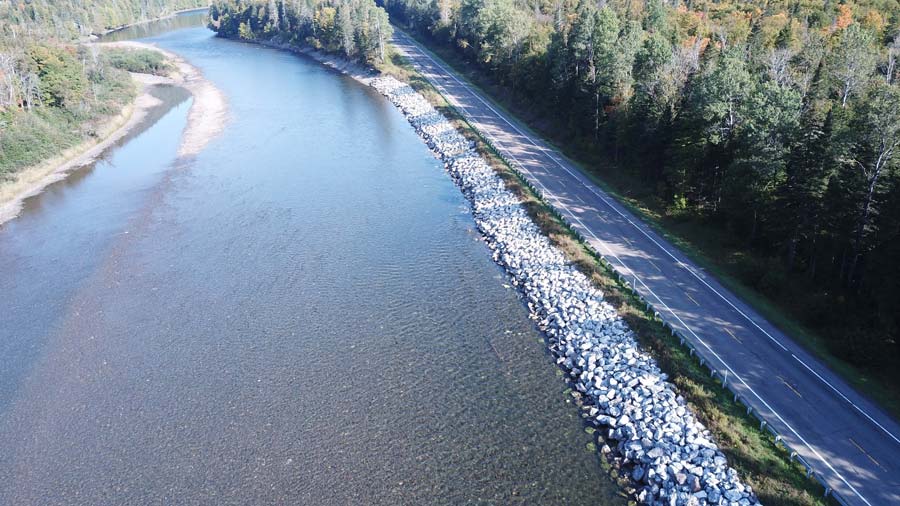
En parallèle, Marc-André Bernard, de la Société Sipuminu inc., mène depuis quelques années un suivi de la température des enrochements le long de la route 299. Sous couvert végétal, la roche reste fraîche ; à découvert, elle atteint près de 47 °C. Ces données alimentent un projet de végétalisation en collaboration avec le ministère des Transports et de la Mobilité durable et d'autres partenaires habituels de la Société Sipuminu, pour mieux protéger la qualité de l'eau, les refuges thermiques et la capacité de recharge des tributaires.
Au-delà du suivi des poissons, le travail sur la Cascapédia se construit aussi à hauteur d'enrochement, un thermographe à la fois.
Le Coin du Moucheur : transmission, saumon et culture rivière
En préparation de ma première vraie saison de pêche au saumon sur la Dartmouth, je suis passée au Coin du Moucheur, dans Limoilou, pour acheter une soie et quelques mouches adaptées aux eaux froides du printemps gaspésien.
Je suis ressortie avec bien davantage.
Richard Rioux m'a guidée à travers une sélection de Green Machine, bombers blancs, Black Dose, Rat et petites mouches sobres vert-chartreuse — des mouches de guide signées Carl Darveau, qui guide sur la Grande Cascapédia, la Petite Cascapédia et la Bonaventure. La boîte qui s'est constituée au fil de la conversation ressemblait, au bout du compte, à une petite carte des rivières gaspésiennes.
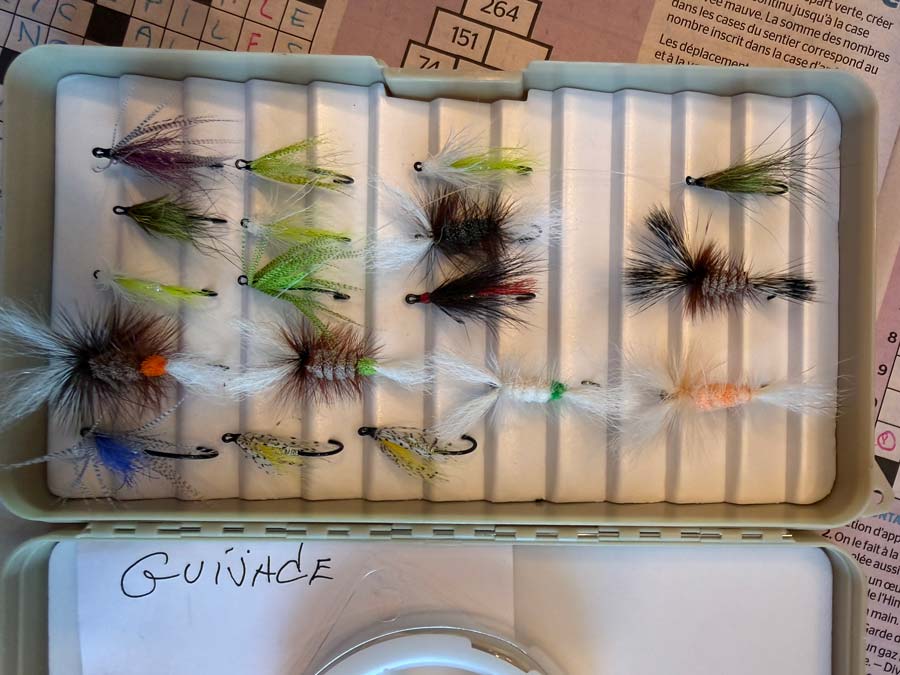
Surtout, la visite s'est vite transformée en cours improvisé sur les insectes aquatiques, les nœuds en huit, testage de canne dans le stationnement et l'histoire de la pêche au saumon au Québec. Quelques phrases sont restées :
« Ils n'ont pas d'expérience, ceux qui ne font pas d'erreurs. »
« Une bonne soie, tu peux moucher avec une canne de marde, pis elle va sortir comme du monde. »
Au fond, les meilleures boutiques de pêche ne vendent pas seulement du matériel. On en ressort avec une façon de regarder la rivière et la vie en général.
Québec (English)
Québec Program Director Caroline Côté discusses problems caused by cold water and warm water, and she shares her preparations for time on the river.
Cascapédia: Cold Water, High Flows, and Smolt-Monitoring Preparations
Preparations are underway on the Cascapédia River for annual smolt outmigration monitoring and acoustic tagging.
Like on many rivers across eastern Canada this spring, teams are dealing with high water, fluctuating flows, and unusually cold water temperatures for the season. Over the past few weeks, project partners—Société Sipuminu inc., ASF, DFO, Association of Mi'gmaq and Wolastoqey Indigenous Fisheries Management (AGHAMW), and several local collaborators—have closely monitored conditions to determine a safe deployment window for the smolt wheel.
Approximately 60 smolts are expected to be tagged this year, between roughly May 26 and June 5, to better understand their migration to the estuary and the challenges they face during their transition to sea.
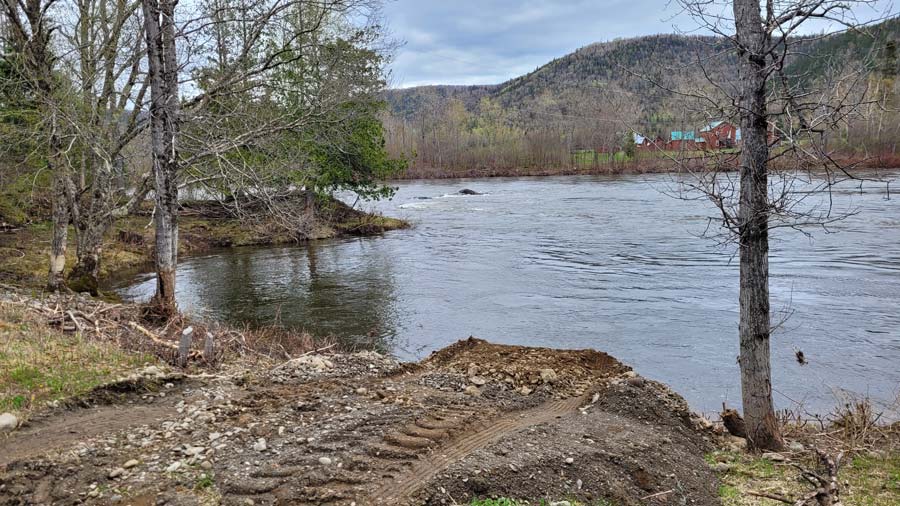
In parallel, Marc-André Bernard of Société Sipuminu Inc. has been running a temperature-monitoring program along Route 299's riprap for several years. Under vegetation, the rock stays cool; exposed to the sun, readings reach close to 47° C (116° F). The data feeds a vegetation project in collaboration with Québec's Ministry of Transportation and Sustainable Mobility and other regular partners of Société Sipuminu, aimed at better protecting water quality, thermal refuges, and tributary recharge capacity (the maximum volume of water a tributary stream can absorb and transmit to an underlying aquifer). Cold, clean water is vital for salmon survival.
Beyond fish monitoring, the work on the Cascapédia is also taking shape at the level of the riprap itself, one thermograph at a time.
Le Coin du Moucheur: Salmon, Fly Fishing and River Knowledge
While preparing for my first true Atlantic salmon season on the Dartmouth River, I stopped by Le Coin du Moucheur in Québec City to pick up a fly line and a few flies suited to the cold early-season waters of the Gaspé. I left with much more.
Richard Rioux walked me through a selection of Green Machines, white Bombers, Black Dose, Rats, and subtle chartreuse-green flies—guide flies tied by Carl Darveau, who guides on the Grande Cascapédia, the Petite Cascapédia, and the Bonaventure. The box that came together over the course of the conversation looked, in the end, like a small map of Gaspé rivers.
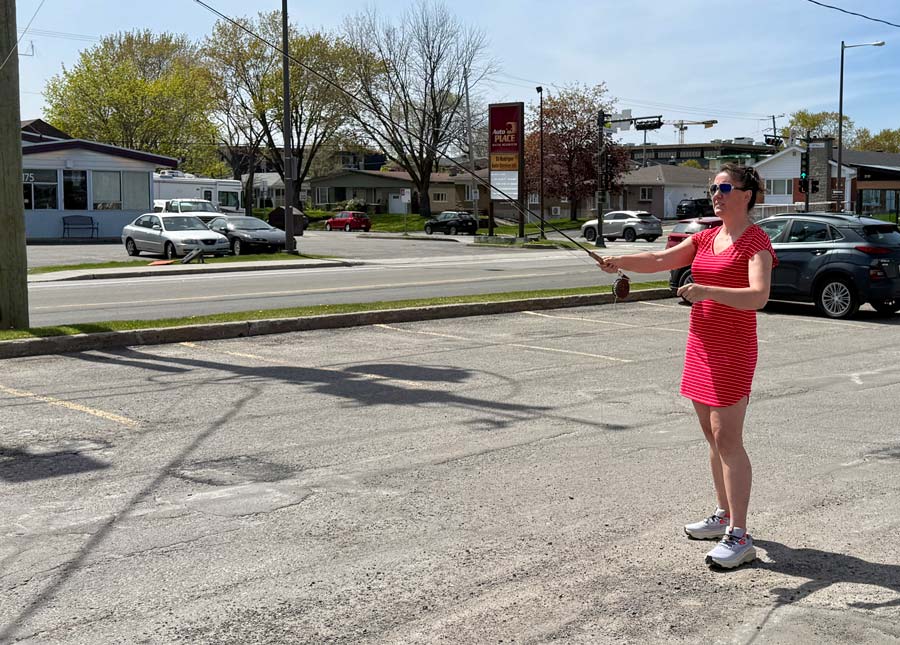
More importantly, the visit quickly turned into an impromptu course on aquatic insects, figure-eight knots, rod testing in the parking lot, and the history of Atlantic salmon fishing in Québec. A few lines stayed with me:
"People who don't make mistakes have no experience."
"With a good fly line, you can cast even with a crappy rod, and it'll still lay out beautifully."
At the end of the day, the best fly shops don't simply sell equipment. You leave with a way of reading the river—and life in general.
Newfoundland and Labrador
Newfoundland and Labrador Program Director Kim Thompson describes the high-water conditions in the province, as well as some important new regulations and upcoming events.
June is right around the bend, and so too is the opening of the 2026 Atlantic Salmon recreational fishery. DFO advises anglers of the season dates are:
- Insular Newfoundland—June 1 to September 7
- Labrador—June 15 to September 15.
For more information on regulations and management measures— retention limits, catch and release, river classifications, closed areas and environmental protocols—visit DFO Anglers' Guide 2026-2027.
This is also a good time, prior to the opening of the season to get a refresher on best practices for catch and release of Atlantic salmon.
For anglers in central Newfoundland, NL Hydro advises about life-extension work on Goodyear’s Dam, located about 4 km upstream from the Grand Falls Generating Station on the Exploits River. This project will be carried out in phases over a three year period. The work includes adding buttressing along the entire overflow spillway to stabilize the dam and installing a new vertical slot fishway. See the public notice for more details.
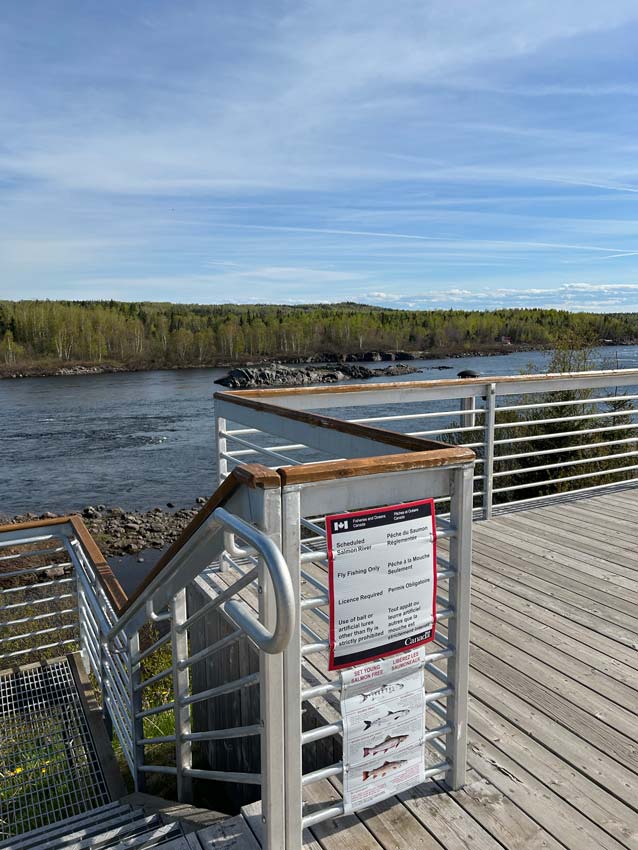
Wild Salmon Watersheds project on the Terra Nova River
Since last Saturday, with water flows receding on the Terra Nova River, the Freshwater Alexander Bays Ecosystem Corporation (FABEC) were finally able to safely deploy the smolt wheel for operation—steering migrating smolt into a holding tank for testing and tagging, so we can better understand their migration.
Wild Salmon Watersheds
Jordan Condon, Science Coordinator for Wild Salmon Watersheds, updates smolt-tagging efforts on three WSW rivers.
Smolt wheels play an important role in our understanding of salmon populations and migrations. Also known as "rotary screw traps," smolt wheels are designed to safely capture migrating salmon smolt as they travel downstream, usually at night. Click here to learn more about smolt wheels.
Recent weather conditions have improved for smolt-wheel operations, and with increasing water temperatures, smolt numbers have also begun to rise. A summary of the total number of smolts tagged to date for the Wild Salmon Watershed (WSW) program smolt wheels is as follows:
- Cheticamp River: 209
- Nepisiguit River: 87
- Terra Nova River: 15
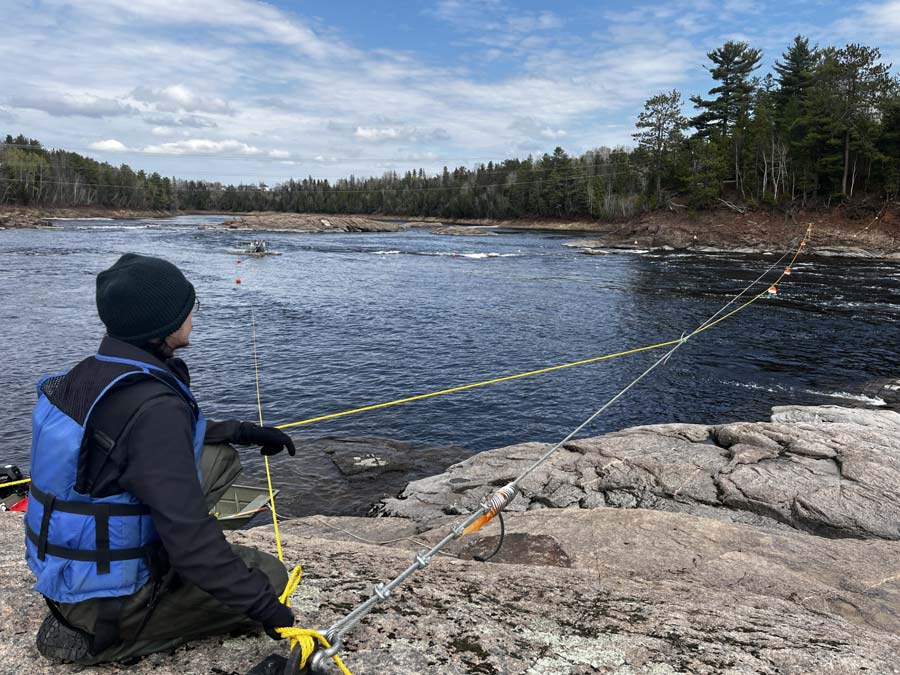
The Terra Nova River had a difficult start to the season due to high water, but as Kim Thompson mentioned above, water levels receded enough for the wheel to resume fishing operations on Saturday, May 23. The Cheticamp and Nepisiguit smolt wheel operations have run relatively smoothly since deployment, with an anticipated busy week ahead as water temperatures continue to rise.
The main purpose of the Wild Salmon Watershed smolt wheels is to conduct mark-recapture studies to estimate the population of outgoing Atlantic salmon smolts. This metric is used as a proxy for freshwater productivity, as the smolt stage represents the final juvenile life stage before ocean migration and provides insight into the level of production the freshwater habitat of a river system is supporting.
Research and Environment
Vice President of Research and Environment Valérie Ouellet describes the end of stocking season on the Narraguagus.
It's a wrap for the fry stocking season on the Narraguagus
Spring on the Narraguagus means cold water, long days, and thousands of Atlantic salmon fry making their first contact with wild habitat. Last week, I joined Maine Department of Marine Resources and U.S. Fish and Wildlife Service on the river for fry stocking, one of the most hands-on pieces of the Gulf of Maine recovery program.
River-specific fry stockings aim to release the fish back into their native river before first feeding. Every fish in the bucket matters, and the hope is that local adaptation can help sustain these populations above extinction thresholds while wild numbers rebuild.
Field days like this are not just about moving fish. They are where science gets updated in real time, where agency partners compare notes, and where the gaps between our monitoring programs become visible. The Narraguagus has long been the most consistently monitored salmon river in Maine, and it’s always a pleasure to look at the river conditions while geeking about science.
Agencies don't align in boardrooms, and these fry won't wait for us to finish our meetings. Some things only happen at the water's edge.
Events
The Toronto Upstream Mixer was a tremendous success and brought a fresh energy to ASF engagement efforts. Hosted at Reid's Distillery, there was a relaxed and welcoming atmosphere. Long-time Board Member Michael Meighen jokingly remarked to the Committee Chair, Rob Cesta, that he knew the event had been successful because he “didn’t recognize anyone in the room,” a reflection of the strong turnout of first-time attendees and the event’s success in expanding ASF’s reach.
Here's a slideshow of photos from the event, taken by ASF's Heather Perry:
Several elements contributed to the evening’s strong reception:
- Vendor tables, alongside the fly-tying booth and ASF information table, created an engaging environment where attendees could explore a variety of conservation, angling, and outdoor topics while also browsing gear and products.
- A betting game—“Race to the Strait”—designed to show real data of smolt from the Miramichi traveling to the Strait of Bell Isle was created by Jason Daniels especially for this event.
- Heather Perry gave a great presentation covering an overview of ASF's research department.
- 3 Scale of Change films were shown, introduced by Fred Campbell
- Live and silent auctions raised funds for ASF's programs!
Overall, the event succeeded in creating a relaxed, informal, and informative experience that appealed to a broad demographic and introduced new audiences to ASF and its work.
Policy
ASF's Executive Director of Regional Programs Deirdre Green sent in this report from a meeting about how best to implement the Wild Atlantic Salmon Strategy.
A Path Forward
Last Wednesday morning, I attended the Wild Atlantic Salmon Strategy Roundtable / La table ronde – Stratégie de conservation du saumon atlantique sauvage at the Bedford Institute of Oceanography alongside Amy Weston of the Nova Scotia Salmon Association and Sana Kavanaugh of the Confederacy of Mainland Mi’kmaq.
The roundtable was convened by Minister Joanne Thompson and Deputy Minister Paul MacKinnon, together with ministerial staff and Regional Directors General from the Gulf and Maritimes regions, with additional Indigenous, academic, and watershed partners participating virtually from across Eastern North America.
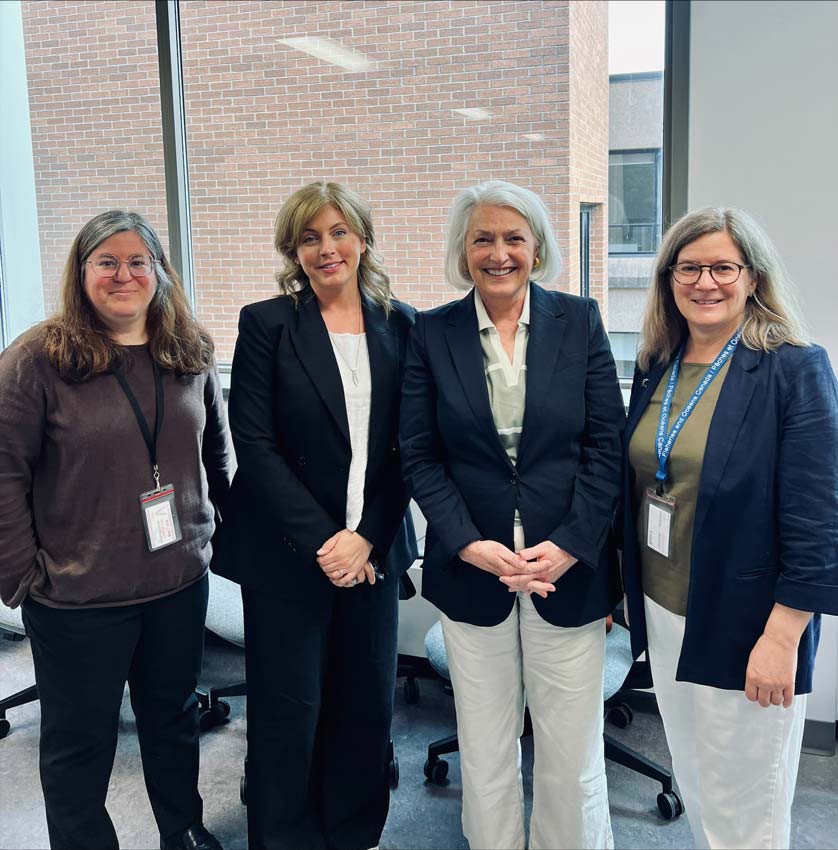
The discussion focused on the implementation of the Wild Atlantic Salmon Strategy and the urgency surrounding Atlantic salmon conservation. Minister Thompson emphasized the importance of hearing directly from organizations and individuals doing the work on the ground from the outset. Both the Minister and Deputy Minister also spoke to the depth of knowledge and experience represented around the table and the importance of drawing on that expertise as the strategy moves forward.
Participants were asked what success under the strategy would look like from their perspective, leading to a substantive discussion around implementation priorities, governance, funding models, accountability, and measurable ecological outcomes. There was also thoughtful discussion around the concept of focal rivers, including questions about how to balance strategic investment with equitable access to support for Indigenous communities, smaller organizations, and watershed groups. At the same time, participants also recognized the challenge of spreading limited resources too broadly, particularly when the shared objective is to improve the health and long-term recovery of wild Atlantic salmon populations.
Overall, the roundtable provided a valuable opportunity for open and constructive dialogue among DFO leadership, Indigenous organizations, watershed groups, NGOs, researchers, and conservation partners. We are appreciative of Minister Thompson, Deputy Minister MacKinnon, Regional Director General Doug Wentzell (Maritimes Region), Regional Director General Celine Gaudet (Gulf Region), and DFO staff for creating the space for these conversations as the Strategy moves into implementation.