



News & Blogs
Restoring the Kennebec: An Interview with ASF President Nathan Wilbur
asf
January 5, 2026
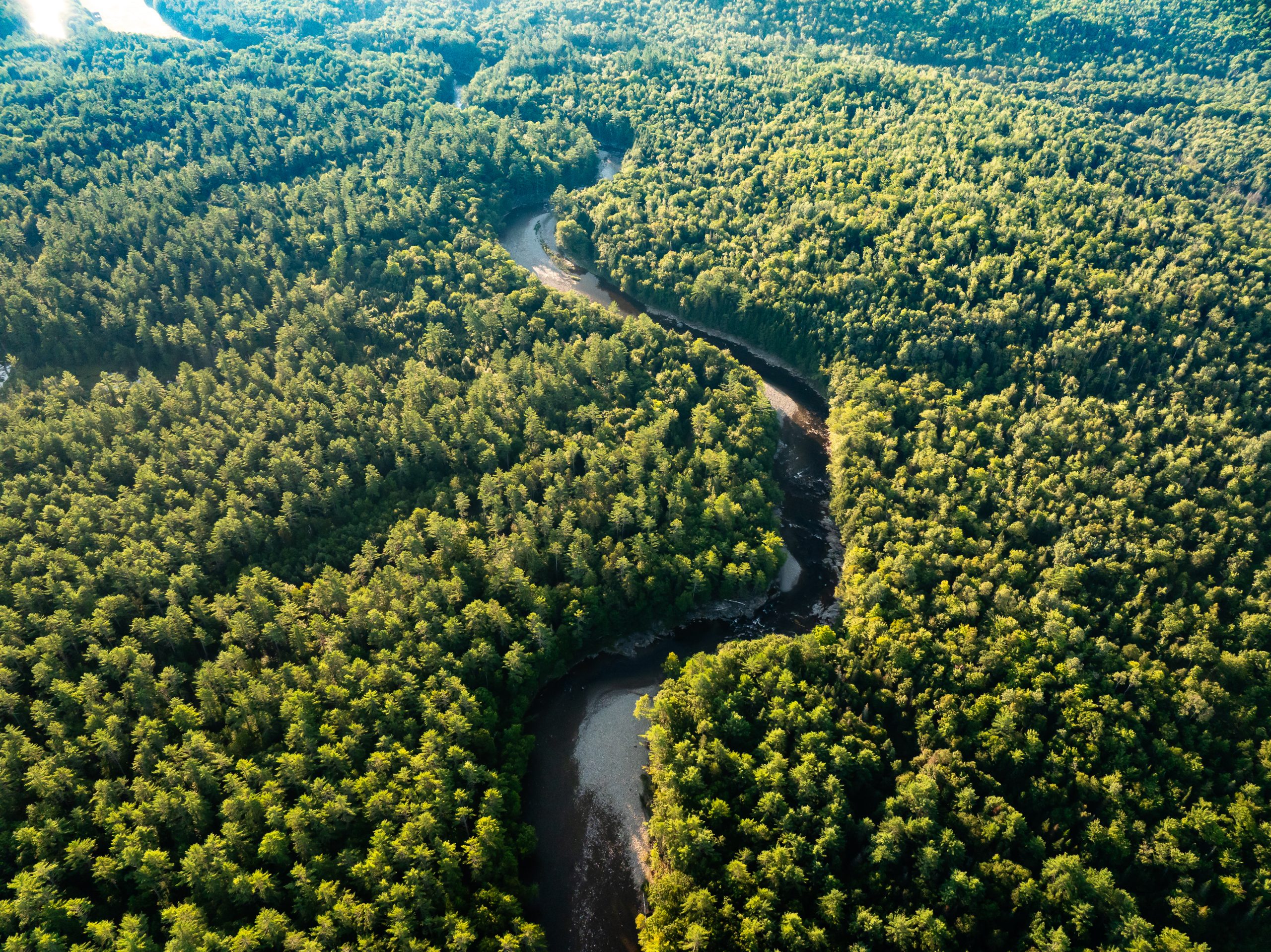
In late September an agreement was signed to purchase four large hydropower dams on Maine’s Kennebec River in order to restore connectivity between this remarkable river and the Gulf of Maine. It is a project of unprecedented scale for Atlantic salmon and is a globally significant river restoration. ASF is the lead partner with The Nature Conservancy on the project, and has had a long, ongoing commitment to restoring the Kennebec River to help get Atlantic salmon off the endangered species list in the United States. To understand this news better, we caught up with ASF’s new President, Nathan Wilbur.
Has ASF ever been involved in a project as big as the Kennebec?
The Penobscot wasn’t quite as big, but it’s comparable. They’re both large-scale river restoration projects where we establish free-flowing conditions to reconnect hundreds of miles of river.
It’s hard to compare other types of work that we do with major projects like these because they’re so engineering-heavy, socially complex, and expensive.
Our Greenland agreements have been big and complex: working internationally as an NGO doing what governments couldn’t, and doing that privately. That’s complicated. Our work to help end the commercial salmon fishery in Canada was big and complex. The smallmouth bass eradication project on the Miramichi was an enormous undertaking. So, we’ve done large, tough projects in the past, but the Kennebec is right there at the top of the list. The sheer cost puts it in a league of its own.
Is it the largest river restoration project in the world?
In terms of the number of river miles opened up and reconnected to salt water, it’s certainly one of the largest river restoration projects in the world that we are aware of. It reconnects over 800 river miles of the Kennebec to the Gulf of Maine.
So, what is the ultimate goal, and what markers or metrics will need to be achieved for this to be considered a success?
The number one goal for us is to reconnect the habitat and restore the river. After that, nature has a way of recovering, re-balancing, and thriving again. We’ve seen examples of that on the Penobscot where river herring have gone from a few thousand to eight million in 10 years. That’s incredible. American shad, sea lamprey, striped bass—they all have a way of recovering when they have access to the habitat. We expect there to be a rapid increase in river herring on the Kennebec once habitat is reconnected. We also expect Atlantic salmon to take longer, as they usually do, and they have on the Penobscot.
A key metric of success beyond the physical aspects of river restoration and biology is community support. This project cannot be successful without the community behind it. That means close collaboration and partnership with riverside communities to ensure the restoration process addresses local needs and concerns, and delivers real benefits. We believe deeply that a restored Kennebec River will support regional economic revitalization – as it has in other river valleys around the world where major dams have been removed.
It’s also worth noting that over the years—more than three decades—ASF has been very active in the Kennebec watershed to keep the salmon population alive. We’ve worked with the state of Maine and other conservation partners to do egg planting and other conservation projects. So, it’s got this nucleus of a returning salmon population on the Sandy River that has actually been increasing over the years and that gives the Kennebec River a real chance for recovery. A key metric of recovery would be to have enough salmon returning to the Kennebec and Penobscot rivers to have U.S. Atlantic salmon removed from the endangered species list.
Along with this, what other reasons do we have to be hopeful about achieving these goals?
This is a big, expensive project. However, it’s very tangible. What it means for Atlantic salmon and other native migratory species has motivated a lot of generous donations. So, the project resonates with conservationists and that gives us good reason to be optimistic that we’ll be able to raise the money to complete it, and open up this important habitat to the Gulf of Maine.
The Kennebec is also climate resilient. Although it is in the southern part of the Atlantic salmon’s North American range, it is equipped for success against climate challenges. The watershed has plenty of cold, clean water and models show that it will remain resilient long into the future—meaning it has the ability to withstand warm weather, droughts, and more intense rainfall events. That gives us reason to be optimistic for success as well.
What are the immediate next steps on the Kennebec?
The focus needs to be on raising the money, working collaboratively with the local paper mill to ensure their operations are not impacted, and effectively establishing the Kennebec River Restoration Trust. That’s the body that will own the dams, operate them, and do the social engagement work necessary to generate community involvement and support for the restoration. It will be comprised of ASF, The Nature Conservancy, as well as several experienced and passionate conservation, business, and community leaders.
To an outsider, the purchase of these dams might seem like the start of the initiative. But that’s not true, is it? What sort of work has ASF been doing?
This all goes back to our long-term commitment on the Sandy River, where we have been working for the last three decades, beginning with the removal of the Edwards Dam and the Fort Halifax Dam. These were tremendous success stories. We’ve also been involved in habitat connectivity work, community outreach and engagement, and supporting the innovative egg planting efforts of the State of Maine’s salmon biologists. The Sandy River is the engine for the Kennebec, in terms of Atlantic salmon.
We’ve also been involved in a variety of legal and advocacy work on these four dams on the Kennebec for many, many years. So, it’s been something that we’ve had our sights on for a long time.
Projects of this size have a lot of unsung heroes. Is there anyone in particular from the ASF community who played a pivotal role leading up to this sale?
Chris Buckley, our past U.S. chair, urged ASF to be a leader on the Kennebec file 10 years ago.
The late Bill Townsend, another long-time ASF U.S. board member, spent decades advocating for dam removal on the Kennebec and was instrumental in the fight against the Edwards Dam back in the 1990s, which paved the way for where we are today.
Eric Roberts, our current U.S. chair, was absolutely instrumental in getting us to this point, both in deal-making and major fundraising. Eric has been the hardest worker on this project behind the scenes for ASF. Our Canadian chair, Brian Porter, was also a leader in solidifying ASF’s ambitious commitment to the project.
Alex Taylor, one of our ASF (U.S.) directors, has provided a great deal of leadership in fundraising. Finally, John Burrows is one of this project’s true heroes. He’s been deeply involved for over a decade on this.
We’ve received significant contributions from the James M. Cox Foundation, which is the largest funder of the project at $30 million. The Richard King Mellon Foundation committed $5 million, and The Conservation Fund with $10 million in financing.
Of course, there have been many hard workers on this project from The Nature Conservancy and other community leaders, and we are deeply appreciative of the collective effort and teamwork.
Why is the Kennebec so important? Why should anyone care about this?
This is tremendously important for Atlantic salmon in the United States. Restoring the Kennebec River, coupled with the Penobscot restoration, is our only avenue to removing Atlantic salmon from the endangered species list. So, that’s meaningful at a national scale in the U.S.
It’s also important—not just from a U.S. perspective but from an Atlantic salmon overall perspective—because it’s a good news story. The recovery of Atlantic salmon on the Kennebec will help keep the U.S. active in international negotiations around Atlantic salmon. For example, the U.S. will have a real stake in keeping the Greenland quota to a reasonable level. In turn, that will help bring Atlantic salmon back to thousands of rivers in Canada, Iceland, and Europe, and the U.S. So, it’s meaningful beyond the U.S. for wild Atlantic salmon throughout their range.