





Rivernotes
Rivernotes April 23, 2026
Phil Monahan
April 22, 2026
Editor's Note
by Phil Monahan, ASF Managing Editor
Welcome to Rivernotes, our weekly roundup of news and information from around the world of Atlantic salmon—Québec, Atlantic Canada, and Maine.
The first thing I want to point out is the row of buttons you see above, right below the title. In the past, you might have had to scroll through the entire post to find the information you were most interested in. Now you can simply click a button and be whisked directly to the section you want to read first.
Of course, we hope you'll read all of Rivernotes each week—and we will continue to shuffle the order of the sections—but now it's easier to find exactly what you're looking for.
May 20th Toronto Event Aimed an New Anglers and Conservationists
Have you always wanted to fish for Atlantic salmon—or learn more about the species—but don’t know where to start? The Upstream Mixer: An Atlantic Salmon Rendezvous, hosted by ASF in partnership with Drift Outfitters and Hooké, is a great opportunity to learn from the experts.
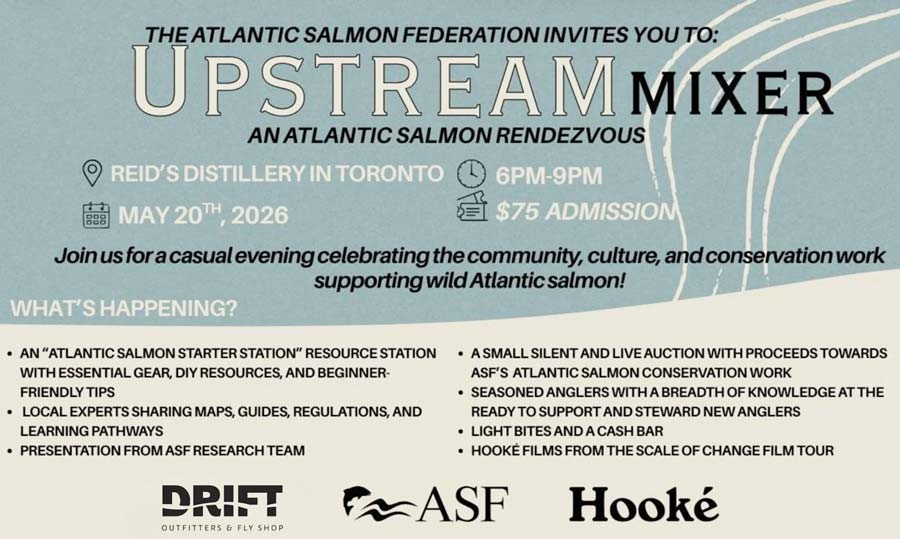
Join us on Wednesday May 20th for a casual evening at Reid’s Distillery in Toronto to welcome a new wave of stewards to the community, culture, and conservation work that supports wild Atlantic salmon. Together with seasoned anglers and conservationists, we invite you to join us in demystifying Atlantic-salmon angling.
The event is a chance to learn about Atlantic-salmon fishing opportunities from regional experts from across Eastern Canada, as well as to learn about the ASF's conservation work. If you've ever been interested in angling on the East coast, this event is for you!
Highlights include:
- An “Atlantic Salmon Starter Station” featuring essential gear, DIY resources, and beginner-friendly tips
- Regional resource tables with local experts sharing maps, guides, regulations, and learning pathways
- Seasoned anglers with a breadth of knowledge at the ready to support and steward new anglers
- An ASF research presentation from research scientists Jason Daniels and Heather Perry
- Hooké films presents the Scale of Change Film Tour
- A small silent and live auction with proceeds towards Atlantic-salmon conservation work
- Light bites and a cash bar
Safe Fish Handling is Vital to Salmon Survival
Now that the fishing season is underway on some rivers, it's important that every angler is familiar with best practices for handling fish, so every caught salmon can swim off healthy. ASF believes that the principles promoted by Keep Fish Wet are the best way anglers can minimize their impact on the population.
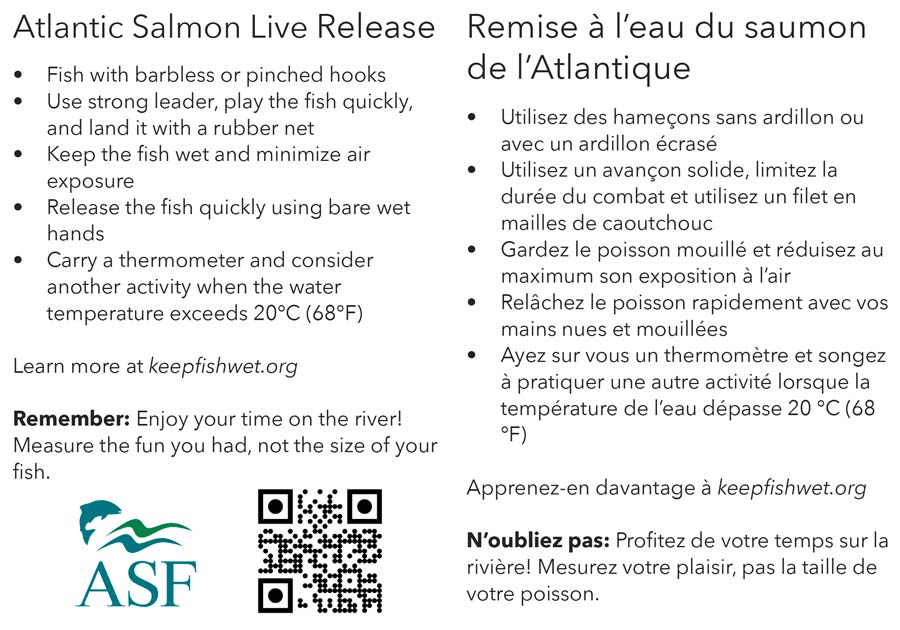
Rest assured that each of us can have an impact on the future of these salmon:
Science shows that even small changes in how an angler catches, handles, and releases a fish can have positive outcomes once that fish swims away. Not only does using best practices increase survival rates of fish, but it also helps fish return to their normal behavior as quickly as possible after release. Using best practices for catch-and-release is a quick and effective way to put conservation in to practice.
—Keep Fish Wet
New Brunswick
New Brunswick Program Director David Roth discusses the slow start to the fishing season, but notes that things have picked up in the last few days. Smolt-collection activities are also underway.
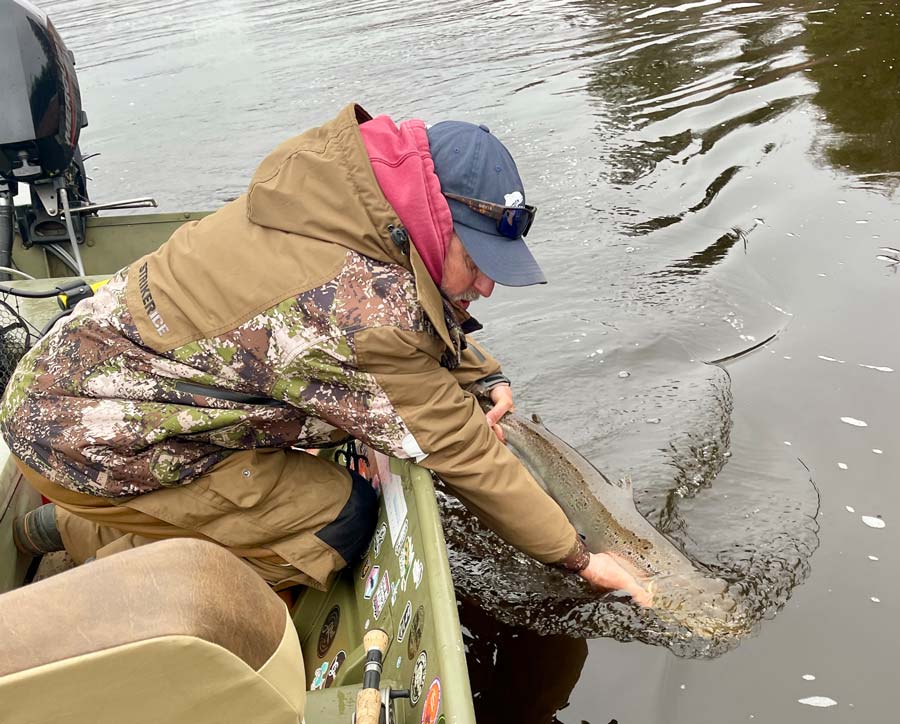
With the first week of the angling season now behind us, early reports from the river are beginning to take shape. While trout anglers in the southern part of the province have enjoyed encouraging success, kelt fishing on the Miramichi has been slower to get underway.
River conditions have played a key role. Tyler Coughlan of Country Haven summed it up well, echoing what many guides have been observing:
“It has been a tough week with challenging conditions. There was a lot of grass moving downstream, and high water levels led to increased turbidity. When flows briefly eased, fishing improved right away, and after last year’s dry conditions, no one is complaining about the rain.”
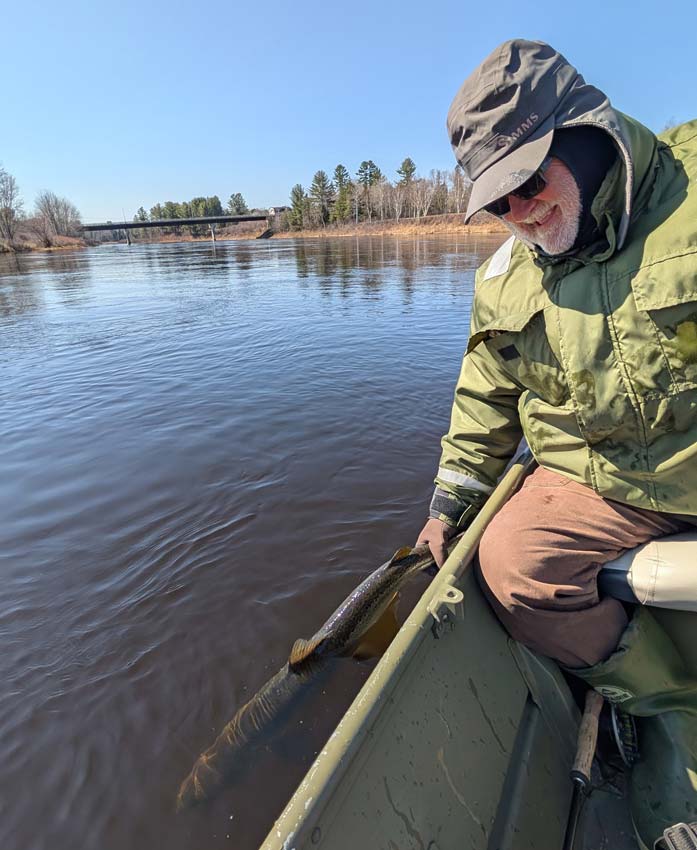
Despite the slow start, there have been some bright spots. On the Southwest Miramichi, guide Ian Cavanagh helped his guest, Craig Williams of New Hampshire, land his first fish of the season. Yesterday, angler Hank Leeming of Rhode Island caught and released a male salmon on the MSW Miramichi near Blackville. His guide was Axel Lerche, who said, "Fishing conditions improve with clean water and lower water levels. It seems that more fish from upriver are moving down."
With ice now cleared from many rivers across the province, field activities are also ramping up. Smolt monitoring efforts are already underway on the Wolastoq watershed, with the first early captures reported from tributaries such as the Nashwaak River.
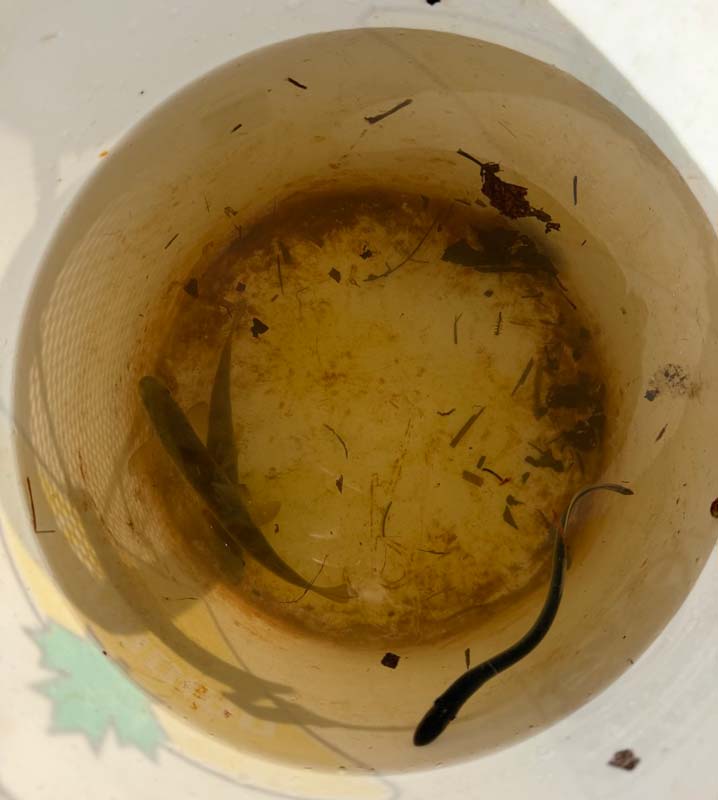
ASF’s field teams are likewise gearing up for the season ahead. Preparations are in full swing for the deployment of smolt wheels on both the Miramichi and the Nepisiguit rivers, an important step in advancing our spring monitoring and conservation efforts.
Nova Scotia
Nova Scotia Program Director Matt Russell shares important news about smolt wheels on the St. Mary's River and explains why they are so important.
With temperatures rising, Atlantic salmon smolt will soon begin their migration to sea—one of the most critical stages in their life cycle. While responsible angling matters year-round, it’s especially important now, as smolt by-catch is common. Taking extra care can help more of these young fish safely reach the ocean.
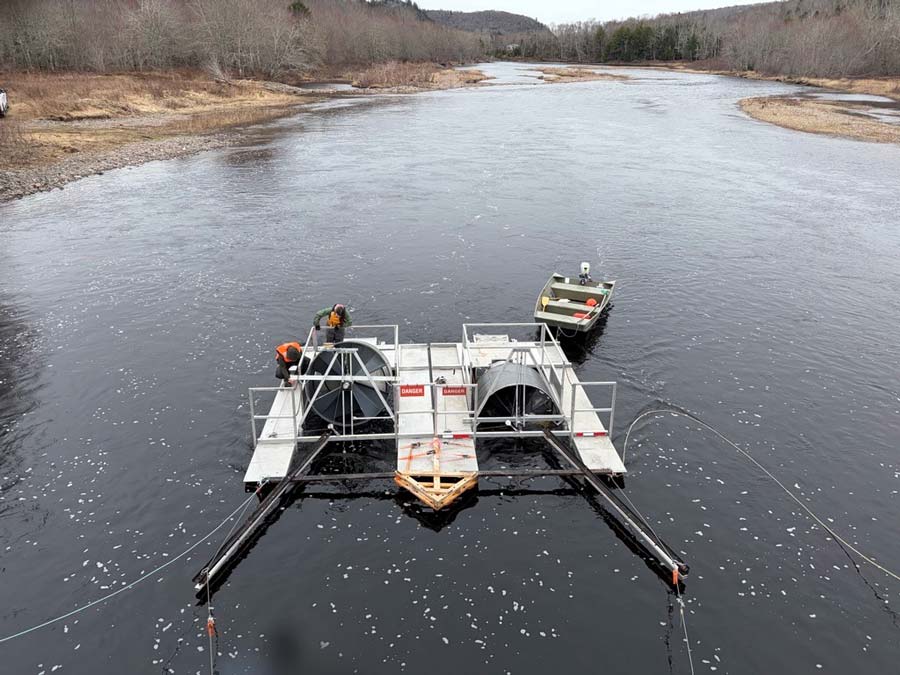
This spring, ASF, alongside DFO, NSSA, and the St. Mary’s River Association, installed three smolt wheels on the St. Mary’s River—one on the East River and two on the West. These wheels began operating April 20 and will run for about six weeks, covering the migration.
Smolt wheels safely capture fish for monitoring. Each healthy smolt is fitted with a small PIT tag similar to a pet microchip. These tags require no battery and last the lifetime of the fish. (See the video below for how the process works.)
In the coming year, a detection array will be installed across the riverbed. When tagged salmon return as adults, the arrays will record their unique tags as they pass over top. This allows our team to track survival without needing to recapture fish.
This work helps answer key questions about how many smolt leave the river, how many survive at sea, and how many return to spawn, providing critical insight into population health.
Québec
Caroline Coté, directrice du programme pour le Québec, a présenté les comptes rendus de deux récentes rencontres organisées par des associations de protection de l’environnement, au cours desquelles des défenseurs de longue date des rivières ont été mis à l'honneur.
FQSA—Mention Salar 2025, documentaire et panel
Le 16 avril, à Québec, une salle comble s’est tue quelques secondes. À l’écran, un saumon remontait la rivière — et pour une fois, la conversation ne portait pas sur la pêche, mais sur l’écoute.
Ce soir-là, la Fédération québécoise pour le saumon atlantique (FQSA) tenait son assemblée générale annuelle, dans une atmosphère à la fois symbolique et profondément rassembleuse.
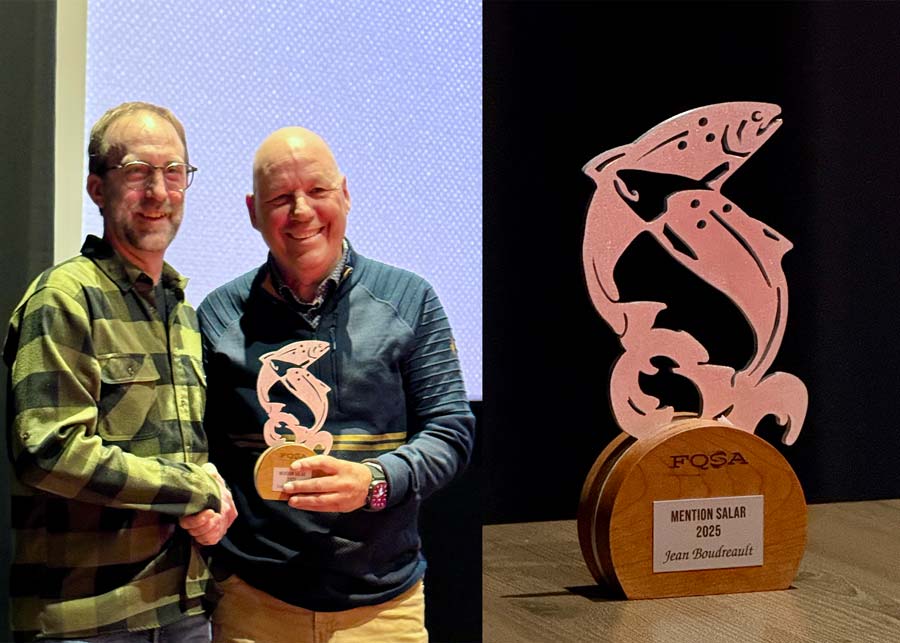
La soirée s’est ouverte avec la remise de la Mention Salar 2025 à Jean Boudreau. Président de la FQSA de 2013 à 2019, il a joué un rôle clé dans la transformation de l’organisation à un moment charnière : ouverture à de nouveaux publics grâce à un partenariat avec Hooké, consolidation de la stabilité financière d’un réseau fragilisé, et rapprochement historique entre les acteurs du saumon au Québec. Cette démarche a notamment mené à la fusion des fédérations et à l’émergence d’une voix plus cohérente pour la conservation du saumon à l’échelle provinciale.
La projection du documentaire Et si on écoutait le saumon a ensuite prolongé cette réflexion. Le film propose un regard sensible sur les rivières, les communautés et les savoirs qui entourent le saumon atlantique, invitant à ralentir et à réfléchir à ce que cette espèce révèle de l’état de nos écosystèmes.
Un panel réunissant Myriam Bergeron (directrice générale de la FQSA), Dominique Robert (ISMER-UQAR) et moi-même a permis de poursuivre les échanges avec le public. Les discussions ont porté sur les grandes inconnues liées à la phase marine, sur les transformations en cours dans les systèmes fluviaux, ainsi que sur le rôle que peuvent jouer des initiatives comme ce documentaire pour élargir la conversation au-delà du cercle traditionnel des pêcheurs.
Les prochaines projections seront annoncées par la FQSA :
https://www.saumonquebec.com/evenements/documentaire
Jacques-Cartier—rendre hommage au temps long
Quelques jours plus tôt, le 12 avril, la Corporation du bassin de la Jacques-Cartier soulignait la contribution exceptionnelle de Gilles Shooner, l’un de ses membres fondateurs.
Depuis 1979, il est au cœur des efforts de restauration du saumon atlantique dans la rivière Jacques-Cartier, contribuant à la réintroduction de l’espèce, au développement d’outils éducatifs et à la mise en place d’infrastructures de franchissement.
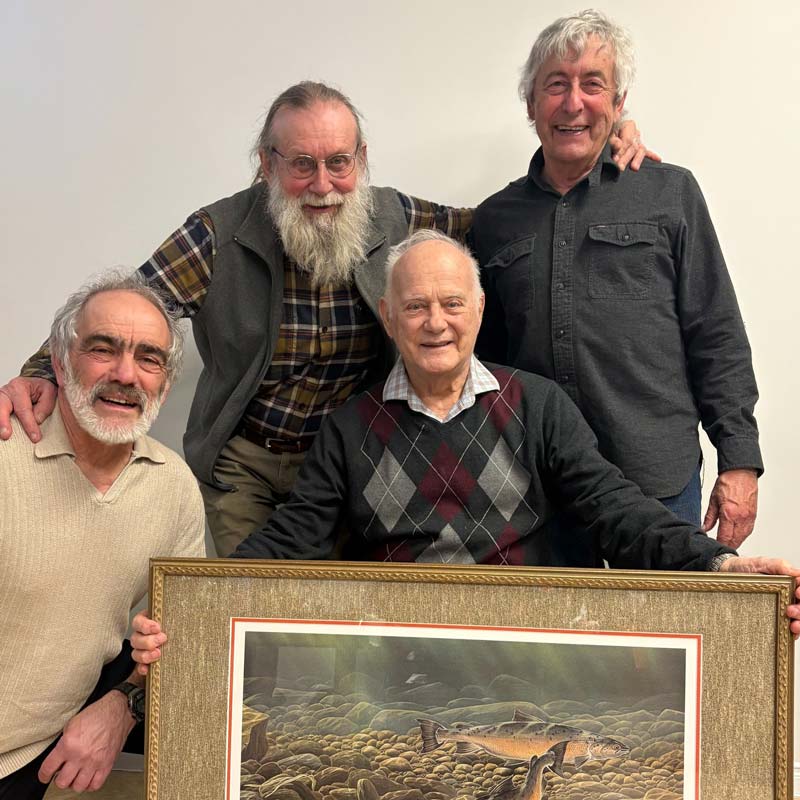
Son engagement, sur près de cinq décennies, a laissé une empreinte durable sur le bassin versant et sur les générations de gestionnaires qui ont poursuivi ce travail.
Cet hommage rappelle une réalité souvent sous-estimée : les rivières qui fonctionnent bien aujourd’hui sont le résultat de décennies d’efforts patients, souvent discrets, mais profondément structurants.
Québec (English)
Québec Program Director Caroline Coté shared wrap-ups of two recent conservation-organization gatherings, in which long-time river heroes were honored.
FQSA — 2025 Salar Award, documentary, and panel discussion
On April 16 in Quebec City, a full room fell silent for a few seconds. On the screen, a salmon was making its way upriver—and for once, the conversation was not about fishing, but about listening.
That evening, the Fédération québécoise pour le saumon atlantique (FQSA) held its annual general meeting, marked by a gathering that was both symbolic and deeply unifying.
The evening opened with the presentation of the 2025 Salar Award to Jean Boudreau. President of the FQSA from 2013 to 2019, he played a key role in transforming the organization at a pivotal moment: opening it to new audiences through a partnership with Hooké, strengthening the financial stability of a fragile network, and fostering a historic rapprochement among salmon stakeholders in Québec. This effort ultimately led to the merger of federations and to a more coherent voice for salmon conservation at the provincial level.
The screening of What If We Listened to the Salmon followed. The film offers a thoughtful and sensitive look at the rivers, communities, and knowledge systems that surround Atlantic salmon, inviting viewers to slow down and reflect on what the species reveals about the state of our ecosystems.
A panel discussion featuring Myriam Bergeron (Executive Director of the FQSA), Dominique Robert (ISMER-UQAR), and me extended the conversation with the audience. Discussions touched on major unknowns related to the marine phase, ongoing changes in river systems, and the role that initiatives like this documentary can play in broadening the conversation beyond the traditional circle of anglers.
Click here for more information and a calendar of upcoming screenings
Jacques-Cartier—honouring long-term stewardship
A few days earlier, on April 12, the Corporation du bassin de la Jacques-Cartier recognized the exceptional contribution of Gilles Shooner, one of its founding members.
Since 1979, he has been at the heart of efforts to restore Atlantic salmon in the Jacques-Cartier River, contributing to reintroduction work, the development of educational tools, and the implementation of fish passage infrastructure.
His nearly five decades of commitment have left a lasting mark on the watershed and on the generations of river managers who followed.
This recognition is a reminder of a reality that is often overlooked: the rivers that function well today are the result of decades of patient, often quiet, but deeply important work.
Newfoundland and Labrador
Newfoundland and Labrador Program Director Kim Thompson shines a light on some young scientists, gives updates on a couple recent gatherings, and highlights some upcoming events.
Spring is in the air, so anglers, conservationists and local communities are gathering, connecting, and collaborating while patiently waiting for the opening of the recreational angling season. Some of the highlights for this week include sparking conversations, raising awareness, and inspiring collective action for the future of wild Atlantic salmon and the rivers they depend on.
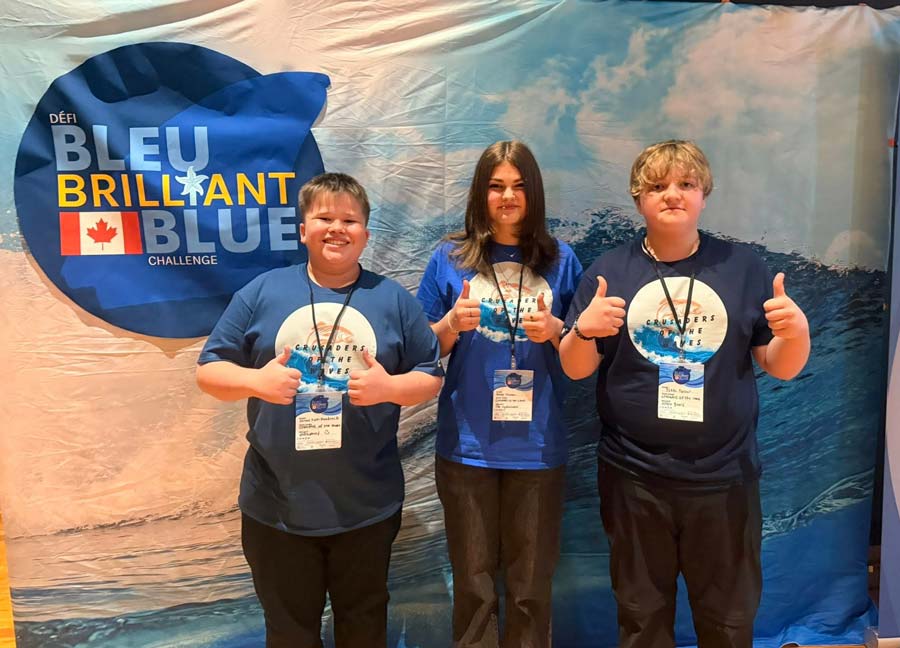
Students from Holy Cross School in Eastport Make Provincial First at Global Ocean Innovation Challenge
Congratulations to Alexis Tavenor, Isaac Turner, and Isaiah Tulk‑Handcock, members of the Crusaders of the Waves team from Holy Cross School in Eastport, who became the first group from Newfoundland and Labrador to attend the Brilliant Blue Challenge.
Endorsed by the UN Ocean Decade, the Brilliant Blue Challenge is a global annual ocean innovation competition that highlights solutions to some of the most pressing challenges in the blue economy—including marine renewable energy, marine autonomous systems, and marine life conservation.
The team’s project, The HydroGuard, presented an innovative, multi‑solution approach to addressing key environmental issues currently impacting Atlantic salmon. Their work reflects a strong commitment to sustainability, scientific creativity, and community-driven stewardship.
Thank you to the Crusaders of the Waves team, Holy Cross School, FABEC, and the wider community for your inspiration, ingenuity, and passion for the future of wild Atlantic salmon.
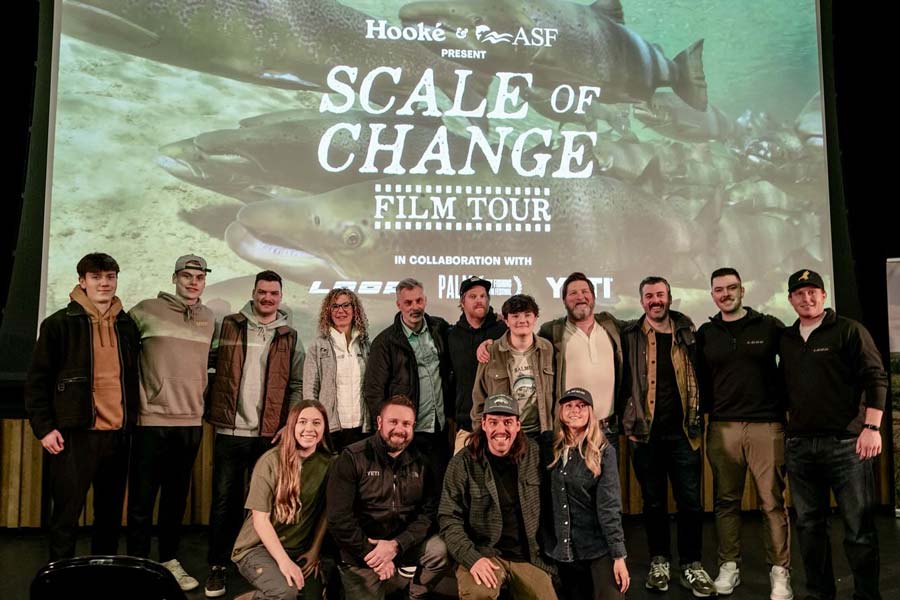
Scale of Change Film Tour Returns to St. John’s
For the second year, the Scale of Change film tour landed in St. John’s—this time at the Majestic Theatre—to a packed and enthusiastic audience. The evening was hosted by Hooké founder Fred Campbell who showcased a variety of fly-fishing films, primarily from eastern Canada.
Special guests Scott and Kate Sherin from Nova Scotia were in attendance, offering a personal introduction to their film, In Kind. The highlight of the evening was the premier of Bloodline, featuring Chef Jeremy Charles and his son Hank, sharing their father-son bond and growing love of fly fishing. Their story was beautifully captured by cinematographer Cecil Johnson against the breathtaking backdrop of wild Labrador rivers.
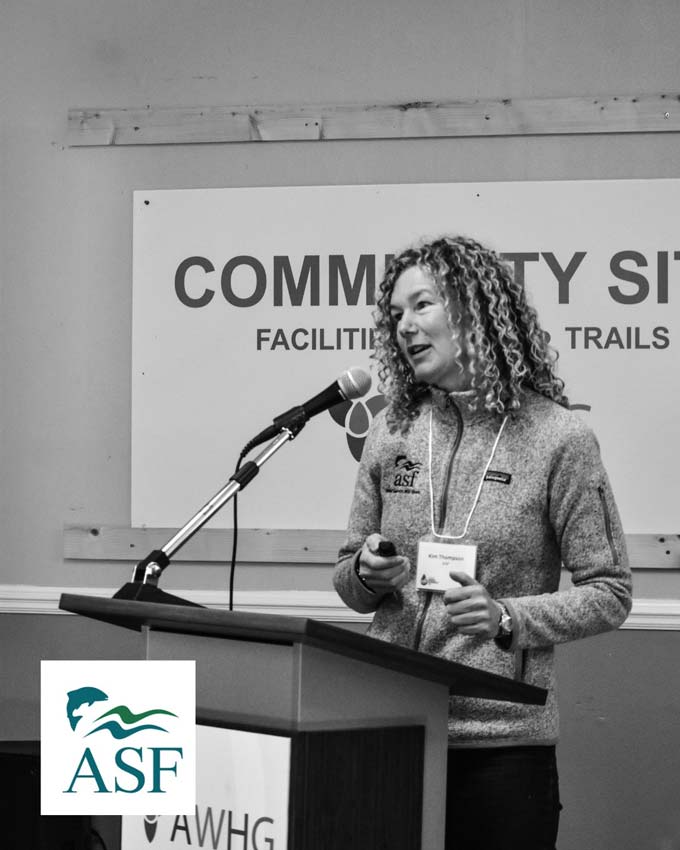
Forging Shared Paths
Congratulations to Nature NL—a non-profit organization promoting the enjoyment and conservation of wildlife and natural resources in Newfoundland and Labrador—on hosting a highly successful “Forging Shared Paths” ENGO Summit this past week. The event supported a shared commitment to building capacity and identifying innovative solutions for the environment and our communities. A special thank you to the organizers for the invitation to participate, connect, share knowledge, and explore new opportunities to collaborate with those dedicated to conservation and community well-being.
Upcoming Newfoundland & Labrador Events
April 30—International Fly Fishing Film Festival (IF4), Bruneau Centre for Research and Innovation, St. John’s.
May 2 —Salmonid Association of Eastern Newfoundland (SAEN) Spring Dinner and Auction, Knights of Columbus, St. John’s. Tickets can be obtained through any SAEN board member, through the SAEN office (info@saen.org or 709-722-9300), or in person at 50 Pippy Place. The SAEN office operates on Monday, Wednesday, and Friday mornings.
May 8-10—Downhome Expo, Glacier Arena in Mount Pearl.
Maine
Jason Valliere, a marine scientist with the Maine Department of Marine Resources, sent in the first numbers of the year from the Penobscot.
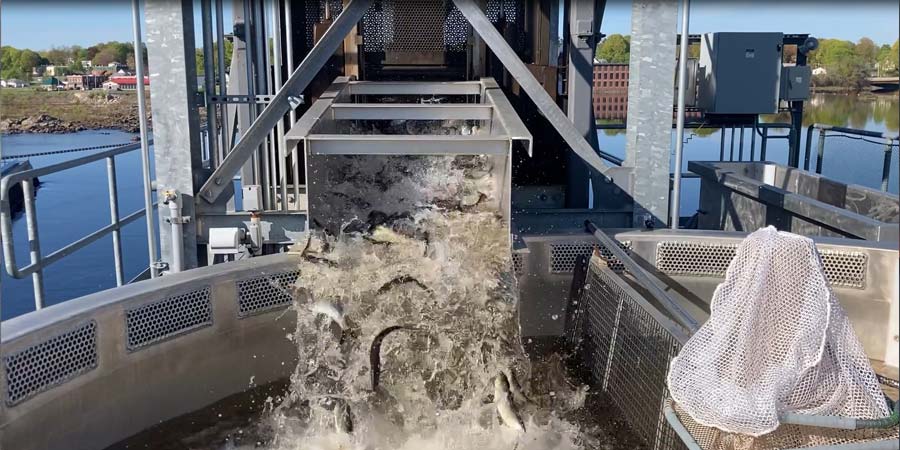
The Milford and Orono fish lifts started operation for the season last Wednesday, April 15. The water is cold and high, as it usually is this time of year.
So far only 2 river herring have passed through the Milford fish lift, which is actually a good start. 2021 was the only other year we have caught fish this early.
With cooler weather forecast for the next week and high water, things will likely progress slowly over the next week.
We also heard from ASF Habitat Restoration Project Manager Cat Morse about progress in dam removal on the Narraguagus River.
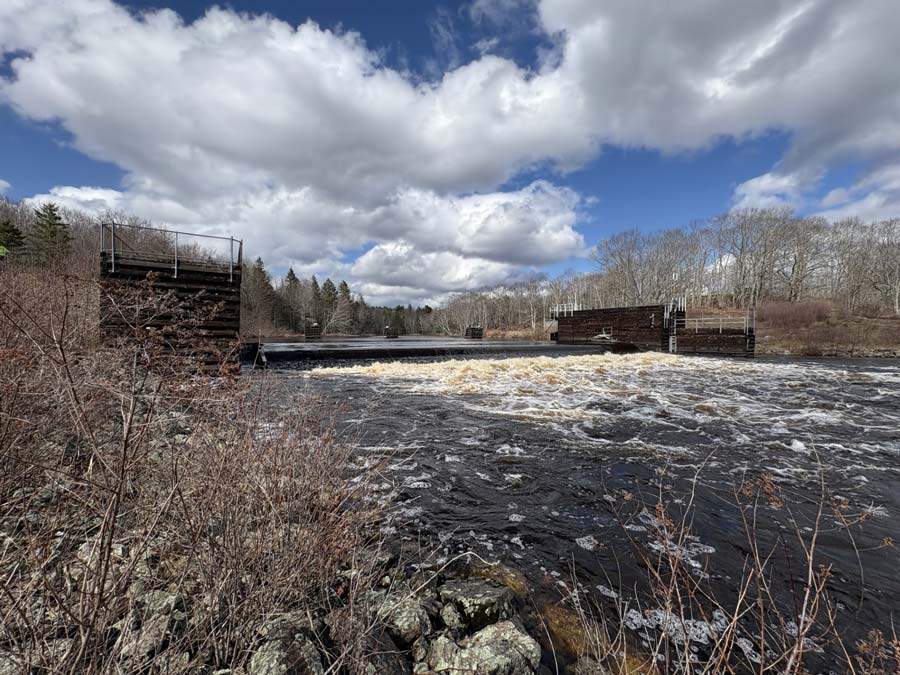
ASF was on site at the Cherryfield Dam on the mainstem Narraguagus River for a pre-construction meeting on Monday, April 20. This summer, the Cherryfield Dam will be replaced with a nature-like fishway, allowing salmon, alewives, shad, and other sea-run fish to access the entirety of the Narraguagus watershed.
Research and Environment
Ellen Mansfield, of ASF's Research and Environment team shared stories of teams preparing for a season of collecting and analyzing data from rivers around the region.
On the Job Training and Research
Good science doesn't always require a big budget; sometimes it requires a soldering iron and a willingness to learn.
Biologist Graham Chafe has been building low-cost, remote water quality stations designed to monitor salmon habitat health and generate the kind of long-term data series we need to track real change in our rivers. Graham has thrown himself into the deep end by picking up new technical skills along the way to bring this project to life from scratch.
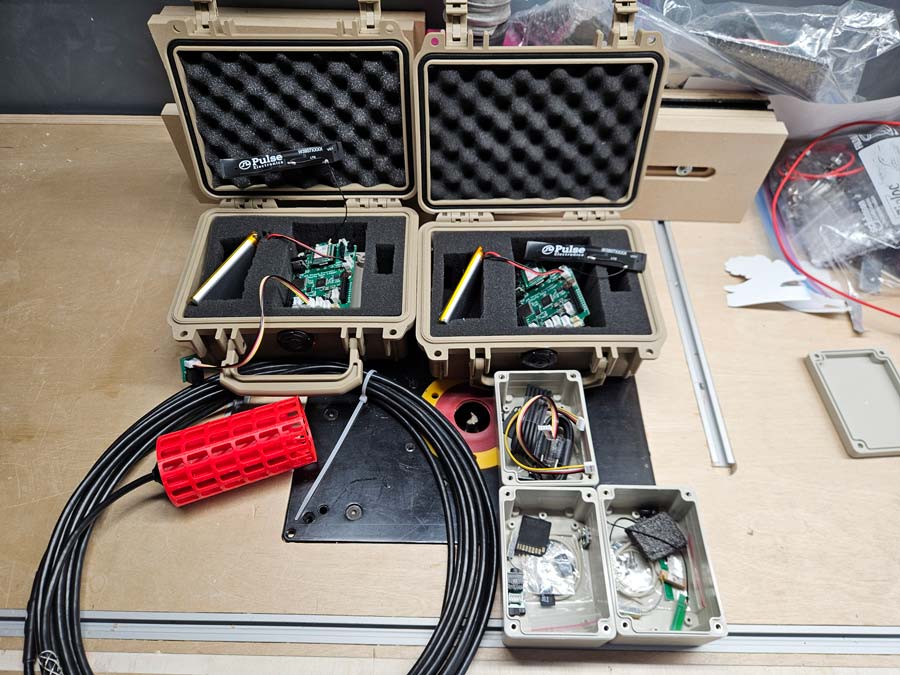
Each portable unit measures dissolved oxygen, pH, temperature, depth, and conductivity. A suite of sensors is controlled by a small microcontroller tucked inside a waterproof enclosure, logging data to an SD card for field collection. Where cellular service exists, a compact LTE-M module transmits readings to an online platform for near real-time viewing and download so no technician is required on-site . . . or not too often.
The brains of the operation is a circuit board designed by EnviroDIY, built specifically for environmental sensing applications. From there, it's up to the builder, and that's where Graham's new skill set comes in. Components are widely available, community support is strong, and a growing network of researchers and organizations worldwide are using these Internet of Things (IoT) devices to close the gap between remote rivers and real-time data.
The goal: more rivers, more data, less guesswork about where salmon habitat is holding and where it's starting to slip.
The rivers won't monitor themselves, but Graham is working on it.
Important Work Happening in the Shadows
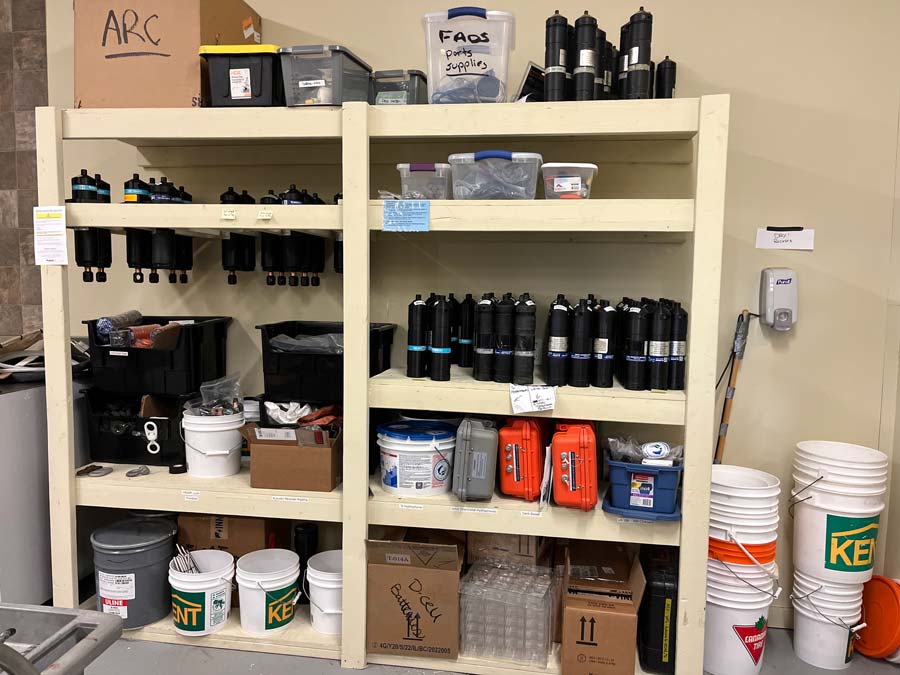
Technician Kate Gingles is getting equipment ready for the fast-approaching field season. Boats are getting their seasonal check ups, smolt wheels are being packed for transport, and acoustic receivers are being primed and rigged for deployment. Both the Research and Wild Salmon Watershed (WSW) teams are closely monitoring the weather conditions as they eagerly await getting back into the rivers for another season of smolt tagging and tracking throughout Atlantic Canada and Quebec.
Smolt-Run Madness
The race to collect and tag smolt is officially underway, and ASF's research team is in full sprint.
As PIT tagging programs start again this spring across the Northwest Miramichi, St. Mary's, Chéticamp, Terra Nova, and Nepisiguit rivers, research biologists Heather Perry and Kate have been busy preparing 7,000 labelled vials, each one destined for a fin clip from a PIT-tagged smolt. Those small tissue samples pack a scientific punch: they'll be used to characterize the genetic profiles and population structure of wild Atlantic salmon across these rivers, helping us build a clearer picture of riverine productivity and where marine mortality is taking its toll.
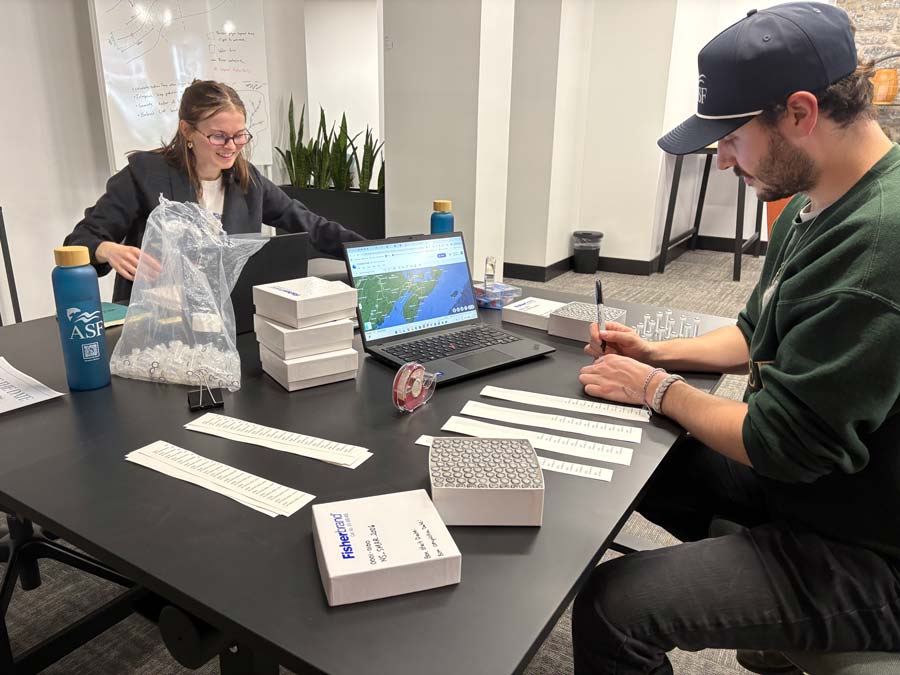
Last week, Heather travelled to Halifax to hand-deliver 1,000 vials to Nova Scotia Program Director Matt Russell, who is teaming up with local groups to kick off PIT tagging on the St. Mary's River starting this week. (See above.)
The coordination behind the scenes among ASF's research and regional teams turns a smolt run into a data set. And the smolt, for their part, are not waiting.
Stay tuned as the season unfolds: 7,000 vials don't fill themselves.
Development
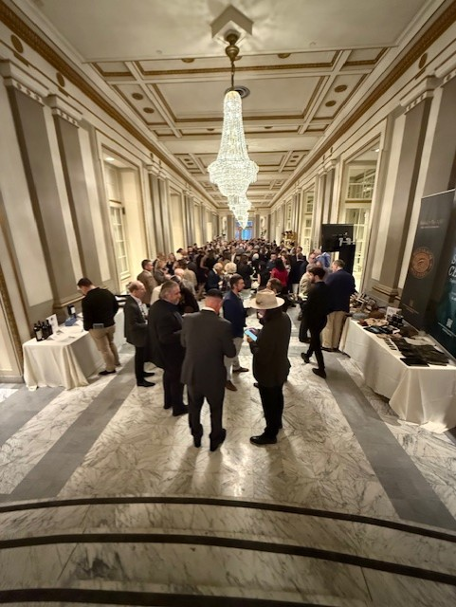
Upcoming ASF Events
May 6: 35th Annual Halifax Dinner. Co-hosted with the Nova Scotia Salmon Association, Annual Halifax Dinner will honour René Aucoin, president of the Chéticamp River Association, for his many valuable contributions to Atlantic salmon conservation throughout Nova Scotia and the Maritimes.
May 20: Toronto Upstream Mixer, An Atlantic Salmon Rendezvous. Join us for a casual evening to welcome a new wave of stewards to the community, culture, and conservation work that supports wild Atlantic salmon. Together with seasoned Atlantic salmon Anglers and Conservationists, we invite you to join us in demystifying Atlantic salmon angling.
Beantown Beer Bash
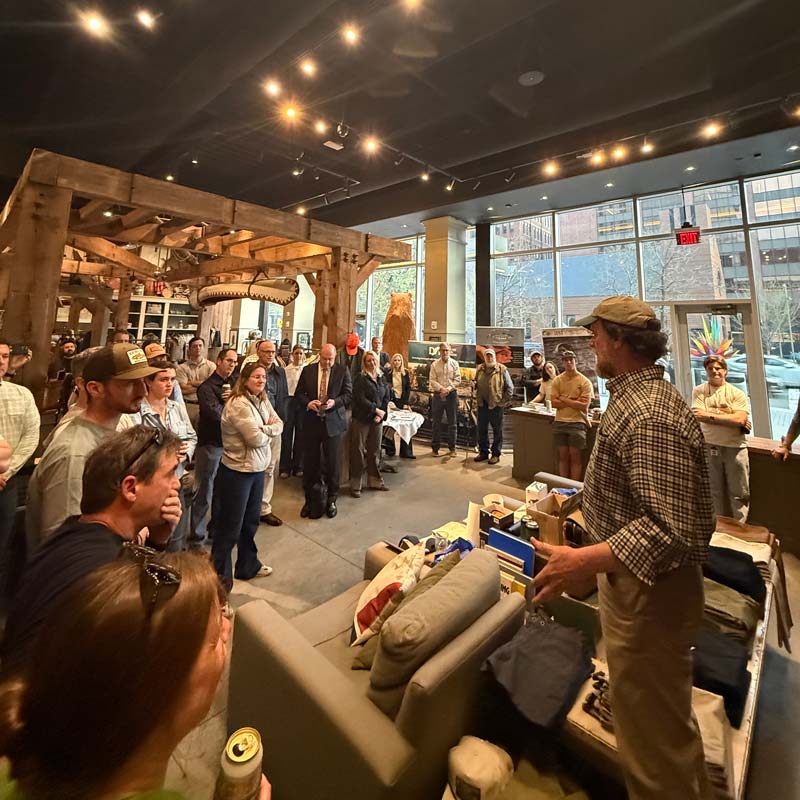
U.S. Director Ben Carmichael offers a recap of the “Sippin’ Suds” event in Boston on April 14.
We had a great event once again at the Boston Filson store to celebrate the excellent work of Atlantic Salmon Federation and Downeast Salmon Federation to conserve and restore our wild Atlantic salmon.
We saw great energy and attendance from New England's passionate salmon anglers and conservationists. Always great to see some new faces looking to learn more about Salmo salar. But it wasn’t all entertainment: funds were raised for ASF and Downeast Salmon Federation for their work on Maine's Atlantic salmon
Thanks goes to:
Joe Gugino of Fish Boston, who has been there from the beginning and continues to donate his time to help organize and donate items for the raffle.
Oxbow Beer, proud sponsors of the event.
Loop tackle and Jim Coates for being a new donor and providing generous support.
Filson Boston for hosting, as always.
Jonas Clark & Spinoza Rods - He's a great friend to salmon and has been helpful from the beginning!
And, of course, to DSF and ASF for their inspiring, tireless work.
Tomorrow's Protection Begins Today
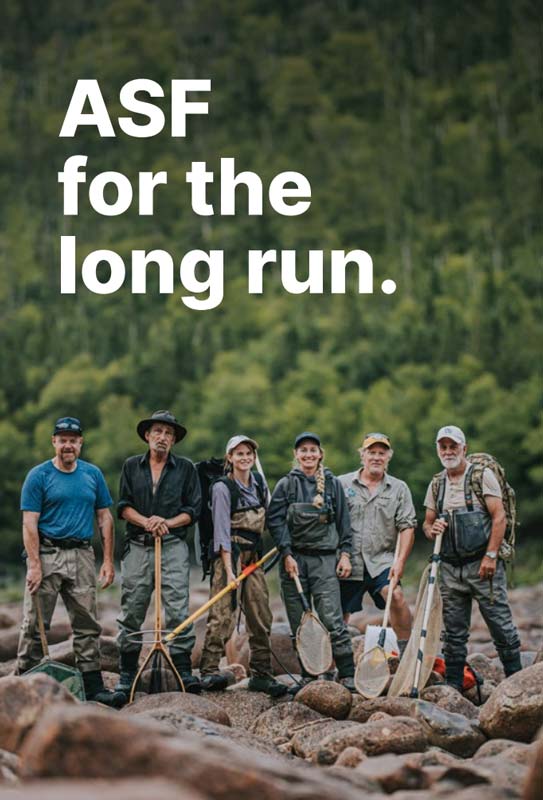
Many of us feel a compelling need to leave a lasting impact on our friends and family, as well as the world in which we live.
At ASF, we focus on remarkable fish in delicate ecosystems that demand the coldest and cleanest water. Legacy gifts help make a difference. There are easy ways to make an impactful gift that not only helps our conservation and research efforts, but also helps you, your estate, and your heirs.
To learn more about how you can help, please visit our Planned Giving Website.
We will be pleased to assist you and your advisors in planning a legacy gift that both serves your financial needs and contributes to the health of wild salmon.
And if you're 65 or older, ASF has secured a 20% match on any endowment gift or legacy gift made to ASF in 2026. This means that a $100,000 planned gift commitment for tomorrow would result in a $20,000 gift today from our anonymous matching foundation.
For more information, please contact:
Bill Bullock, Vice President, Development
Vice-présidente, développement ÉU
(802) 375-3320 | bbullock@asfmaine.org