





Rivernotes
Rivernotes June 4, 2026
Phil Monahan
June 4, 2026
Editor's Note
by Phil Monahan, ASF Managing Editor
Welcome to Rivernotes, our weekly roundup of news and information from around the world of Atlantic salmon—Québec, Atlantic Canada, and Maine.
Reminders
- Use the buttons above to jump to any section.
- If you have a great story or photo you'd like to share with Rivernotes readers, just email it to rivernotes@asf.ca.
Fishing Reports
Salmon season is off to a slow start in some places, due to cool weather and water. Todd Cochrane from Sexton & Sexton in Cascapedia-Saint-Jules, Québec, told me that although they're seeing fish moving, few anglers have been able to elicit strikes. Byron Coughlan at Country Haven Lodge and Cottages in Gray Rapids, New Brunswick, and Alex Breckenridge at The Tying Scotsman in Margaree Forks, Nova Scotia, told a very similar story.
Reader Michael Baytoff weighed in from the North East Margaree in Nova Scotia:
"The early season looks good, with lots of recent rain and good water flows. So far, I have not seen any fish holding in the upper river pools, nor have I hooked into any salmon. Weather has been on the cool side with morning temps in the low 30s. Excellent weather, but we just need the fish to come in."
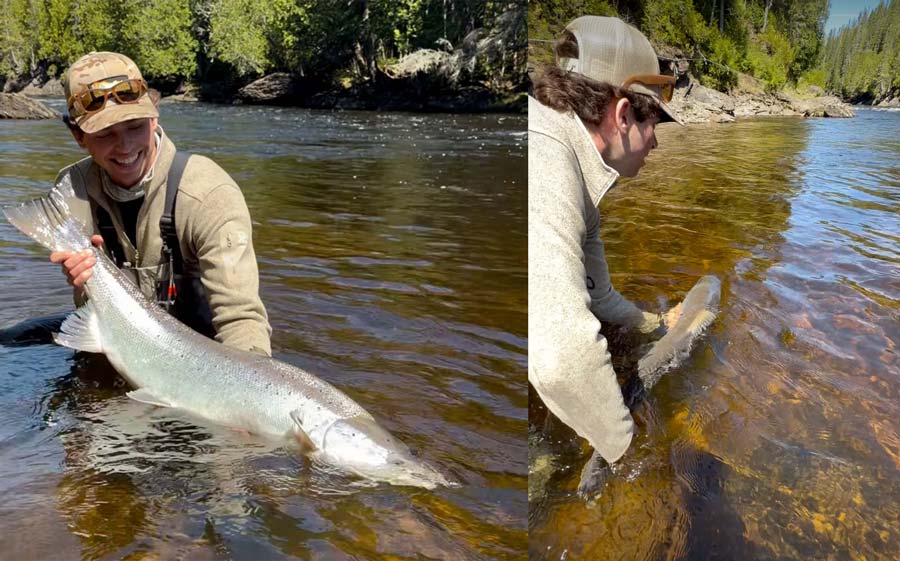
Photos: @Woodsmanshipclub
There certainly are bright spots, however. Benjamin St-Pierre—one of the three anglers behind the Woodsmanshipclub Instagram account—told me that he caught the gorgeous salmon above on an Orange Picasse while fishing the Causapscal River on Tuesday. Yesterday, he and his pals landed three salmon on dry flies before noon!
Benoît Bond of Saumon Gaspé reports that salmon have been caught and released on the York, Dartmouth and Saint-Jean rivers, as well.
A President's Call to Action
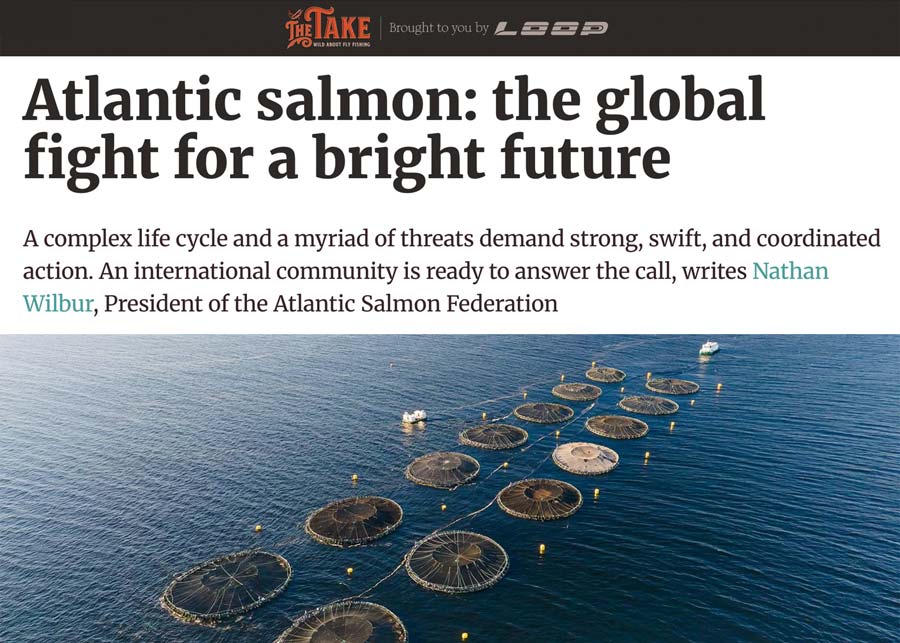
Writing in the new online publication The Take—published by Loop Tackle—ASF President Nathan Wilbur makes a strong case that this is a pivotal moment for those committed to protecting wild Atlantic salmon, on both sides of the Atlantic:
"[T]he salmon community is more aligned than ever. We’re aligned on the need to match the pace and scale of our work to the urgency of issues facing salmon. We’re aligned on the need to better understand salmon mortality at sea, to invest in science, to push our governments to stop the expansion of open-net pen salmon farming, and to improve climate resilience across salmon country by following through on the international commitment to protect 30 per cent of land and water by 2030."
Celebrating Salmon
Monday was Wild Salmon Day 2026, and we want to extend our heartfelt thanks to everyone who participated.
This year, people from around the world came together to raise their voices for wild salmon and the healthy rivers they depend on. It was really inspiring to see Wild Salmon Day flags flying in so many places around the world. Across social media, thousands shared digital versions of the flag, helping to spread the message far beyond just physical flags.
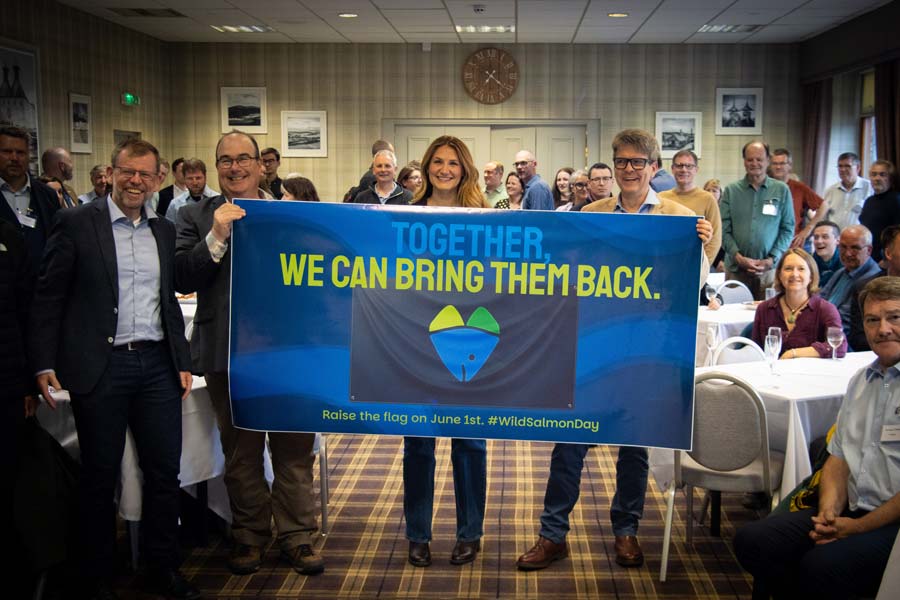
Photo: Jonathon Muir/Atlantic Salmon Trust
Wild Salmon Day is a collaborative effort, and we were proud to celebrate alongside our partners at Atlantic Salmon Trust, Pacific Salmon Foundation, and the First Nations Fisheries Council of BC. Wild Salmon Day is only one day on the calendar, but the movement behind it continues year-round. We are grateful to everyone who participated. Thank you for helping raise awareness and show that people across the globe care deeply about the future of wild salmon.
Policing Plastic Pollution
ASF Vice President of Communications and Special Projects Neville Crabbe offers an update on a fact-finding boat trip off the coast of New Brunswick.
Last weekend, I joined some colleagues for a cruise around Deer Island in the Bay of Fundy. After our investigation of plastic dumping by salmon-farming companies in Newfoundland last year, we were curious to see if anything similar was happening elsewhere in Atlantic Canada.
Google Earth shows multiple sites in southwestern New Brunswick with apparently degraded or abandoned salmon-farm gear in the water, and in Grand Manan last summer, I wandered into the woods near the island’s baseball field and spotted a pile of old aquaculture plastic partially covered by undergrowth.
On May 30, we spent about three hours on the water around Deer Island and didn’t see anything on the scale of Newfoundland, where companies removed hundreds of tons of waste following our 2025 investigation, but what we did see warrants some follow up.
Ocean plastic pollution is a global problem, and Atlantic Canada’s fish-farming companies are far from the only offenders. But for an industry that claims to be “cultivating the ocean with care,” leaving old equipment behind to sink and break apart seems careless.
Maine
Our ASF U.S. project managers are hosting a webinar that's open to all. If you're interested in the work being done to restore wild Atlantic salmon, don't miss it.
Join us on June 12 at 11:00 a.m. EST (12:00 p.m. Atlantic) for a webinar with our U.S. team!
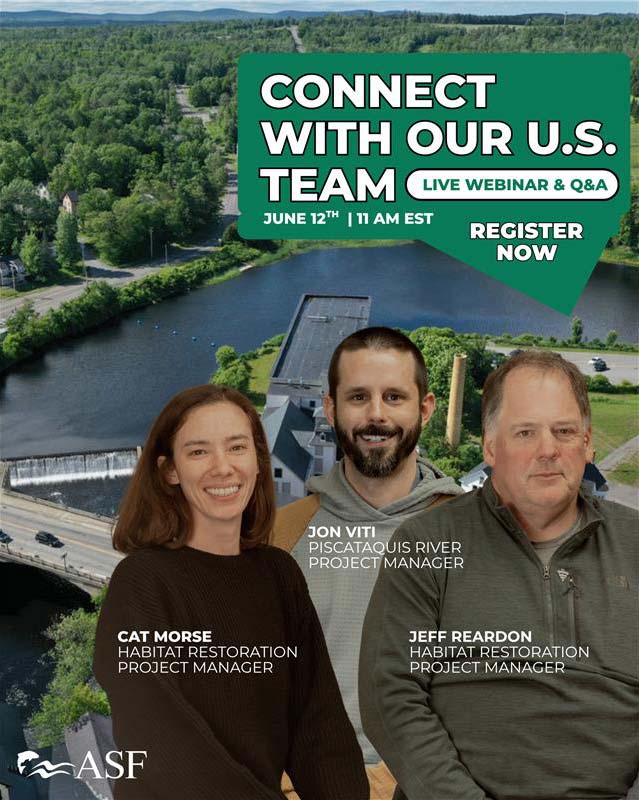
This panel discussion will highlight exciting river-restoration projects happening in Maine this summer, including on-the-ground work that is helping to open up habitat, improve river connectivity, and support the recovery of wild Atlantic salmon.
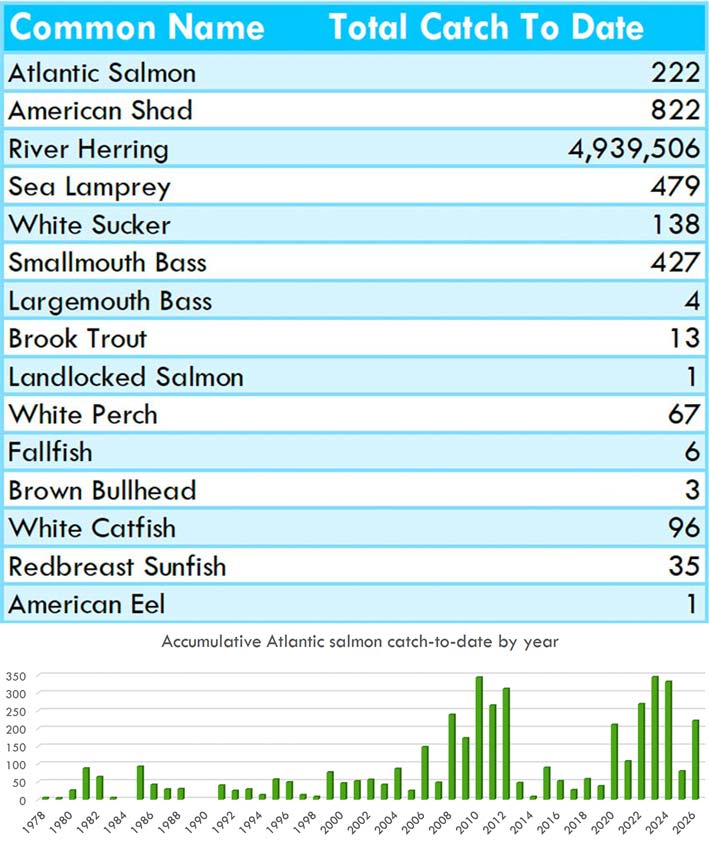
On Sunday, Jason Valliere, a marine scientist with the Maine Department of Marine Resources, let us know that it's a time of transition at the Penobscot fish passage:
The river herring run appears to be winding down, while shad and salmon are coming in steady. No real big days yet, but numbers are trending upward. You can see things are already better than last year.
Nova Scotia
Nova Scotia Program Director Matt Russell is ready for salmon season to get underway, and he offers a wrap-up of a tough smolt-collecting effort.
Salmon season is finally here on Cape Breton Island. The weather remains cool and relatively wet, but anglers have yet to report many catches as of this writing (June 2). That said, I know the first big push of fish will be swimming up our rivers any day now.
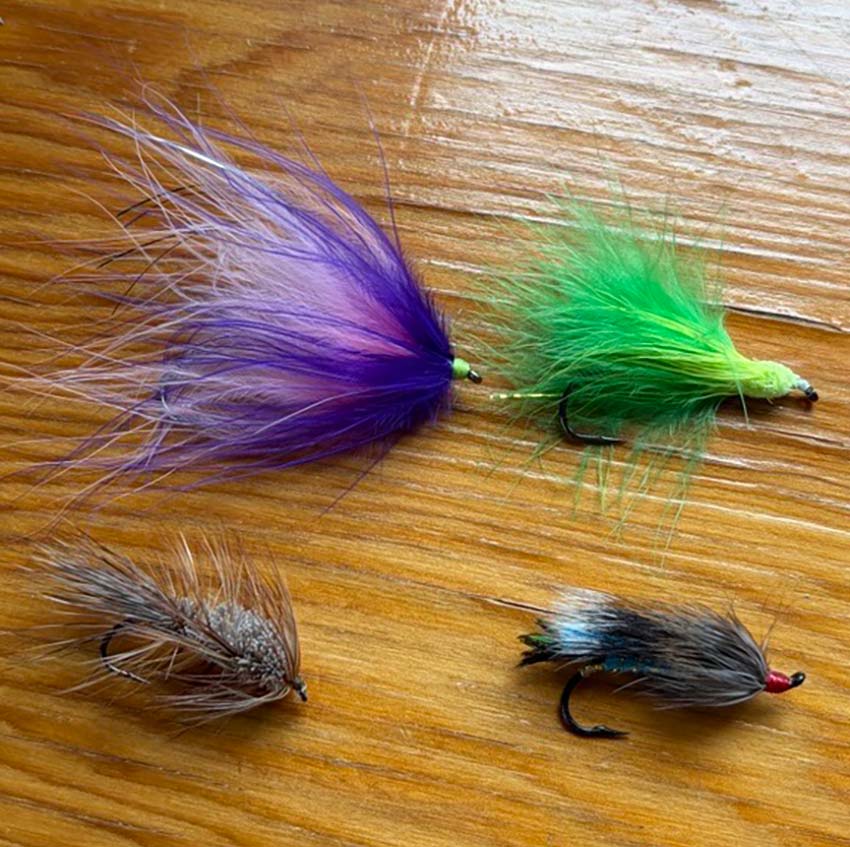
For fresh fish in high water, consider using large, high-visibility flies. Nova Scotians often turn to the trusty Muddler, Marabou, Carter’s Bug, and Rusty Rat. With any luck, there will be fish biting these flies all through the highlands soon.
Research Updates
Our first year of tagging for the St. Mary’s River Modernized Population Assessment concluded this last week. Our total smolt numbers were 325, which is below our goal of 1,000 smolt, but given the adverse conditions our team faced this spring, it's not too shabby. Due to the high water—with over 250mm of rain falling in the area—our smolt wheels were operating at very low efficiency.
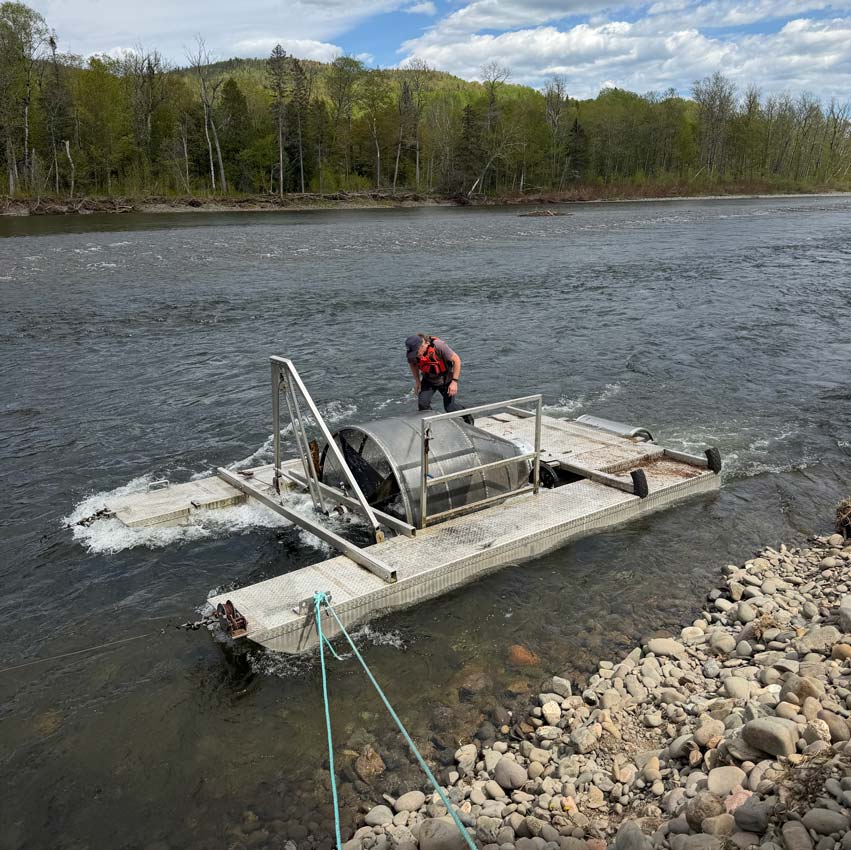
A smolt wheel is a large passive fish trap which funnels migrating smolt into a catch basin. The smolt are then fitted with passive integrated transponder (PIT) tags—small permanent tags used to evaluate the long-term survival of the smolts to returning adults.
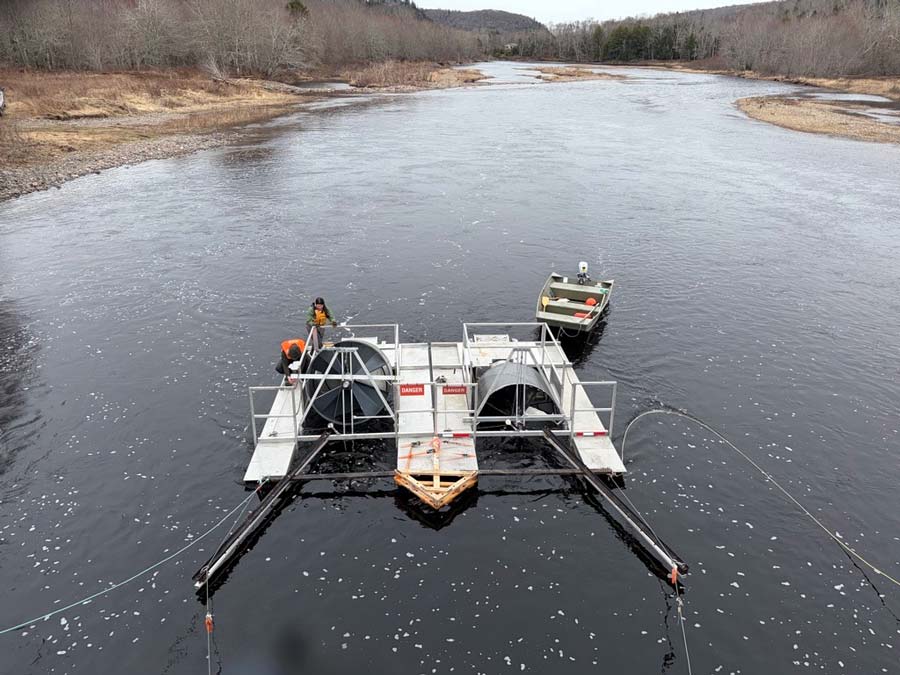
Our local partners Fisheries and Ocean Canada, Nova Scotia Salmon Association, and the St. Mary’s River Association worked intensively to catch and tag as many smolt as possible and did everything they could to overcome the high-water conditions. The smolt we did manage to tag are a testament to our partners’ dedication.
While smolt tagging has come to an end on the St. Mary’s, the Chéticamp River is seeing its last push with May 30th being our most productive day yet. Over 100 smolt were tagged and released that day alone.
Québec
La directrice du programme du Québec, Caroline Côté, parcourt actuellement la péninsule gaspésienne avec quelques collègues afin de faire le point sur diverses rivières et différents programmes.
Le Grand Départ
Au cours des deux dernières semaines, j’ai parcouru plusieurs rivières à saumon de la Gaspésie en compagnie de Charles Cusson, Deirdre Green et Martin Silverstone de la Fédération du saumon atlantique (ASF).
Notre tournée a débuté à Causapscal, où la saison de pêche venait tout juste de s’ouvrir. Malgré des eaux encore froides et des débits relativement élevés, les premières rumeurs d’observations de saumons circulaient déjà. Comme c’est souvent le cas en début de saison, l’enthousiasme voyage parfois plus vite que les poissons eux-mêmes. Nous avons ensuite visité plusieurs rivières emblématiques de la péninsule : la Sainte-Anne, la Saint-Jean, la Madeleine et la Malbaie.
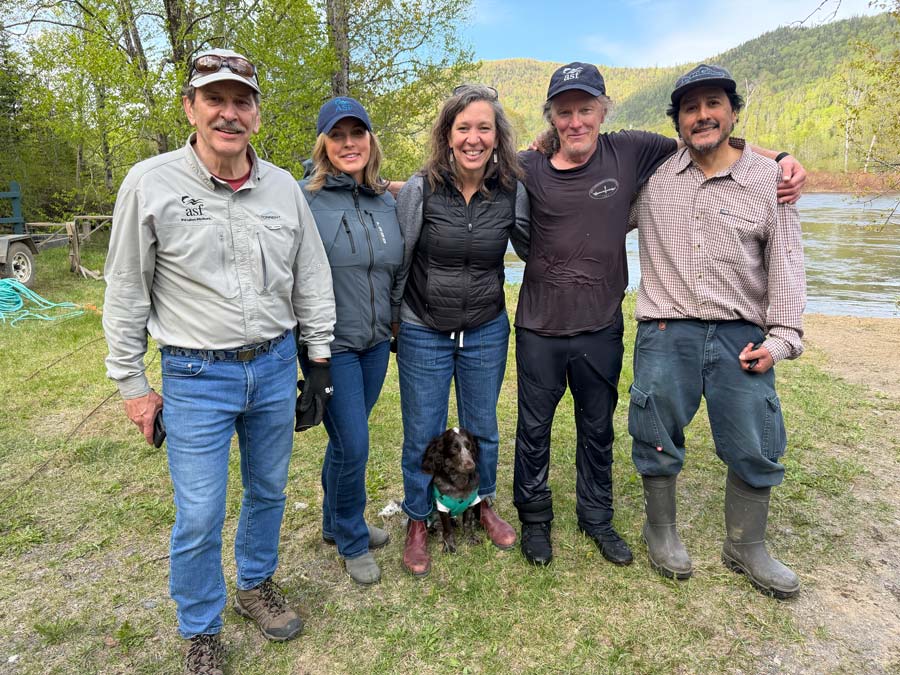
Photo : Martin Silverstone.
La seconde partie de notre tournée s’est déroulée sur le territoire de la Saumon Gaspé. À la suite de l’entente signée en mars dernier visant l’intégration de la rivière York au programme Wild Salmon Watersheds de l’ASF, nous avons rencontré le nouveau directeur général, Benoît Bond, des membres du conseil d’administration ainsi que des représentants de la Fondation Saumon de Gaspé. Nous avons également eu l’occasion de mouiller nos lignes sur la rivière Saint-Jean. Les premiers saumons de la saison ont montré peu d’intérêt pour nos mouches, mais les occasions ne manqueront pas au cours des prochaines semaines.
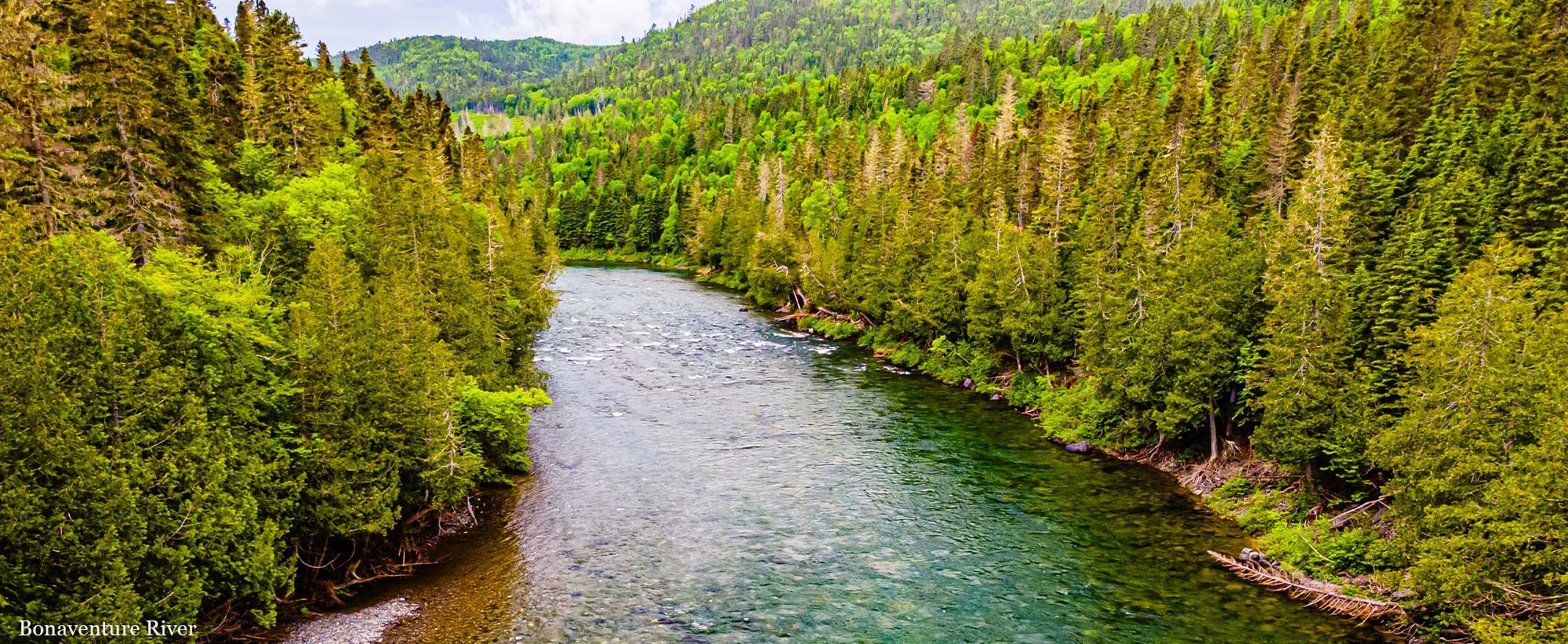
Notre tournée s’est poursuivie sur la rivière Bonaventure, où nous avons rencontré la Fondation de la rivière Bonaventure, créée en 2023 afin de soutenir la conservation de ce joyau gaspésien reconnu pour la qualité exceptionnelle de ses eaux. Nous avons ensuite rejoint notre collègue Jon Carr ainsi que des représentants de l’Association de gestion halieutique autochtone Mi’gmaq et Wolastoqey (AGHAMW), de la société Sipuminu et du MPO sur la rivière Cascapédia afin de participer au retrait de la roue à smolts.
Les opérations de marquage acoustique des smolts allaient déjà bon train, tandis que la visite de stations de suivi de la température de l’eau nous a permis de mieux comprendre les effets des routes, des ponceaux et du ruissellement sur la qualité des habitats du saumon atlantique. Ces échanges ont également mené à des discussions sur la santé des bassins versants, notamment l’influence des pratiques forestières, des épidémies de tordeuses des bourgeons de l’épinette et d’autres perturbations sur la capacité des forêts à réguler les écoulements, maintenir la qualité de l’eau et soutenir la biodiversité.
Les conditions observées à travers la région sont encourageantes, avec des débits généralement favorables et des températures variantes encore entre 4 et 7 °C. Alors que nous terminions notre tournée, deux saumons capturés puis remis à l’eau avaient déjà été signalés sur la rivière Cascapédia.
Dans l’ensemble, cette tournée a été un franc succès. Le fait de parcourir le territoire avec des collègues expérimentés de l’ASF et de rencontrer de nouveaux partenaires de conservation renforce notre optimisme quant à l’avenir du saumon atlantique sauvage en Gaspésie.
Québec (English)
Québec Program Director Caroline Côté has been traveling across the Gaspé Peninsula with some colleagues, checking in on various rivers and programs.
The Grand Tour
Over the last two weeks, I travelled across several Gaspé salmon rivers with ASF’s Charles Cusson, Deirdre Green, and Martin Silverstone.
Our tour began in Causapscal, where the fishing season had just opened. Despite cold water temperatures and relatively high flows, rumours of the first salmon sightings were already circulating. Early in the season, enthusiasm sometimes travels faster than the fish themselves, but the excitement was unmistakable.
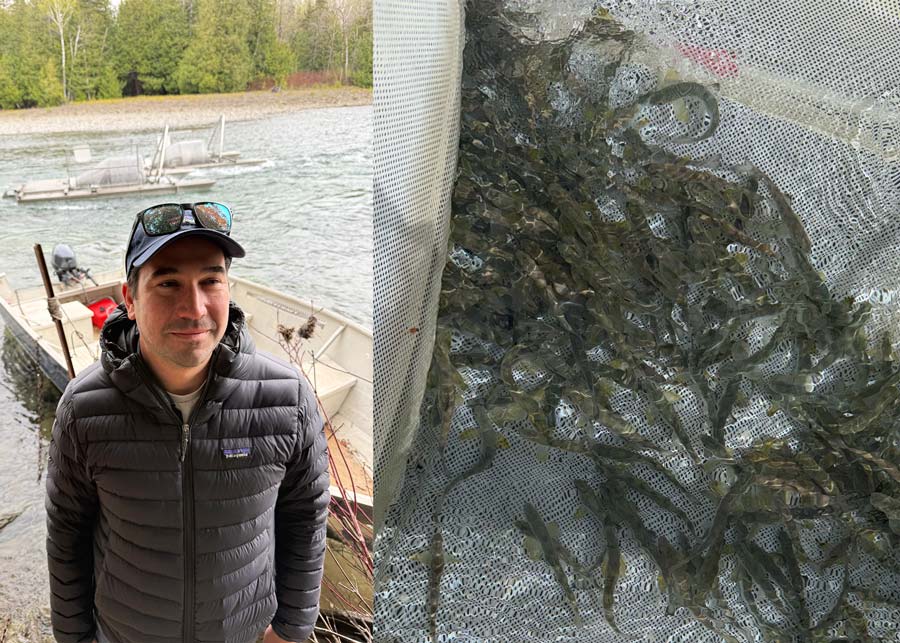
The second half of our tour took place on the territory managed by the Saumon Gaspé. Following the agreement signed in March to include the York River in ASF's Wild Salmon Watersheds Program, we met with the new Executive Director, Benoît Bond, members of the board of directors, and representatives of the Fondation Saumon de Gaspé. We also wet a line on the St.-Jean River, after work. The season's first salmon showed little interest in our presentations, but there will be plenty more opportunities ahead.
Our journey continued to the Bonaventure River, where we met with the Fondation de la rivière Bonaventure, established in 2023 to support the conservation of this Gaspesian jewel renowned for the exceptional quality of its waters. We then joined our colleague Jon Carr along with representatives from L’Association de gestion halieutique autochtone Mi’gmaq et Wolastoqey (AGHAMW), Sipuminu Society, and DFO on the Cascapédia to assist with removing the smolt wheel.
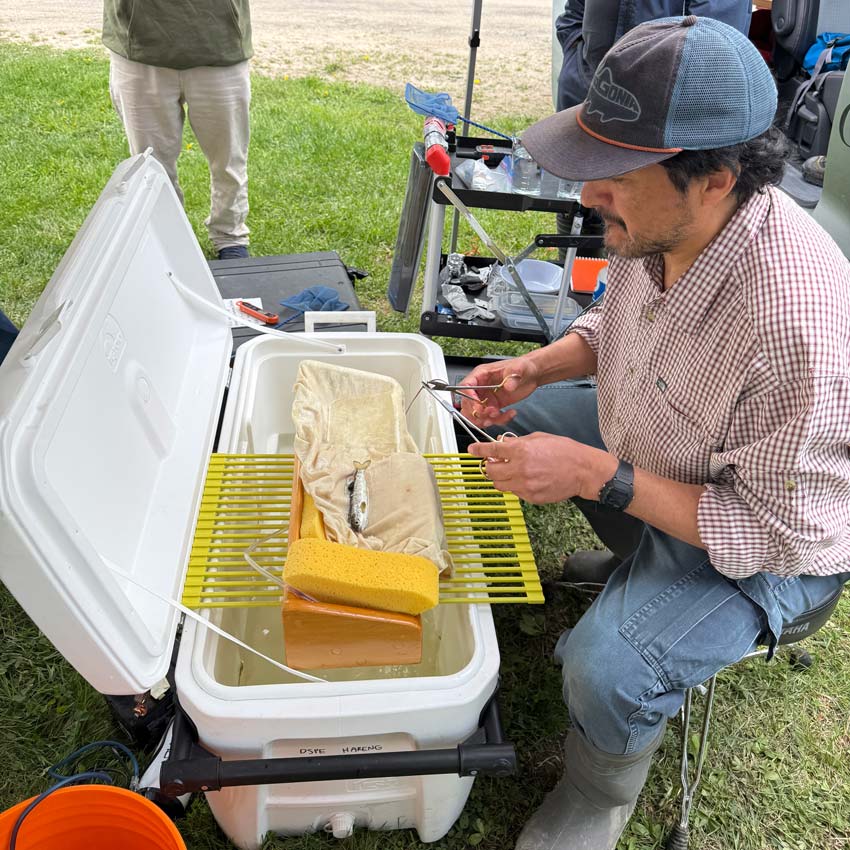
Acoustic smolt-tagging operations were already well underway, while visits to water temperature monitoring stations helped us better understand the effects of roads, culverts and runoff on water temperature and critical salmon habitat. These conversations also expanded into broader discussions about watershed health. We explored how forestry practices, spruce budworm outbreaks and other disturbances can affect a forest's ability to regulate water flows, maintain water quality, support river ecosystem functions, and sustain biodiversity.
Water conditions throughout the region appear encouraging, with generally strong flows and temperatures still ranging between 4° and 7°C (39° and 45°F). As we wrapped up the tour, two catch-and-release salmon had already been reported on the Cascapédia River. Good news that has fueled conversations and anticipation among those watching the rivers closely.
Overall, it was an incredibly successful field trip. Travelling with experienced ASF staff and meeting new conservation partners reinforced our optimism for the future of wild Atlantic salmon in Gaspé.
Newfoundland and Labrador
Newfoundland and Labrador Program Director Kim Thompson shares some angling reports from the first days of the salmon season.
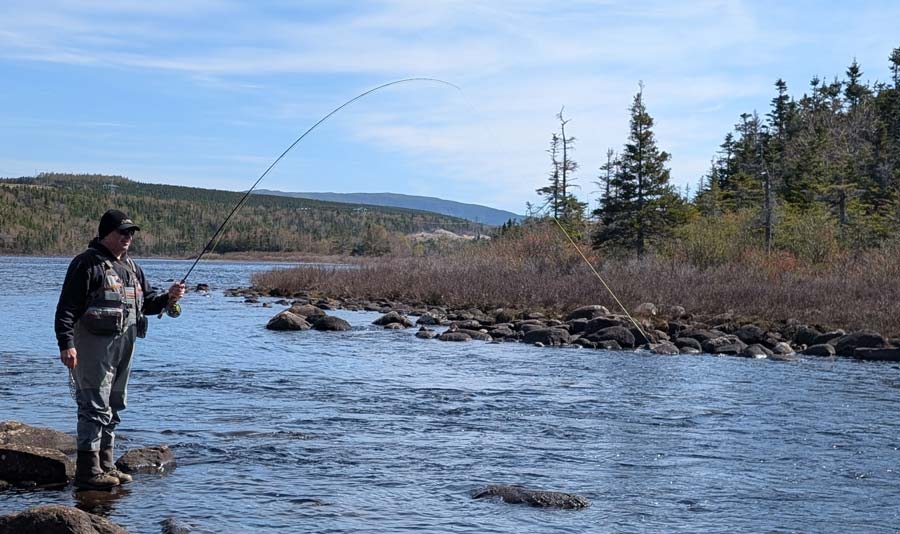
Snowfall and frost warnings didn’t deter anglers from making the most of opening week of the recreational salmon angling season on the island of Newfoundland. I am profoundly grateful for those who I’ve come to know in the fly-fishing world and who appreciate the awe-inspiring magic of wild Atlantic salmon. I didn’t have the opportunity to get out myself yet, but when I reached out to two enthusiastic anglers in this province, they were happy to share their experiences, just days into the season. Many thanks to Paul M. White, from central Newfoundland, who unselfishly educates youth on fly fishing, and to Colin Burridge, whose inspiring opening day would motivate anyone who wasn’t a fly fisher to give it a try.
From Paul M. White:
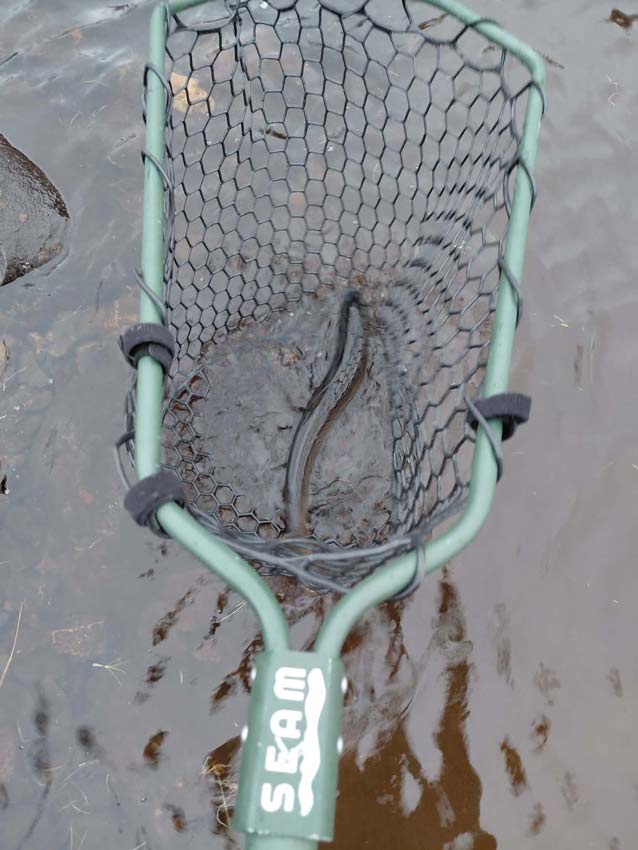
“Lots of water in the Central Region. A few kelts were caught and released. This time of year, many anglers are after speckled trout and a few of these were caught as well.
Cold weather all over Newfoundland yesterday, with many anglers waking up to their vehicles being covered in frost! Great for the salmon, but it reminds us too much of winter. Icebergs off the east and northeast coast of the island have the temperatures cool for the salmon.”
From Colin Burridge on the west coast of Newfoundland:
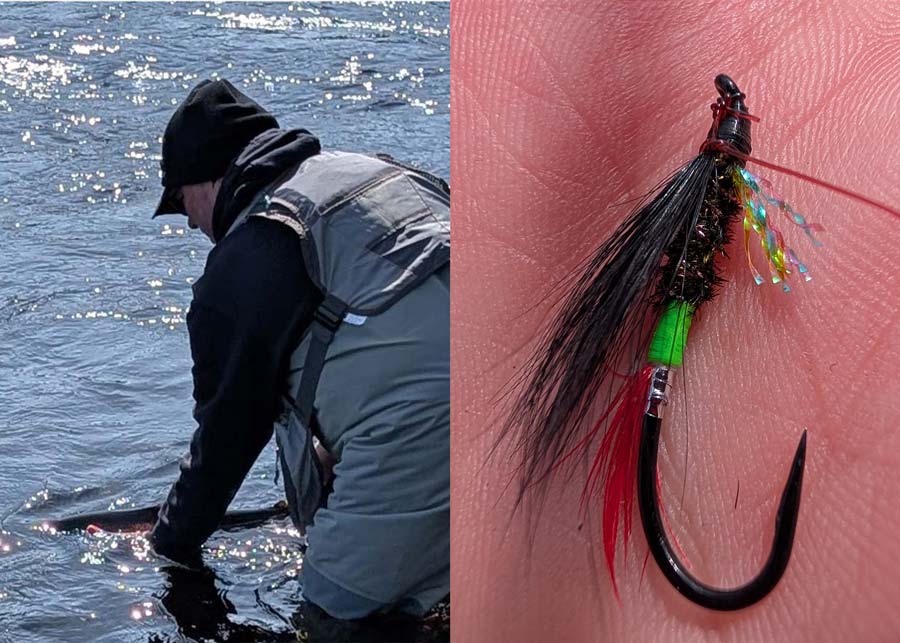
“Opening day couldn't have been much better! Under blue skies and perfect river conditions, I spent a couple of hours fishing different sections of the rugged yet charming Southwest Brook near the Burgeo highway. I released one beautiful salmon and tagged another, making for a day I'll never forget.
What makes it even more special is that both fish took a new fly pattern I recently tied. After yesterday’s success, I've decided to name it in memory of my late father. It seems only fitting that a fly carrying his name, the Carson’s Special, would help create such a memorable day on the river.
Some days are about the fish. Others are about the memories. Today was both.”
New Brunswick
New Brunswick Program Director David Roth describes a cool start to salmon season and shares updates for resident anglers.
Fishing for bright salmon has started in New Brunswick, and we are already hearing catch reports from both the Miramichi and Restigouche rivers, along with a few salmon bycatches from anglers targeting trout on rivers across the province.
River conditions have generally been excellent over the last few days, with cool water temperatures and good water levels creating strong migration conditions. Anglers are reporting seeing a good number of fish moving upstream, although the colder temperatures throughout the week seem to have reduced the fish’s willingness to grab a fly.
On the Northwest Miramichi, water levels were even too high to fully install the protection barrier fence. On the Dungarvon River, however, where the second barrier fence in the Miramichi River catchment is in place, the Department of Natural Resources (DNR) has already reported the first two grilse passing the counting fence. Overall, the current conditions should allow fish to move upriver quickly and safely toward the headwaters as more salmon continue to enter the systems.
With the start of June, I also want to remind New Brunswick residents that the daily Crown Reserve stretches are now open. These stretches provide access to some of the most beautiful salmon water in the province and can be booked through the Crown Reserve online portal.
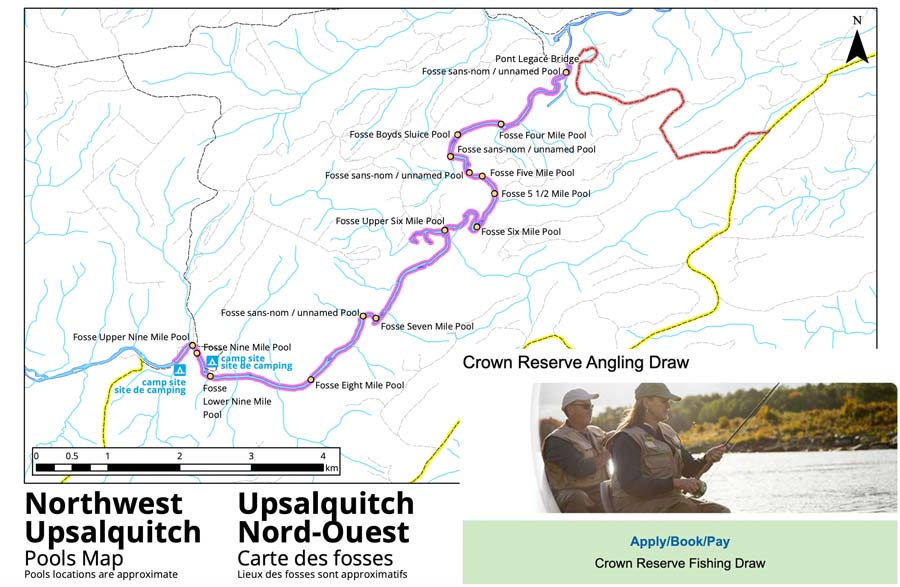
Anglers should make sure they are familiar with and follow the regulations for the specific waters they are fishing. Information on seasons, retention rules, Crown Reserve waters, and other regulations can be found in the 2026 New Brunswick Fish Book.
As a final note, I also want to make people aware of the new website launched by the Nepisiguit Salmon Association. Visitors to the site currently also have the chance to enter a raffle to win a three-day fishing trip on the Miramichi with Country Haven Lodge and Cottages.
Research and Environment
Vice President of Research and Environment Valérie Ouellet celebrated Wild Salmon Day with colleagues from across the pond.
Transatlantic Connections: AST Visits ASF
Wild Salmon Day came with good timing this year. Dr. Jessica Rodger, researcher at the Atlantic Salmon Trust (AST), made her way to St. Andrews for a full week with the ASF research team.
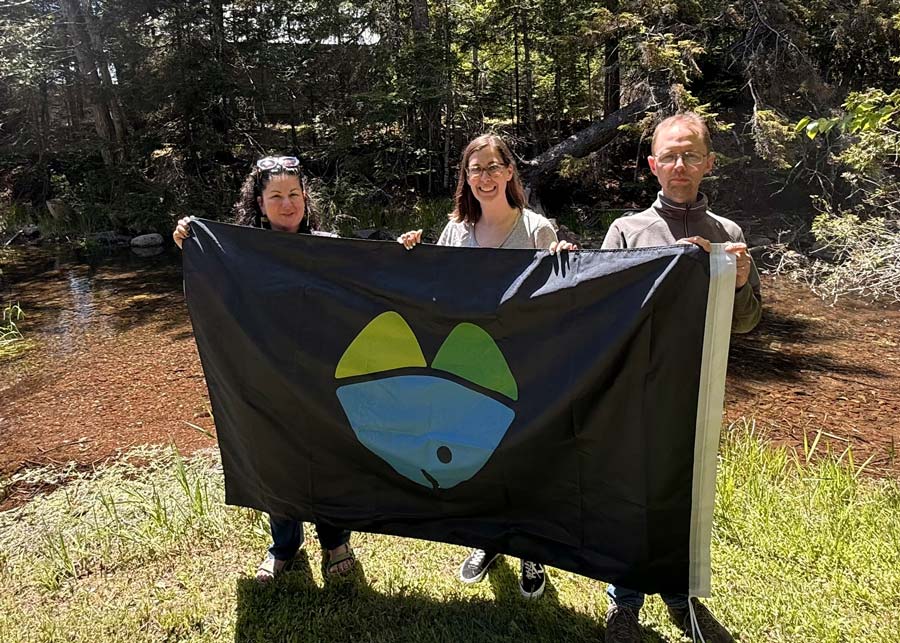
Jess is leading research on migration behaviour, habitat restoration efficacy, and the pressures salmon face across their journey—questions that sit squarely at the heart of what the ASF research team is trying to solve on this side of the Atlantic, too. The week was a deep dive into where our programs intersect.
What made the visit exciting is how much common ground there is between the two organizations working on the same problems from different coasts. AST brings strong river-scale and biodiversity framing; ASF brings the full life-cycle and northern range perspective.
Together, that's a more complete picture of what salmon recovery actually requires.
When two organizations are asking the same hard questions, it's worth being in the same room!