



Getting to 1 million
Conservation for the next 100 years
In 1988, scientists estimated that 1.1 million adult Atlantic salmon would return to North American rivers. Since then, we have come close: we saw returns of 850,000 in both 2011 and 2021.
The team at ASF believes returning to 1 million returning adults is realistic and achievable. It will take a combination of conservation action to prevent further declines and restoration and enhancement work to grow populations. The Watershed Movement campaign is our blueprint
Here are some examples of activities that will help increase adult Atlantic salmon returns to North America:
Reducing excessive predation by striped bass through sustainable fisheries and smart interventions in the Miramichi watershed (P16).
Creating a network of strongholds that help bolster neighbouring populations through the Wild Salmon Watersheds program (P6).
Increasing available spawning and nursery habitat by removing barriers to fish passage, including large dams on the Kennebec (P9) and smaller obstructions through ASF’s Headwaters program (P10)
Saving wild Atlantic salmon from exposure to ocean-based salmon farms through front-line campaigns and broad consumer education efforts (P12).
Partnering directly with the Greenlandic people to incentivize lower salmon harvest (P10).
Keeping water cold and clean by identifying and protecting the most ecologically valuable landscapes in salmon country to foster climate resilience (P14).
Wild Salmon Watersheds
Conservation for the next 100 years
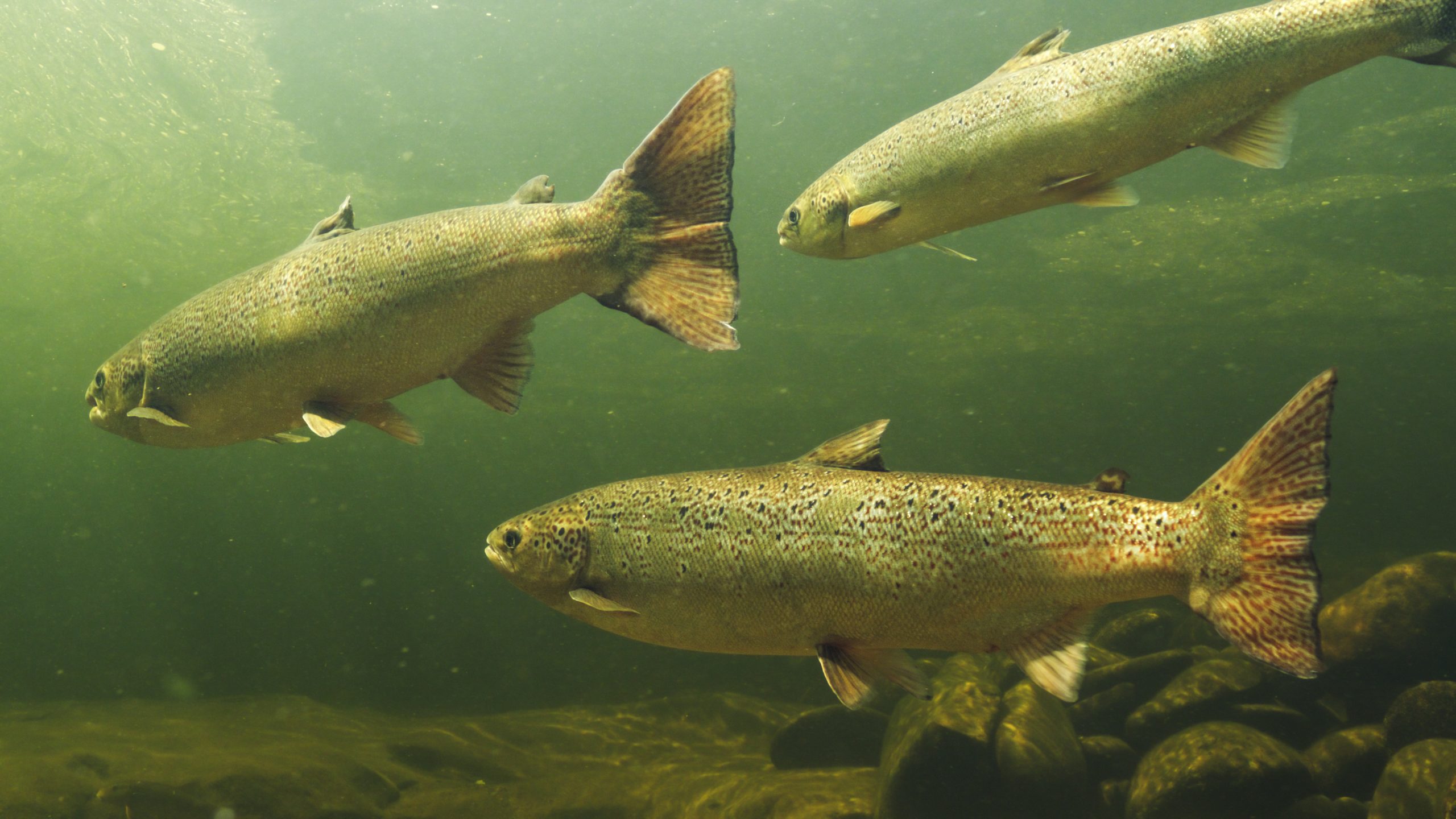
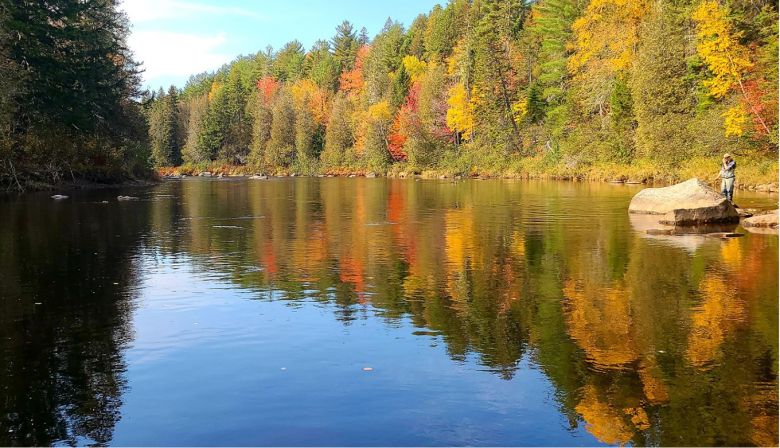
Our vision: A network of locally led Atlantic salmon strongholds with abundant salmon populations and sustainable fisheries that benefit local communities. Atlantic salmon still thrive in hundreds of North American rivers. For too long, the conservation community has taken this for granted. ASF’s Wild Salmon Watersheds program is proactive, long-term conservation to build a network of strongholds highly resilient to climate change and capable of anchoring regional populations. In the face of threats like climate change and industrial development, the program embraces the philosophy that “an ounce of prevention is worth a pound of cure.” The foundation of each Wild Salmon Watershed is partnership with local conservation groups, Indigenous organizations, and governments. We start by asking a single question: What do you want this river to be like in 100 years? Then, we deliver the resources and expertise to help make it happen.
Headwaters
Reconnecting rivers to the sea
Our vision: Free-flowing rivers from headwater spawning habitat to salt water.
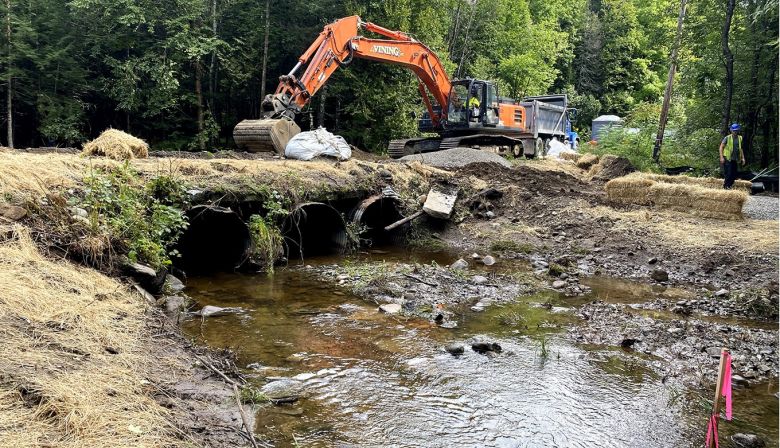
There are thousands of barriers to fish migration in eastern North America, from large dams with inadequate fish passage to poorly installed culverts on remote logging roads. These obstacles significantly reduce available spawning habitat and physically limit population growth. It is “death by a thousand cuts.”
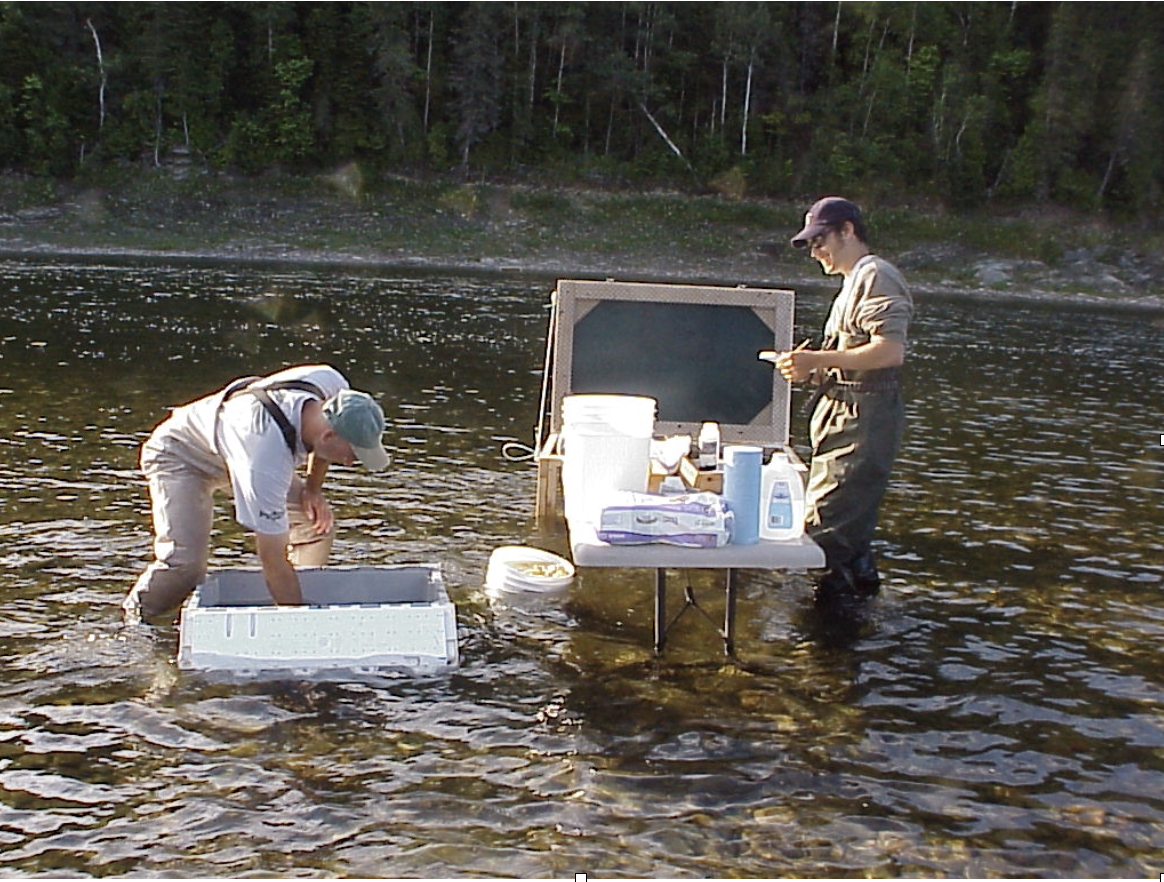
Since 2000, ASF’s Headwaters program has helped remove and remediate hundreds of these barriers, adding thousands of miles of reconnected habitat. We work directly with local partners, offering resources and specialized knowledge.
Headwaters is a pragmatic approach to restoring stream connectivity and naturally increasing the number of wild Atlantic salmon in North American rivers.
Kennebec River renewal
Global-scale river restoration for endangered Atlantic salmon
Our vision: Reconnecting over 800 river miles (nearly 1,300 river kilometres) of the Kennebec River with the Gulf of Maine to achieve wild Atlantic salmon recovery in the U.S. and a thriving ecosystem of migratory fish like river herring.
ASF and The Nature Conservancy have partnered to purchase four dams on the Kennebec River in Maine that have blocked Atlantic salmon and other migratory fish from reaching some of the highestquality spawning habitat in the United States.
Over the next decade we will reconnect the habitat and restore free flow to the Kennebec River for the first time in over 200 years. This globally significant project will open up more than 800 miles of river and stream habitat to migratory fish, giving wild Atlantic salmon a chance to recover.
ASF’s goal is to help Atlantic salmon follow the example of another iconic species, the bald eagle, by growing the U.S. population of Atlantic salmon enough that the species will no longer be listed as endangered.
Greenland
Conserving salmon at sea
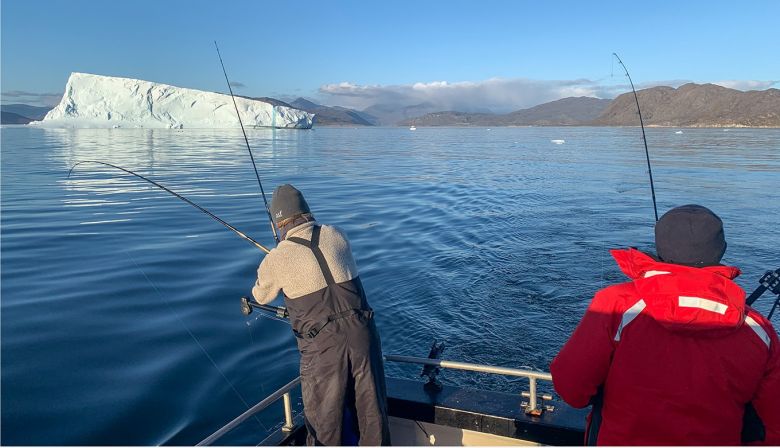
Our vision: A sustainable, well-managed salmon fishery that meets local needs, is achieved through close collaboration with the people of Greenland, and helps bring more adult Atlantic salmon back to North American and European rivers.
Coastal waters around Greenland are the ocean feeding grounds for Atlantic salmon from more than 2,000 rivers in North America and Europe. Juvenile salmon leave home waters as smolt and spend up to three years off Greenland, returning as large adults carrying thousands of eggs.
Uncontrolled commercial fishing off Greenland by a variety of countries decimated the global population of Atlantic salmon in the 20th century. Through successive agreements with fishers negotiated by ASF and the North Atlantic Salmon Fund, and improved management by the Greenland government, the fishery today is greatly reduced.
It’s ASF’s goal to work cooperatively with leaders and fishers in Greenland to maintain the current allowable harvest of 30 tons, or about 9,000 salmon. We will partner to establish research and conservation projects in fishing communities, building trust and making progress together.
Salmon farming
Seeking solutions to an existential threat
Our vision: No more wild Atlantic salmon declines caused by the ocean-based salmon farming industry, and recovery of affected populations.
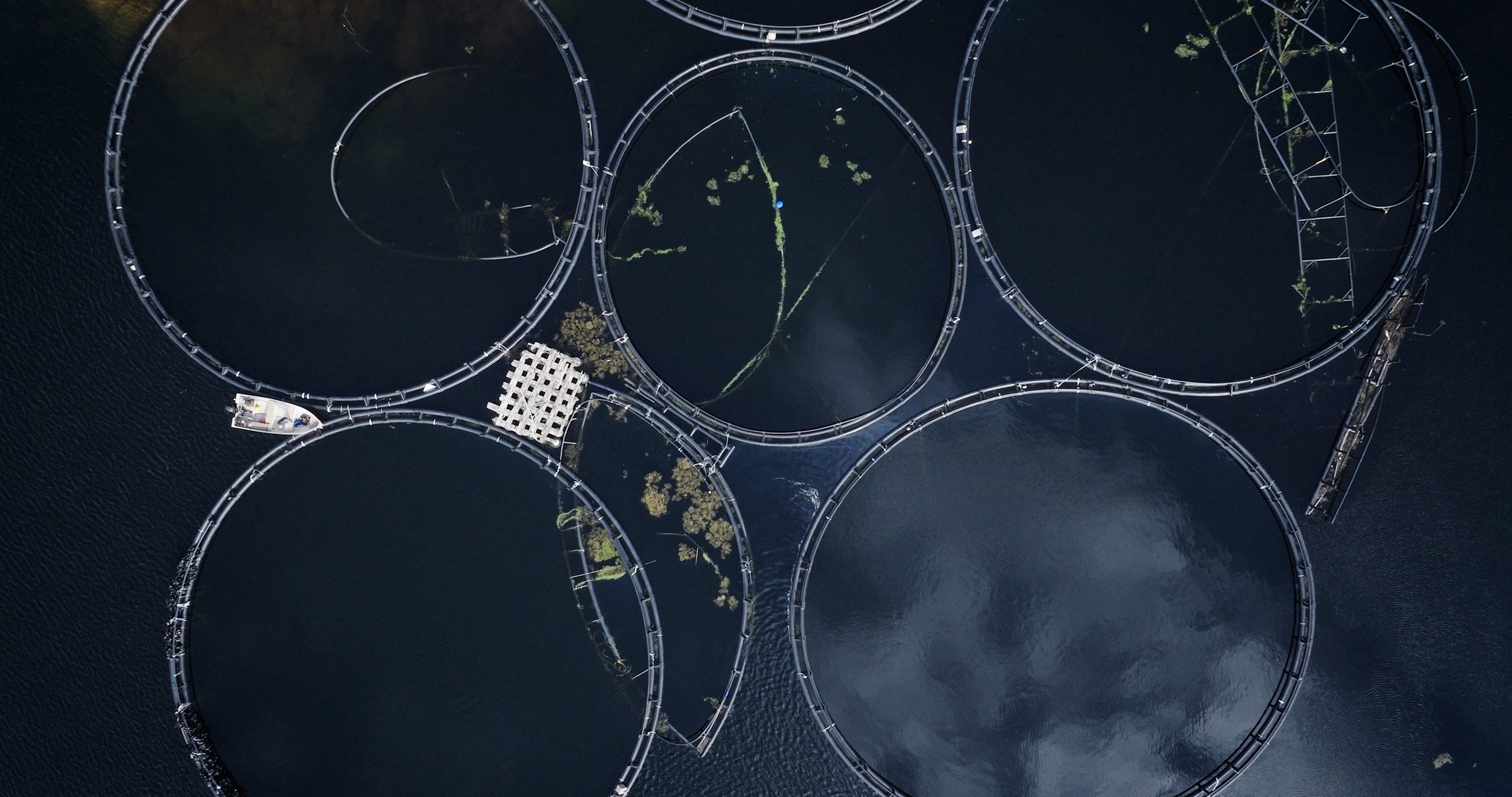
Atlantic Canada is a global front-line where ocean-based salmon farming companies are aggressively trying to expand. Recent studies from the region have singled out the industry as a primary cause of wild Atlantic salmon decline, caused by interbreeding between domesticated and wild fish, and the spread of parasites and disease.
Conditions are so poor at ocean salmon farms that production has declined in recent years, with millions of fish dying annually in industrial sea-cages. In some places, up to half of the currently licensed sites are abandoned.
ASF is working with coastal communities to build support for alternatives to salmon farm expansion. We are heavily engaged in legal and regulatory processes, challenging licensing decisions and holding companies and agencies to account.
We are also part of a coalition conducting consumer awareness campaigns globally to educate consumers about the reality of ocean-based salmon farming.
Salmon science
Supercharging conservation with knowledge
Our vision: ASF at the centre of an international research collaborative focused on finding solutions to the most serious threats facing wild Atlantic salmon.
For over three decades, ASF has been on the leading edge of salmon research. Our scientists were among the first in North America to document interbreeding between escaped farmed salmon and wild fish. We helped develop ocean tracking technology and techniques, following salmon from home rivers to Greenland and back to understand migration routes and sources of mortality.
We always strive to bridge the gap between research and action, integrating our science team with program staff and using knowledge gained to advance our advocacy for stronger policies and better fisheries management.
Perhaps our greatest strengths are determination and longevity. We stick with multi-decade science programs that connect the big picture between rivers and oceans, and guide our strategic direction.
ASF Research connects a global community of salmon scientists and through partnership and bold innovation, we are accelerating the scale of impact for wild salmon.
Ways To Give
sub heading about ways to give
Blurb of text about ways to giveBlurb of text about ways to giveBlurb of text about ways to giveBlurb of text about ways to giveBlurb of text about ways to giveBlurb of text about ways to giveBlurb of text about ways to giveBlurb of text about ways to giveBlurb of text about ways to giveBlurb of text about ways to giveBlurb of text about ways to give.Blurb of text about ways to giveBlurb of text about ways to giveBlurb of text about ways to giveBlurb of text about ways to giveBlurb of text about ways to giveBlurb of text about ways to giveBlurb of text about ways to giveBlurb of text about ways to giveBlurb of text about ways to giveBlurb of text about ways to giveBlurb of text about ways to give.Blurb of text about ways to giveBlurb of text about ways to giveBlurb of text about ways to giveBlurb of text about ways to giveBlurb of text about ways to giveBlurb of text about ways to giveBlurb of text about ways to giveBlurb of text about ways to giveBlurb of text about ways to giveBlurb of text about ways to giveBlurb of text about ways to give.Blurb of text about ways to giveBlurb of text about ways to giveBlurb of text about ways to giveBlurb of text about ways to giveBlurb of text about ways to giveBlurb of text about ways to giveBlurb of text about ways to giveBlurb of text about ways to giveBlurb of text about ways to giveBlurb of text about ways to giveBlurb of text about ways to give.