





Rivernotes, Uncategorized
Wild Salmon Watersheds Update June 17, 2026
Kris Hunter
June 17, 2026
by Kris Hunter, Regional Director for Wild Salmon Watersheds
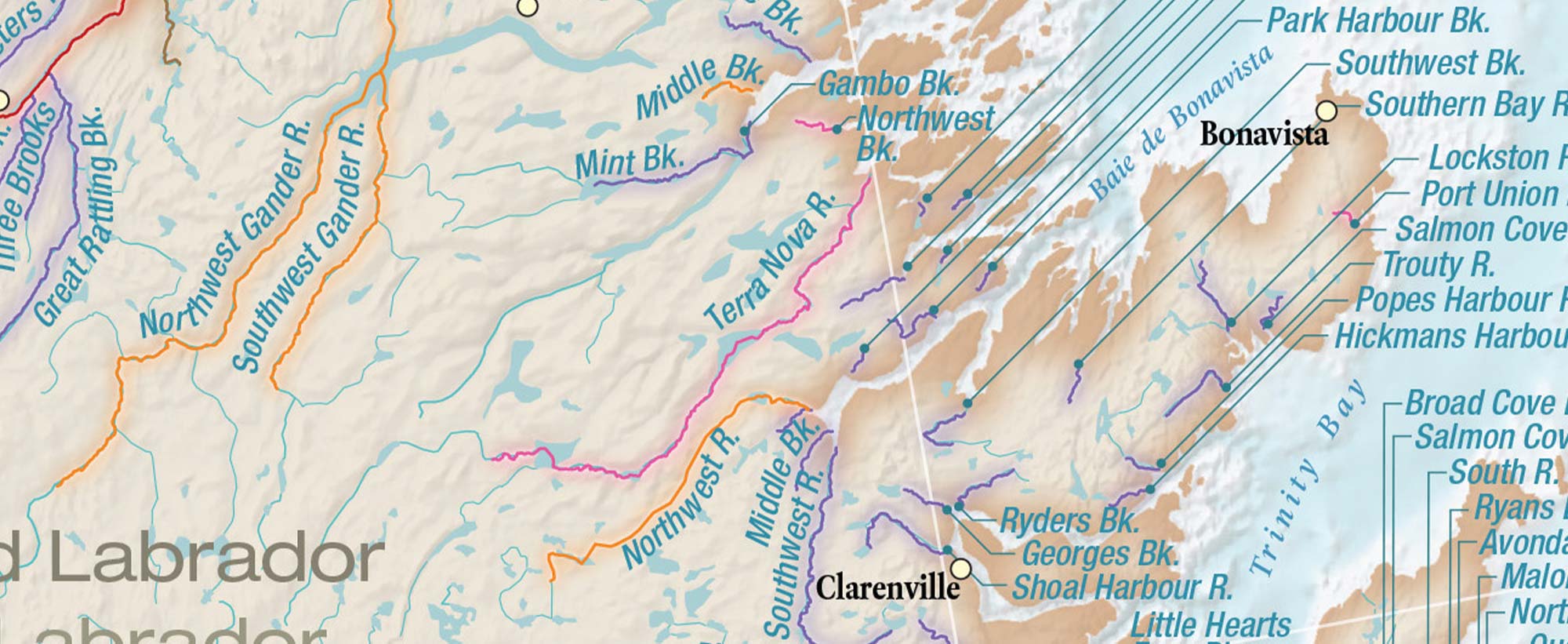
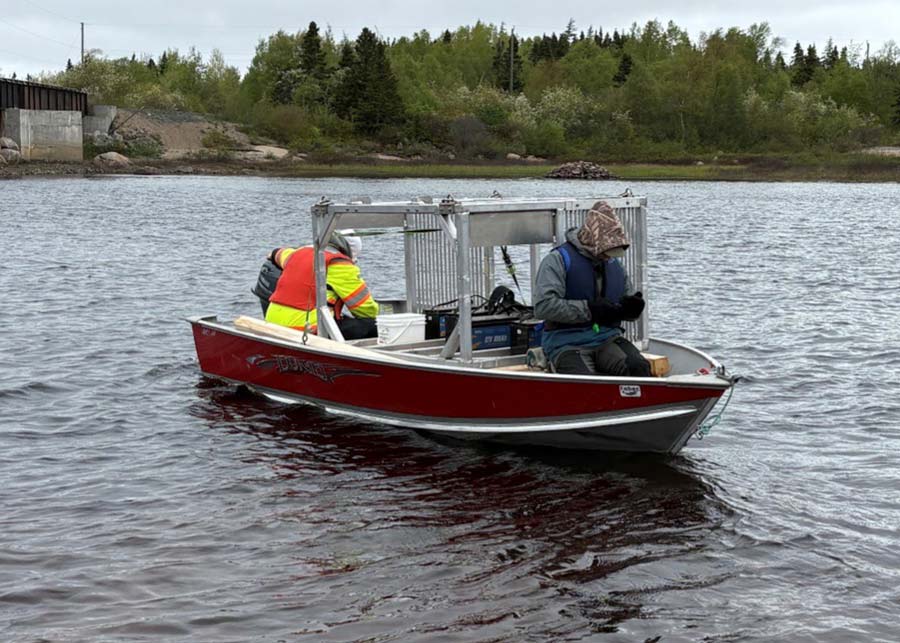
It has been a busy couple of weeks for the Wild Salmon Watersheds (WSW) team. As WSW Science Coordinator Jordan Condon reported last week, our smolt-wheel operations on the Nepisiguit and Chéticamp were wrapping up, so we have been working with our partners to collect the last few fish and get the wheels out of the water and back into storage. The smolt wheel on the Terra Nova continues to operate but had to be significantly readjusted to accommodate the rapidly dropping water. With the adjustment, our catches rose almost fourfold, so with water temperature still in the low teens, we are hopefully that we will continue to catch many more smolt on the Terra Nova. Huge shout out to all those that helped during this challenging smolt season.
Flight Training
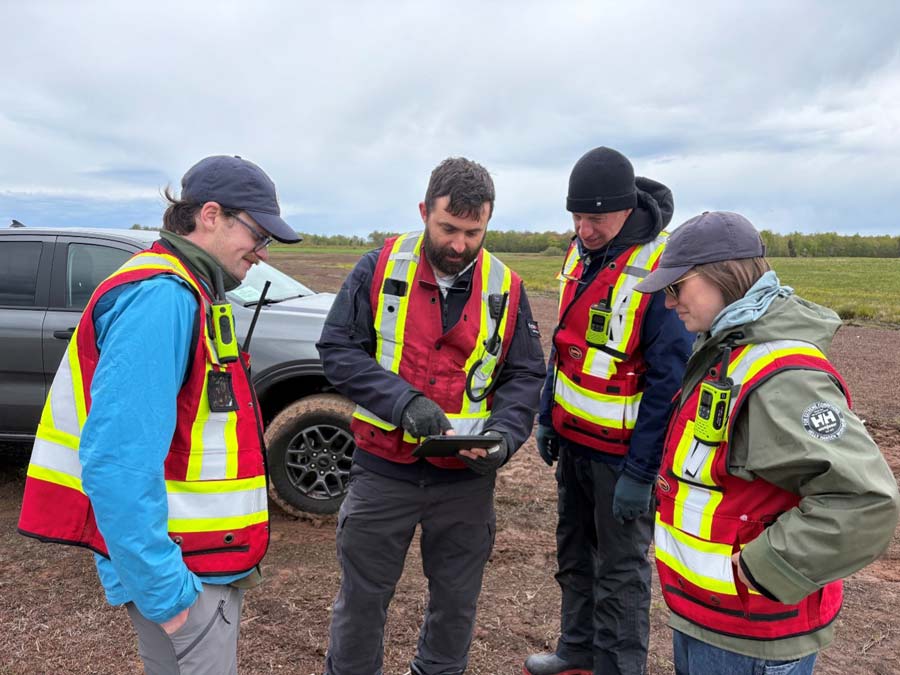
Two weeks ago, I joined members of our Research team on the Morell River on PEI to complete our Level 1 Complex Drone operators’ certification and to practice procedures that are needed for us to be able to conduct drone operations later this summer. Our DeltaQuad Evo drone and DJI Matrice drone will allow ASF to do all sorts of remote sensing work—such as thermal imagery, LiDAR, and aerial surveys—that are critical to Wild Salmon Watersheds and our other work. However, in order to conduct some of these operations, such as flying higher than 400 feet or flying beyond visual line of sight, we need special permission, so this training and tests were very important.
Tracking Tech
This week, Wild Salmon Watersheds Science Coordinator Jordan Condon and I were on the Terra Nova River in Newfoundland and Labrador to install a Biomark Passive Integrated Transponder (PIT) tag array and the RiverWatcher system. We were joined by an international team from Biomark, our local WSW partners, Freshwater Alexander Bays Ecosystem Corporation (FABEC), and NL Program Director Kim Thompson. The PIT tag array works as a giant electronic fence, creating a magnetic field that reads small microchips (the PIT tags) when they pass by. We have been implanting smolt from the smolt-wheel operations with these PIT tags. They have no battery and will last for the fish’s entire life, so when those smolt return as adults we can detect them without having to catch the fish again.
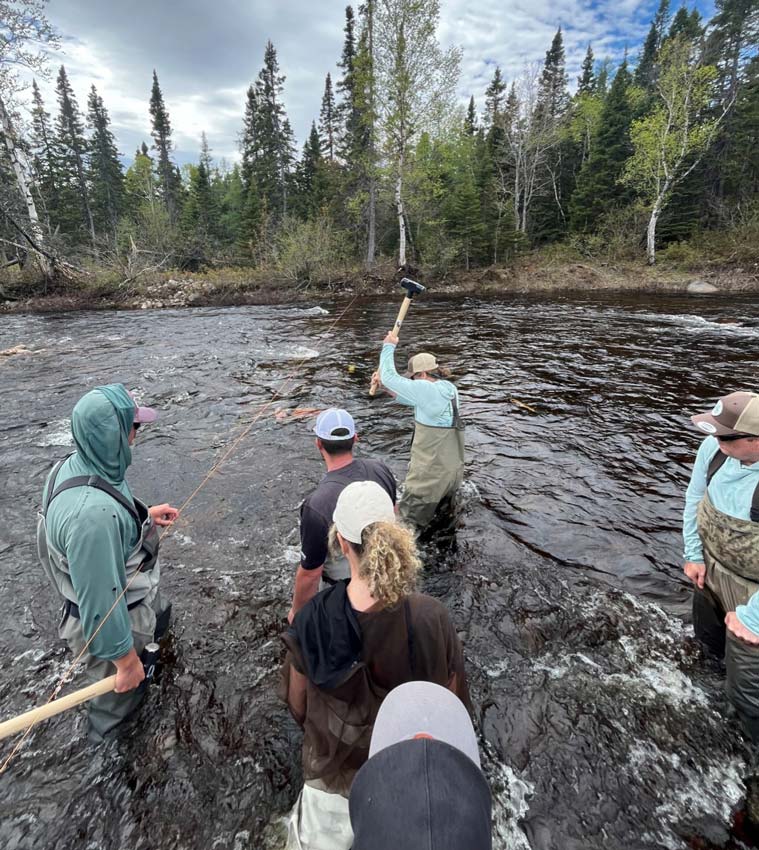
We are using this technology on the Terra Nova so the fish can help us identify the most important parts of the river so we can build our WSW conservation plans and restoration actions accordingly. This is really important on the Terra Nova, where we cannot get access to the whole watershed and need to know more about the importance of tributaries like the Maccles where the PIT tag array is installed. This system is similar to the one that NB Program Director David Roth and our partners have been working on in the Miramichi, which is from a different manufacturer. By running both systems, we are also learning the pros and cons of each system, which is useful to help our partners and as we expand our efforts.
ASF Vice President of Research & Environment Valérie Ouellet explains the importance of the data that will be generated by this project:
"Once installed, the array will detect individually-tagged salmon moving through the system around the clock, building the kind of continuous, passive monitoring record that transforms snapshots into stories. PIT tag arrays tell us when fish arrive, whether they make it through, and how that changes year to year, river to river. This specific array will also help us answer an important question for the Terra Nova WSW of how salmon use Maccles Brook a key tributary. As we are trying to understand how salmon navigate and adapt to warming rivers, altered flows, and shifting ocean conditions, that continuity of record is everything. It's how we move from knowing a river has salmon to understanding what those salmon actually need."
Eyes on the Prize
Once we wrapped up with the PIT tag array installation and said goodbye to the Biomark team, we shifted our focus to installing the RiverWatcher at Big Falls on the Terra Nova, a beautiful but inaccessible spot that requires several hours of boating and trekking across boggy ground to reach. A challenge when you have to carry in by hand hundreds of pounds of RiverWatcher, batteries, and gear. The RiverWatcher is a visual and infrared camera system that automatically detects, measures, and counts fish as they swim through it. We can operate the unit remotely, giving us insight into the timing and distribution of returning adults. This year, we upgraded the system with a better cage around the RiverWatcher, a new PIT tag sensor, and a mobile crane to help get the unit in and out of the water more safely.