


Research

ASF’s research team seeks answers to the most pressing questions about wild Atlantic salmon to inform our advocacy and conservation programs. We work with partners on almost every project to bridge the gap between knowledge and conservation action.
The research department research is focused on three core aspects:
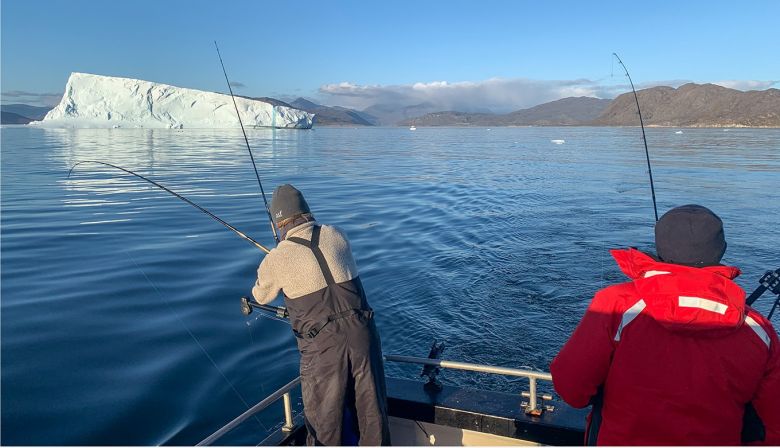
- Tracking and modelling: Understand salmon’s behaviour, movements, and ecology across various ecosystems. Learn how and when they utilize key habitats such as cold-water refuges. Track their ecosystem movements and migration routes to study how changing rivers and oceans affect them throughout their life cycle.
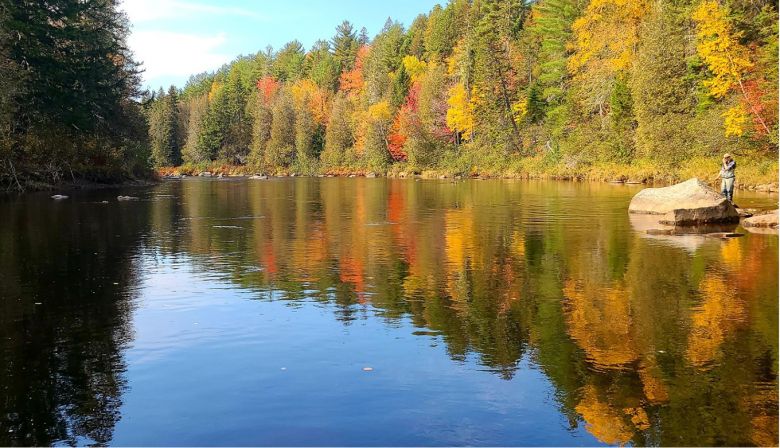
- Assessing climate change resilience: Define habitat and salmon population resilience and assess the vulnerability of critical habitats to climate change and human actions, as well as their impacts on Atlantic salmon throughout its life cycle.
- SCALES-Salmon Conservation And Long-term Ecosystem Surveillance: Develop a network of sentinel monitoring stations across Atlantic salmon rivers and populations to monitor and study the health of rivers and populations.
We work with different working groups (e.g., Atlantic Salmon Research Joint Venture, International Council for the Exploration of the Seas, NASCO), university students and researchers, and other NGOs and agencies to advance the knowledge and develop tangible actions to protect, restore, and conserve Atlantic salmon and their habitats.
Our research department is committed to ethical research that fundamentally respects the individuals and communities we work with collaboratively. We recognize Indigenous Data Sovereignty and engage with collaborators in research for which we co-determine how data will be analyzed and where and how the results will be shared. Co-creation of research programs is to be inclusive of communities and Indigenous Peoples in all steps of the scientific process and that research outcomes benefit individuals, communities, organizations, lands and waters from which the data are gathered.
If you’re interested in partnering with ASF on Atlantic salmon-focused research, please email savesalmon@asf.ca.


Tracking and Modelling
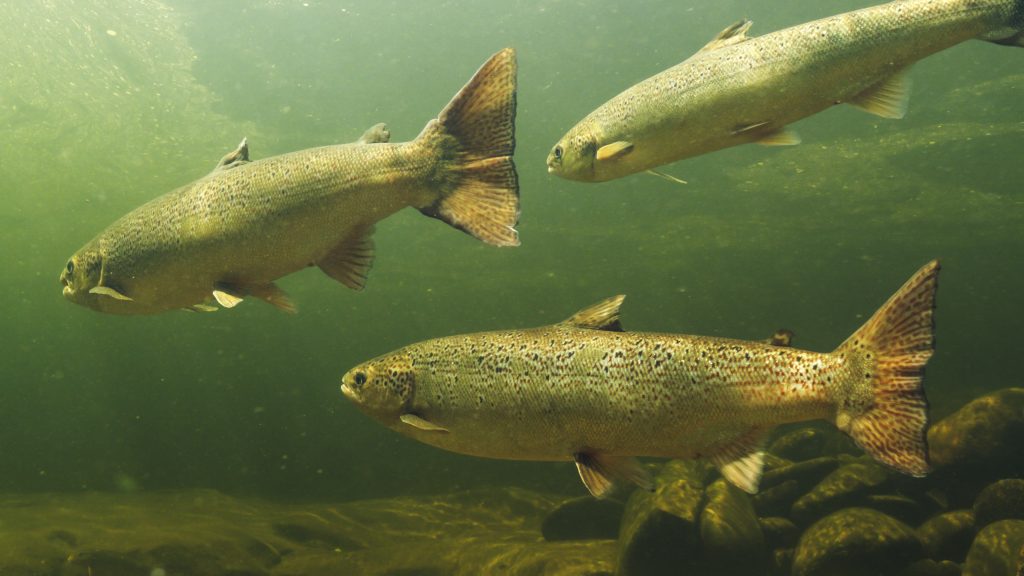
One of the greatest threats to wild Atlantic salmon is climate change, resulting in high mortality at sea. Over the last forty years, we have observed dramatic declines in the abundance of Atlantic salmon.
Many studies have highlighted the relationships between changing oceanic conditions and Atlantic salmon population characteristics and dynamics. Changes in water temperature and other factors alter diets, resulting in lower energy-density prey, ultimately threatening Atlantic salmon’s reproductive success and marine survival. These changes can even inhibit the recovery of populations at low abundance levels.
Since 2003, in partnership with many organizations, we have been using pit tags and acoustic tags on juvenile and adult Atlantic salmon and deploying satellite-connected tags on adults. Over the course of two decades, we have built the longest worldwide series of Atlantic salmon migration data. These data inform models, study habitat use and movements, and understand the exact mechanisms that result in lower sea survival. Our data also informs fishery management, resource development decisions and conservation action, while providing insight into how wild Atlantic salmon will likely respond to warming oceans.
Assessing climate change resilience
All ecosystems that Atlantic salmon use and inhabit are changing rapidly. As we work to predict population-level responses to various combinations of climate change scenarios and proposed management and conservation actions, it is important to assess watersheds, rivers, and population climate resilience.
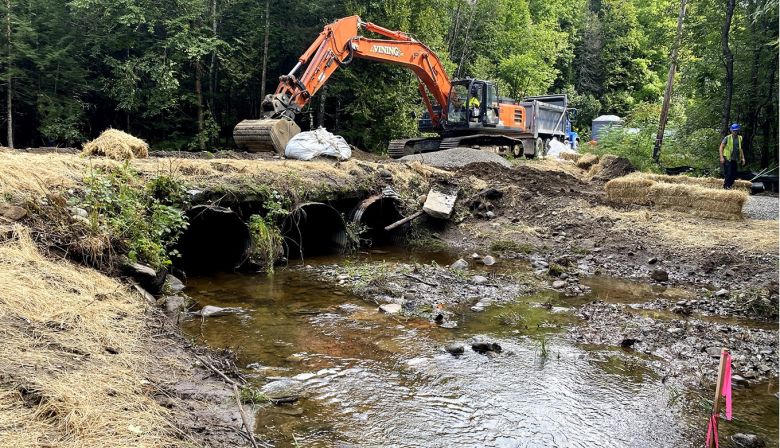
Working together, we can have the most significant positive effect on wild Atlantic salmon populations through protection, restoration, and conservation. Healthy freshwater environments ensure Atlantic salmon can thrive when they return to their rivers and increase freshwater production. Through our programs, Headwaters and Wild Salmon Watersheds, we partner with other organizations to improve freshwater ecosystems’ resilience.
We study rivers and watersheds’ resilience using various tools, such as thermal infrared imagery of rivers, climate models, and climate change metrics. We combine this information with wild Atlantic salmon population genetic information and population structure to understand how we manage resilience while making efforts to reduce other stressors affecting Atlantic salmon populations. This approach feeds into conservation efforts in the context of climate change.

SCALES-Salmon Conservation And Long-term Ecosystem Surveillance
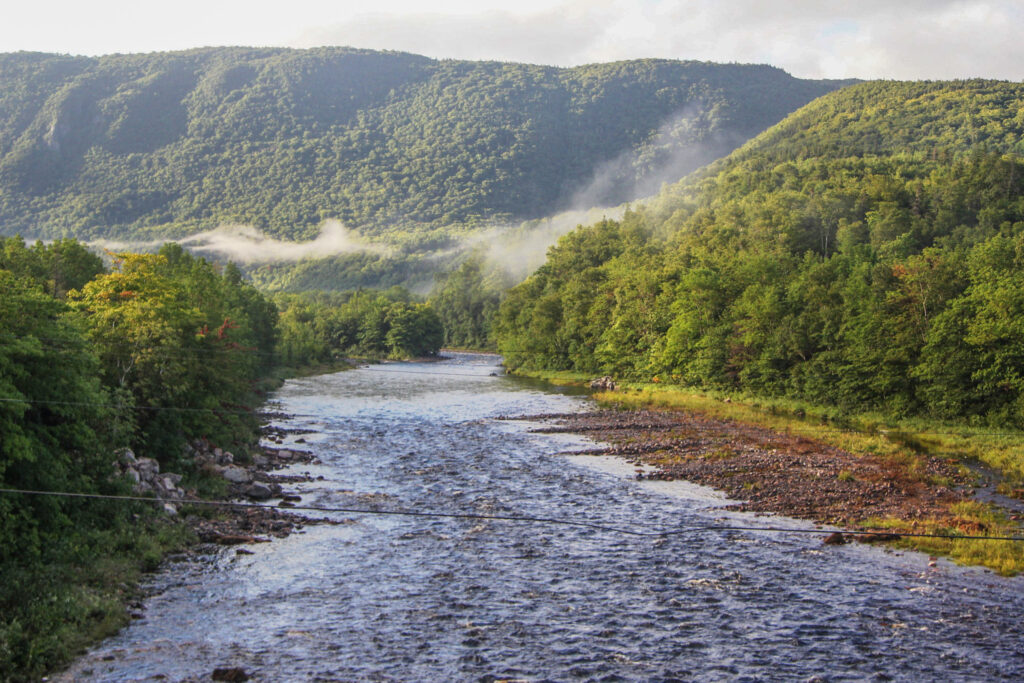
We need quality and comparable data to understand how ecosystems and wild Atlantic salmon populations change. We are working to establish a network of stations monitoring freshwater ecosystem health and salmon populations’ genetics and structure. This will also teach them how Atlantic salmon respond to ecosystem changes.
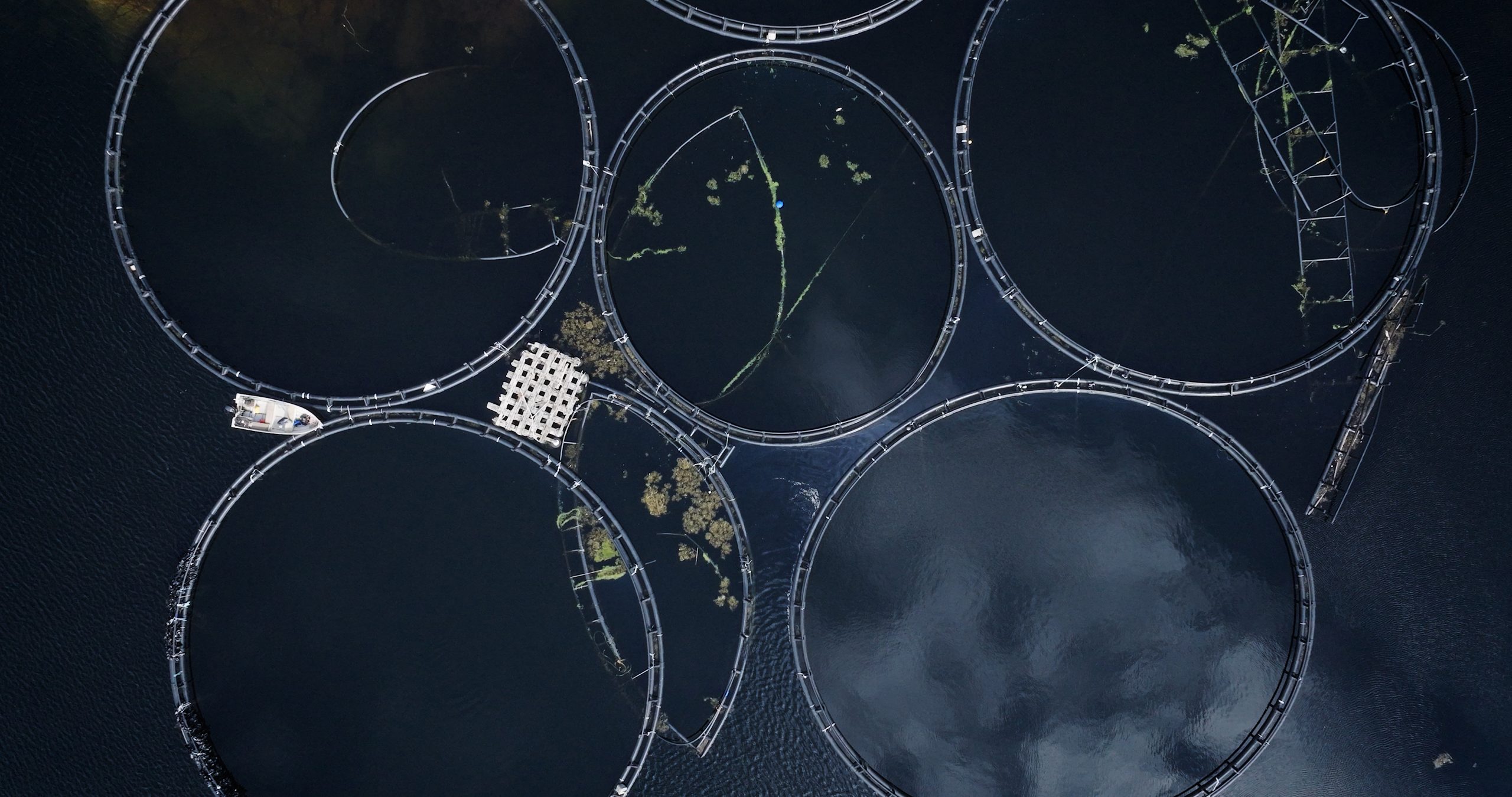
We are also committed to monitoring the impacts of open net-pen salmon aquaculture, which has been shown to affect wild Atlantic salmon populations negatively. We are looking at salmon that routinely escape from their enclosures and interbreed with wild Atlantic salmon, producing offspring that are less fit and contributing to population collapse. We work with partners to look at disease spread and pollution from the industry.
Conducting systematic monitoring across watersheds will allow us to monitor changes locally and at larger scales, which is necessary to implement solutions that can support the populations’ resilience to climate change. We can also monitor the results of our restoration, protection, and conservation efforts, understand how to adjust to local needs when needed, and more efficiently share science-based evidence with our partners worldwide.

Meet our leaders - Valerie Ouellet
Valerie Ouellet is ASF’s Vice-President of Research and Environment. A native of Quebec, she has experience working with governmental agencies, academia, and the non-profit sector. She has global experience doing research on the relationship between stream hydrology and thermal regimes, fish physiology and habitats, as well as tools development to support decision-making. More recently, her research focused on thermal habitats, including cold water refuge, management, stream restoration and diadromous multispecies management. Val has a long list of peer reviewed publications, including recent work on how to better use scientific outcomes to improve management and policies, as well as developing research directions to better understand the impacts of climate changes on Atlantic salmon. She brings significant knowledge of Atlantic salmon habitat research and management, and her dynamism, and is excited to lead the ASF’s research.
Thank you to our partners!
Every project that the ASF research team work on involves partners. We solve problems together and share the same goal; healthy wild Atlantic salmon populations and clean, free-flowing rivers for generations to come.
We have partnered broadly from river specific to international scales with First Nations, academia, NGOs, watershed stakeholders, industries, and governments.
Peer Reviewed Articles
Quilbé, R., Ouellet, V., Frechette, D., Kurylyk, B. L., Sullivan, C. J., Halfyard, E. A., Wilbur, N., and Gillis, C. A. 2025. Cold‐Water Thermal Refuge Enhancement and Creation for Salmonids: Successes, Failures, and Lessons Learned. River Research and Applications. https://onlinelibrary.wiley.com/doi/10.1002/rra.4462?af=R
Summary
As rivers continue to warm due to climate change, there is an urgent need for coordinated approaches to enhance the thermal resiliency of riverscapes. Cold-water refuges (CWRs) serve as critical habitats for temperature-sensitive aquatic species, yet efforts to enhance or create these refuges often lack a unified framework, risking a fragmented and ineffective approach. To address this challenge, the authours of this study held a workshop bringing together experts, practitioners, and stakeholders to develop best practices for CWR enhancement. This manuscript synthesizes the workshop outcomes, presenting a flowchart of overarching conceptual approaches to CWR enhancement, emphasizing factors such as refuge density and type. Case study summaries highlight examples across different CWR types, providing practical insights into site-specific challenges and solutions. Key recommendations include prioritizing CWRs for maximum ecological benefit, integrating thermal refuge enhancement into broader riverscape management plans, and adopting a catchment-based perspective to address upstream influences.
Quilbé, R., Ouellet, V., Frechette, D., Kurylyk, B. L., Sullivan, C. J., Halfyard, E. A., Wilbur, N., and Gillis, C. A. 2025. Cold‐Water Thermal Refuge Enhancement and Creation for Salmonids: Successes, Failures, and Lessons Learned. River Research and Applications. https://onlinelibrary.wiley.com/doi/10.1002/rra.4462?af=R
Ouellet, V., Fullerton, A. H., Kaylor, M., Naman, S., Bellmore, R., Rosenfeld, J. 2025. Food for fish: Challenges and opportunities for quantifying foodscapes in river networks. Wiley Interdisciplinary Reviews: Water 12 (1), e1752. https://wires.onlinelibrary.wiley.com/doi/10.1002/wat2.1752
Summary
Dynamic aquifer storage contributes to baseflow in streams, especially during dry periods when surface runoff is minimal.
This review defines baseflow resilience as a stream’s ability to maintain stable flow and water quality despite climate extremes and human impacts like water withdrawals and land use changes.
Watershed characteristics can influence resilience in complex ways—for instance, permeable geology may enhance groundwater-stream connectivity but reduce flow during droughts.
Shallow groundwater responds quickly to stress, while deeper sources delay impacts and can carry long-term contamination.
The review also examines how irrigation affects baseflow and summarizes key hydrogeological factors and stressors, along with metrics for evaluating baseflow resilience, using examples from the Delaware River Basin.
Ouellet, V., Fullerton, A. H., Kaylor, M., Naman, S., Bellmore, R., Rosenfeld, J. 2025. Food for fish: Challenges and opportunities for quantifying foodscapes in river networks. Wiley Interdisciplinary Reviews: Water 12 (1), e1752. https://wires.onlinelibrary.wiley.com/doi/10.1002/wat2.1752
Briggs, M.A., Newman, C., Benton, J. R., Rey, D. M., Konrad, C. P., Ouellet, V. …2025. James Buttle Review: The Characteristics of Baseflow Resilience Across Diverse Ecohydrological Terrains. Hydrological Processes 39 (3), e70101 https://onlinelibrary.wiley.com/doi/10.1002/hyp.70101
Summary
As climate change continues to warm rivers, it’s becoming harder for temperature-sensitive aquatic species like salmon and trout to survive. These animals rely on cold-water refuges (CWRs)—cool pockets in rivers that offer relief from rising temperatures. However, current efforts to protect or create these refuges are often scattered and uncoordinated.
To tackle this issue, researchers brought together experts, conservationists, and local stakeholders in a workshop to develop a shared set of best practices for enhancing cold-water refuges. They created a step-by-step framework to help guide future projects, including how to choose the most effective types of refuges and where to place them. Real-world case studies from different regions were also shared, offering practical examples of what works and what challenges remain.
The study highlights the need for better tools and technologies—like drones and thermal imaging—to track how and when fish are using these cooler areas. It also stresses the importance of looking at entire watersheds, not just isolated spots, when planning refuge projects. Ultimately, the goal is to help communities and conservation professionals work together more effectively to protect freshwater ecosystems as the climate continues to change. https://onlinelibrary.wiley.com/doi/10.1002/rra.4462
Briggs, M.A., Newman, C., Benton, J. R., Rey, D. M., Konrad, C. P., Ouellet, V. …2025. James Buttle Review: The Characteristics of Baseflow Resilience Across Diverse Ecohydrological Terrains. Hydrological Processes 39 (3), e70101 https://onlinelibrary.wiley.com/doi/10.1002/hyp.70101
Croghan, D., Van Loon, A. F., Bradley, C., Sadler, J., Ouellet, V., Hannah, D. M. 2025. Identifying the impacts of urbanization and extreme flows on river water temperatures in headwater catchments. Hydrological Sciences Journal 70 (2), 347-357 https://www.tandfonline.com/doi/full/10.1080/02626667.2024.2425827
Summary
Urbanization and extreme flows are altering stream temperature dynamics, yet our understanding of the impact of urbanization and extreme flows on stream temperature is limited. We deployed 27 water temperature loggers in three headwater catchments over three summers. We categorized flow as low, high, or average and calculated daily water temperature anomalies. Comparing Z scores between flow conditions revealed the impact of extreme events on water temperature. We used multiple linear regressions to identify landscape predictors of water temperature. We found during low flows stream temperatures were significantly warmer. Additionally, urban landscape predictors were linked to reduced warming during low flows. Our study highlights that low flows increase extreme water temperature events; however, this effect was less pronounced in more urbanized sites. High flows did not significantly affect water temperature anomalies. These results underscore the vulnerability of rivers to extreme temperatures during low flows; however, landscape may help mitigate these effects.
Croghan, D., Van Loon, A. F., Bradley, C., Sadler, J., Ouellet, V., Hannah, D. M. 2025. Identifying the impacts of urbanization and extreme flows on river water temperatures in headwater catchments. Hydrological Sciences Journal 70 (2), 347-357 https://www.tandfonline.com/doi/full/10.1080/02626667.2024.2425827
Dufresne, C., Lavoie, D., Robertson, M., April, J., Burke, C., Carr, J., Chassé, J., Cyr, F., Daniels, J., Denny, L., Denny, S., Han, G., Jonsen, I., Sheehan, T. F., Strøm, J. F., Trudel, M., & Whoriskey, (2025). The Labrador Current cold front shaping the Atlantic salmon homing migration routes from the waters off Southern Greenland to eastern North America. Progress in Oceanography, 233 https://www.sciencedirect.com/science/article/pii/S0079661125000278
Summary
Atlantic salmon (Salmo salar) experienced drastic population declines from the mid-1970 s to the early 1990′s throughout their range. The survival of the salmon while at sea is considered as the main driver of these declines, even though the underlying mechanisms are poorly understood. This study aims at improving the general understanding of the ocean distribution and migration timing of sub-adult salmon returning to North America from the waters off southern Greenland that could help determine the drivers of marine mortality. We used animal biotelemetry and numerical modeling to improve our knowledge of Atlantic salmon migratory behavior. We used data from 43 North American Atlantic salmon tagged at West Greenland, of which 5 individuals migrated towards their native rivers, and developed an individual-based model to simulate homing migration from their feeding grounds in South Greenland towards the coastal areas of their native rivers. The tagged and simulated salmon exhibited similar behavior when they encountered the cold water front formed by the southward flowing Labrador Current. The salmon either crossed the Labrador Current near the Newfoundland shelf break or continued their route southward along the warmer side of the cold front. These two pathways emerged as the migration routes split where the shelf slope is less steep. This discontinuity along the shelf break leads to a highly dynamic region, a high sea surface temperature variability, and occasional breaches in the thermal front that favor on-shelf fish migration. The salmon trajectories appear to be deflected when the front temperature is 1 °C or less. The 1 °C isotherm would thus bound the thermal distribution of North American Atlantic salmon and shape the species migration routes.
Dufresne, C., Lavoie, D., Robertson, M., April, J., Burke, C., Carr, J., Chassé, J., Cyr, F., Daniels, J., Denny, L., Denny, S., Han, G., Jonsen, I., Sheehan, T. F., Strøm, J. F., Trudel, M., & Whoriskey, (2025). The Labrador Current cold front shaping the Atlantic salmon homing migration routes from the waters off Southern Greenland to eastern North America. Progress in Oceanography, 233 https://www.sciencedirect.com/science/article/pii/S0079661125000278
Daniels, J., Brunsdon, E.B., Chaput, G., Dixon H. J., Labadie H., Carr J. 2021. Quantifying the effects of post-surgery recovery time on the migration dynamics and survival rates in the wild of acoustically tagged Atlantic Salmon Salmo salar smolts. 2021. Animal Biotelemetry 9, 6 https://doi.org/10.1186/s40317-020-00228-6.
Summary
Riverine fishes face major challenges like habitat loss and climate change, which impact the productivity of their ecosystems. While factors like water temperature are often studied, the distribution and availability of food—key to fish growth and survival—remain less understood.
This paper expands on the concept of “foodscapes,” focusing on three aspects of food: abundance, accessibility, and quality. It addresses why food availability is hard to estimate, the consequences of uncertainty, and emerging methods to better measure it.
The authors emphasize the critical role of food in fish conservation, particularly as waters warm.
Daniels, J., Brunsdon, E.B., Chaput, G., Dixon H. J., Labadie H., Carr J. 2021. Quantifying the effects of post-surgery recovery time on the migration dynamics and survival rates in the wild of acoustically tagged Atlantic Salmon Salmo salar smolts. 2021. Animal Biotelemetry 9, 6 https://doi.org/10.1186/s40317-020-00228-6.
Quinn B., Trudel M., Wilson B., Carr J., Daniels J., Haigh S., Hardie D., Hawkes J., McKindsey C., O’Flaherty-Sproul M., Simard É., and Page F. 2021. Modelling the effects of currents and migratory behaviours on the dispersal of Atlantic salmon (Salmo salar) post-smolts in a coastal embayment. Canadian Journal of Fisheries and Aquatic Sciences. 79(12): 2087-2111. https://doi.org/10.1139/cjfas-2021-0316
Summary
This study examined how surgery and recovery time after acoustic tagging affect the survival and migration of wild Atlantic Salmon smolts through freshwater, estuarine, and marine environments.
Four treatment groups were compared to assess the impacts of hatchery conditions and post-tagging recovery time. Results showed that short recovery times and hatchery captivity reduced survival, especially within the first 5 days or 48 km after release, with lingering effects during the transition to saltwater.
Hatchery fish migrated faster, likely due to larger size, but still experienced reduced survival. These findings highlight the importance of quantifying tagging-related effects in the wild, as such biases can influence conclusions about natural fish behaviour and survival.
Quinn B., Trudel M., Wilson B., Carr J., Daniels J., Haigh S., Hardie D., Hawkes J., McKindsey C., O’Flaherty-Sproul M., Simard É., and Page F. 2021. Modelling the effects of currents and migratory behaviours on the dispersal of Atlantic salmon (Salmo salar) post-smolts in a coastal embayment. Canadian Journal of Fisheries and Aquatic Sciences. 79(12): 2087-2111. https://doi.org/10.1139/cjfas-2021-0316
For a complete list of our published research and technical reports, click here.