





Rivernotes, Uncategorized
Rivernotes May 21, 2026
Phil Monahan
May 21, 2026
Editor's Note
by Phil Monahan, ASF Managing Editor
Welcome to Rivernotes, our weekly roundup of news and information from around the world of Atlantic salmon—Québec, Atlantic Canada, and Maine.
Reminder: The row of buttons you see above will help you find exactly what you're looking for. Simply click a button and be whisked directly to the section you want to read first.
Between Seasons
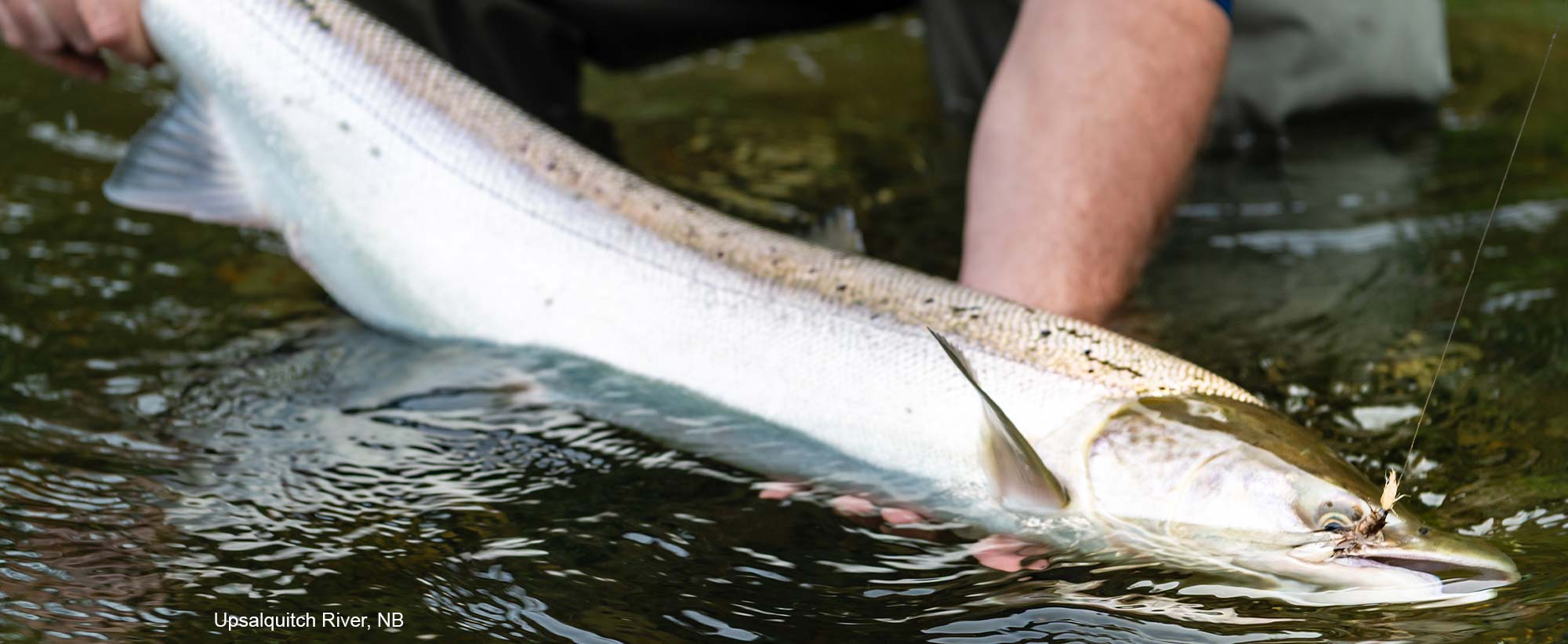
According to Jerry Doak at W.W. Doak Fly Shop on the Southwest Miramichi River, spring salmon season was okay—neither a bust nor anything to write home about—but many anglers caught nice brook trout while waiting for the tug of a kelt. Next up will be the brief sea-run trout run, which he calls the "Andy Warhol fishery" because "it's famous for about fifteen minutes." You've got to be on the water when it happens because if you're hearing about it, you might already be too late.
Given current water levels and fairly frequent precipitation over the past weeks, Jerry thinks there will be adequate water for the start of the bright-salmon run, which really gets going the second week of June.
Love and Salmon
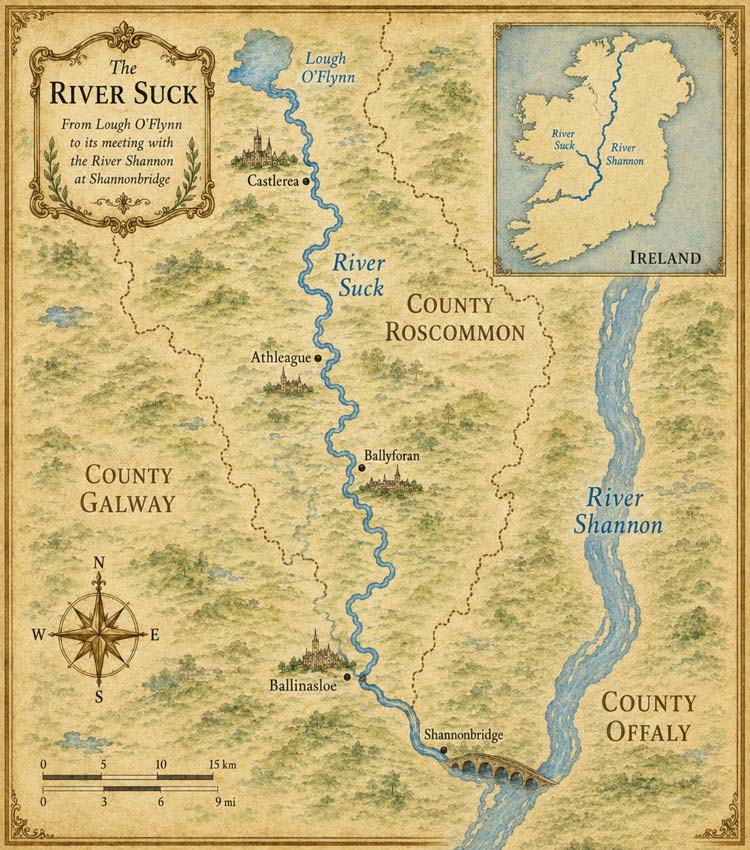
It's not every day that an Atlantic-salmon-themed fairy tale comes over the transom, but that's exactly what happened last week. Irish writer Andreas Buttimer sent us a story about a boy from Ballinasloe, County Galway, who falls in love three times: first with a river, then with a fish, and finally with a red-haired girl. These passions take him across an ocean and back. You'll have to read it to find out why.
Newfoundland and Labrador
Newfoundland and Labrador Program Director Kim Thompson describes the high-water conditions in the province, as well as some important new regulations and upcoming events.
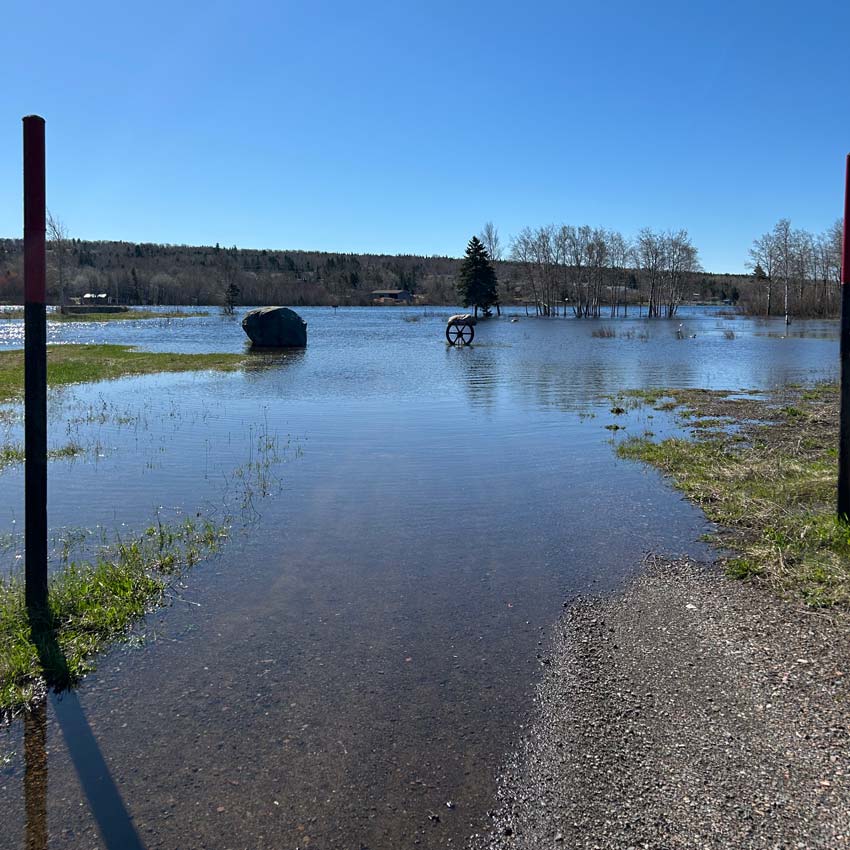
The long weekend was a wet one in the province, with rivers at remarkably elevated levels from snowpack remaining in the backcountry, the highlands of the west coast of the island, and northern Labrador. According to the real-time streamflow data from the Water Resources Management Division of the Department of Environment, Conservation and Climate Change, flood warnings remain for areas of the Churchill River and Lake Melville in Labrador, as well as the Exploits River at Badger on the island.
Fishing News
Despite the wet weather, there are reports of anglers accessing certain secret fishing locations and finding success, with some nice catches of sea-run trout.
Parks Canada–Gros Morne National Park advises anglers to protect salmon and trout populations that are at critically low levels. Trout River as well as Trout River Pond and Tributaries are closed to fishing for the entire season, ending September 7, 2026.
The Watershed Stewardship Association (WSA) Rocky – Colinet & North Harbour Rivers is gathering information and input regarding angling and usage of the Rocky River Watershed. Click here to complete the brief Salmon River Usage and Stewardship Survey.
Upcoming Events
The annual online auction hosted by Salmon Preservation Association for the Waters of Newfoundland & Labrador (SPAWN) is live until Friday, May 22nd (tomorrow!) at 20:00 NST. This is your chance to bid and perhaps get a great deal on some amazing stuff while supporting SPAWN in their continued ongoing conservation efforts.
On Sunday, May 24th Atlantic Rivers Outfitting Company and Banished Brewing are teaming up—with support from the Salmonid Association of Eastern Newfoundland (SAEN) and local Rotarians—to clean up the Waterford River. The effort will work from the mouth of the river at the harbour all the way up to Bowring Park, with teams covering different sections throughout the day. The event runs from 10:00 to 15:00, so if you have a few hours to walk the banks and help clean up litter and debris along the Waterford River, please join in. Reach out to henry@banished.ca for more info.
New Brunswick
The ASF team in New Brunswick is currently working flat-out seven days a week and handling more than 1,000 smolts per day. In lieu of a regular submission, New Brunswick Program Director David Roth sent us a video by Miramichi guide Axel Lerche about the trap-and-transport project designed to help outmigrating smolts avoid the hungry schools of striped bass in the Miramichi estuary.
Maine
ASF Habitat Restoration Project Manager Cat Morse shares a story and photos from a canoe trip that offers a glimpse of what anadromous fish can look forward to when they gain access to this habitat.
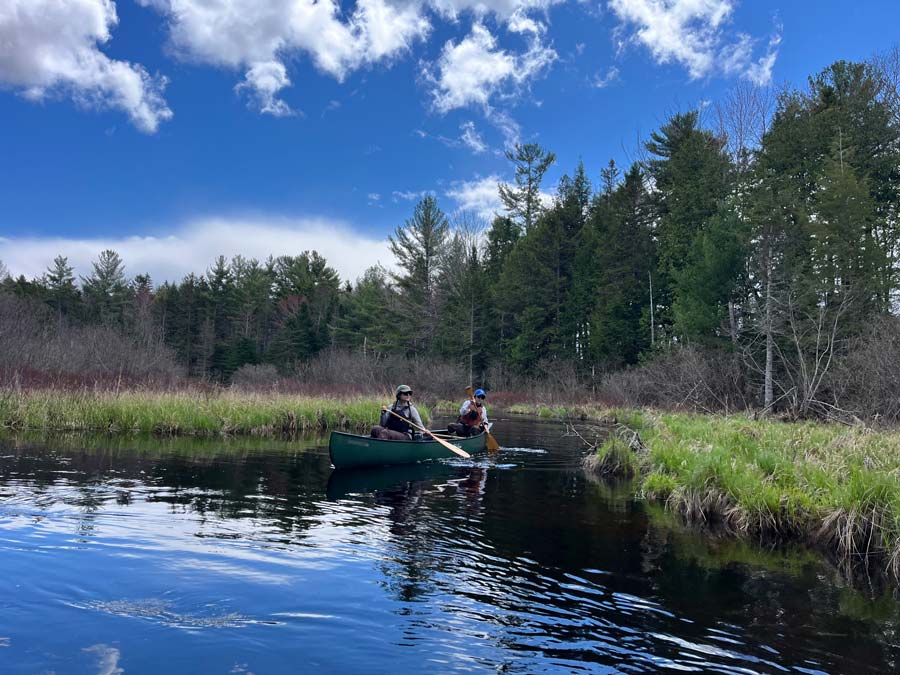
Mid-May is a great time to be on the Narraguagus River. I spent a whole Friday canoeing a stretch of the river with my fellow colleagues who are working on the Cherryfield Dam.
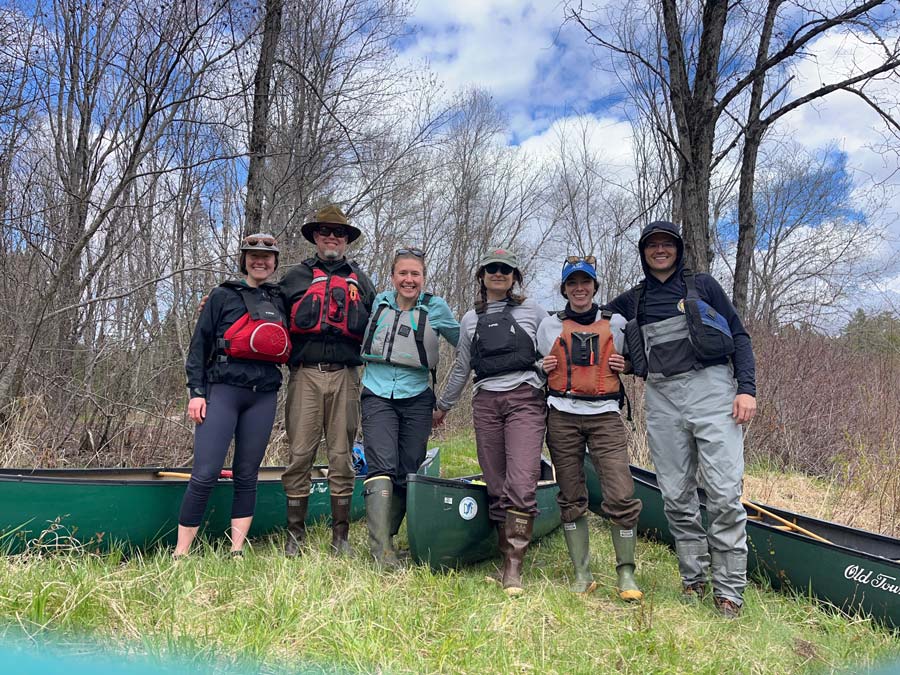
We started mid-morning in Beddington, pairing up in three boats. The water levels were perfect for paddling, and there were some fun class II rapids. We took a slight detour up a tributary to look at the Bog Brook Dam and fishway (no alewives yet!) before continuing downstream to Deblois.
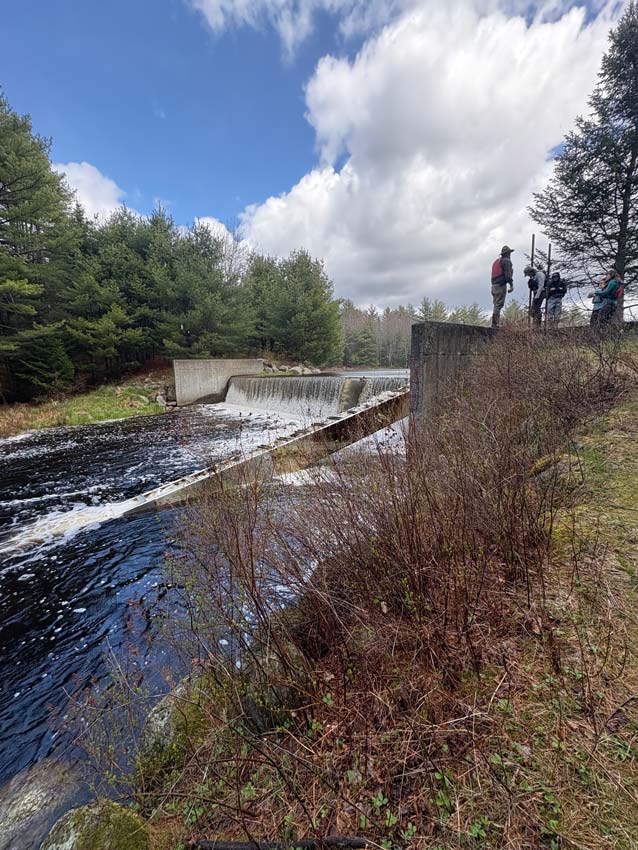
During our trip, we passed through hemlock and red-maple forests, navigating along stretches of cobble and gravel, across a few woody snags, and around some submerged granite boulders. It is inspiring to think of all sea-run fish, including salmon, that will be able to return to these stretches of the river with the removal of the downstream dam and installation of a nature-like fishway this summer.
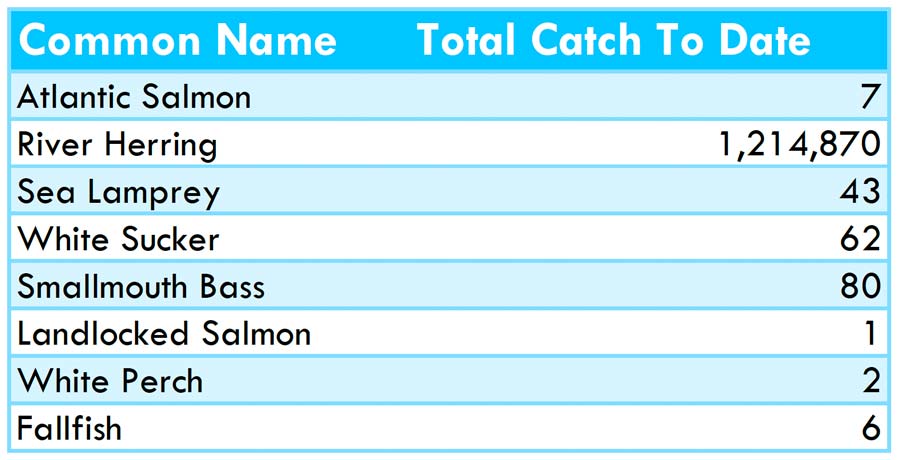
On Sunday, Jason Valliere, a marine scientist with the Maine Department of Marine Resources, let us know that things are heating up at the Penobscot fish passage:
The river has finally warmed up: 16C/61F this afternoon. The fish have shown up too! We have now passed 1.2 million river herring, 7 salmon, and 43 sea lamprey. I expect shad will be showing up any day now.
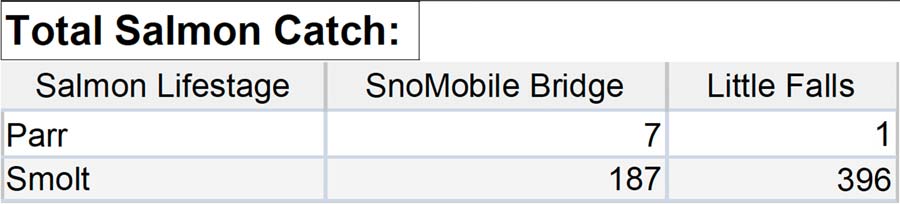
Colby W. B. Bruchs, a Fisheries Scientist with Maine Department of Marine Resources, says that smolt-trap operations are going well.
Week 4, and the smolts keep coming! We are now past peak migration. The Little Falls wheel captured 57 new smolts this week, while SnoMobile Bridge on Route 9 captured 16 new. Discharge is declining rapidly and is approaching 300 CFS.
Nova Scotia
Nova Scotia Program Director Matt Russell has got smolt on the brain these days, but he has an eye to the upcoming salmon season, as well.
Field Work
ASF staff and our partners on the St. Mary’s and Chéticamp Rivers continue our push to tag smolt along their outward migration. As referenced in previous Rivernotes, conditions have not made this an easy feat. The cold and wet spring we have received across this province continues to throw a wrench in our tagging operations. With equipment being damaged on the St. Mary’s and our smolt wheel being temporarily removed from the current in the Chéticamp, it has been an uphill battle to tag smolts. Nonetheless, our teams and partners are up for the challenge and doing everything we can to tag as many smolt as possible.
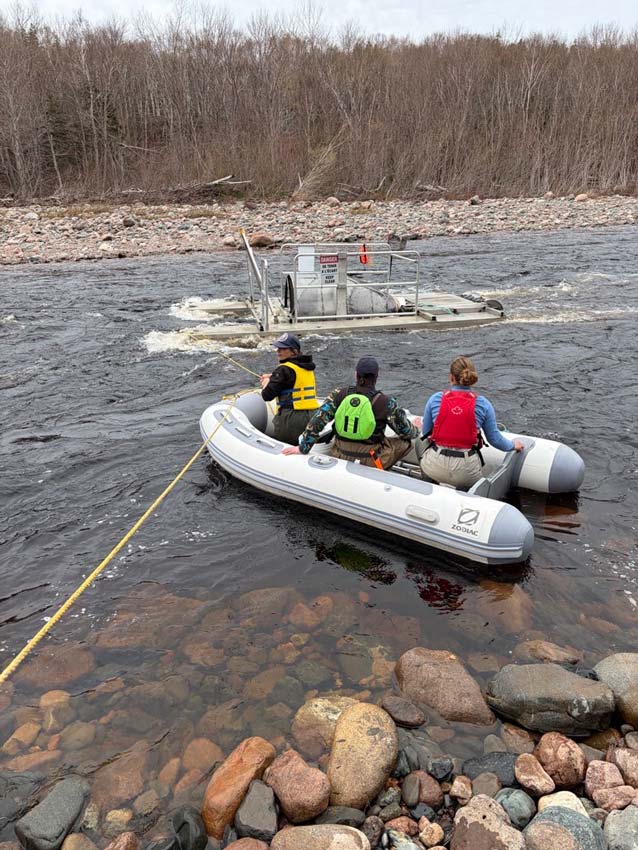
In recent days, our efforts seem to be paying off, with both the Chéticamp and the St. Mary’s teams reporting their largest catches of the season. With any luck, these numbers will continue to increase as smolt runs across the region seem to be delayed this year.
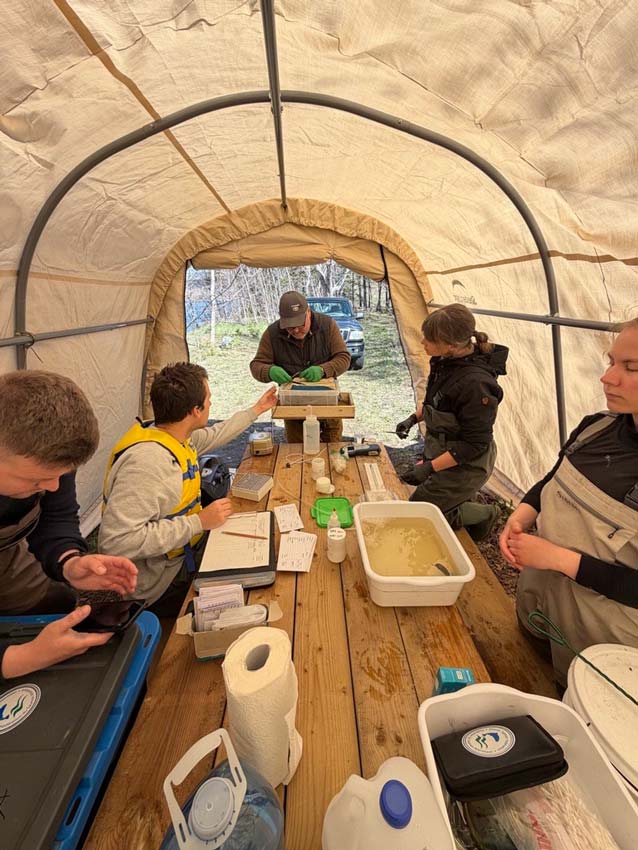
Photo: Matt Russell
Salmon Season
With less than two weeks to go and a forecast of cool temperatures and consistent rain, things are looking good for salmon season. People from across the province and beyond will soon be making their annual pilgrimage to the majestic Cape Breton Highlands, and I can’t wait to see as many of you as possible along the river banks and in the pool queues.
Salmon Documentary in Halifax
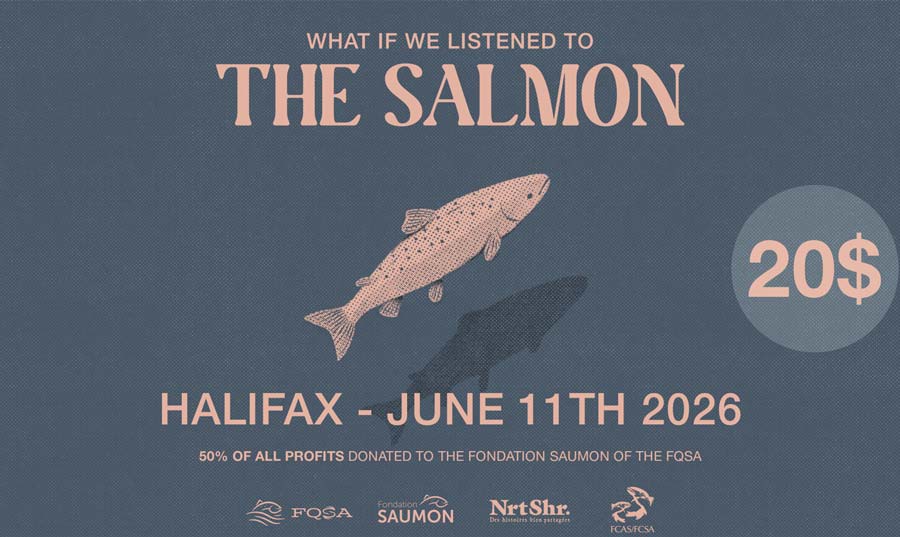
On Thursday, June 11 at 7:00 p.m.—at the Bus Stop Theatre in Halifax—the FQSA and Groupe North Shore will host a screening of the documentary "What If We Listened to the Salmon," which aims to foster a better understanding of the issues surrounding Atlantic salmon, encourage dialogue, and inspire concrete actions to protect this iconic species and the ecosystems on which it depends. The presentation will be followed by a discussion panel where guest speakers will engage with the audience about the current state of Atlantic salmon and the challenges surrounding its conservation. This event is being held in support of the FQSA Salmon Foundation and directly contributes to Atlantic salmon conservation efforts.
Québec
La directrice du programme Québec, Caroline Côté, présente les faits saillants d’un événement remarquable qui accueille de nouveaux pêcheurs et conservationnistes dans la communauté.
Cascapédia–Saint-Jules : la 7e édition du 50/50 On the Water
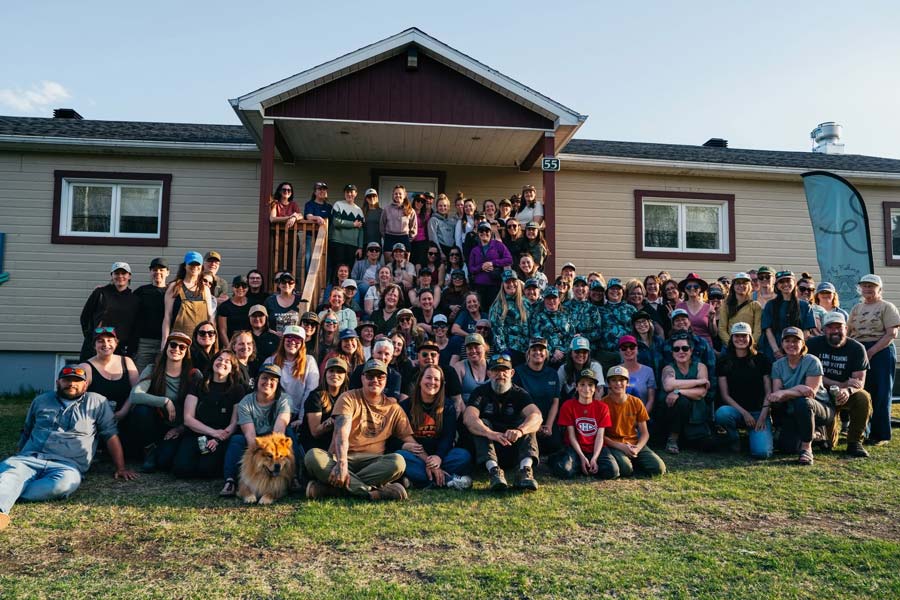
La fin de semaine dernière, près de 150 femmes, enfants et bénévoles se sont réunies à Cascapédia–Saint-Jules pour la 7e édition du 50/50 On the Water, un événement imaginé et organisé par Lyne Sexton, de Sexton & Sexton. Ce qui a commencé comme une fin de semaine entre pêcheuses est devenu, au fil des années, une communauté qui se construit autour de l'amour des rivières et de la transmission de la passion pour la pêche au saumon atlantique.
Pendant trois jours, des femmes de tous les niveaux ont pris part à des ateliers de lancer à une main, d'initiation au Spey, de montage de mouches, de nœuds, de lecture de rivière, de sécurité et de remise à l'eau. Certaines tenaient une canne à mouche pour la première fois, d'autres en étaient à leur sixième ou septième édition.
« Il y a des filles qui reviennent depuis sept ans, puis elles amènent une autre femme, qui amène ensuite une autre femme », explique Lyne Sexton. Pour Marie-Ève, participante à sa deuxième édition et pêcheuse depuis quatre ans, ce type d'espace répond à un besoin précis : « La pêche, c'est intimidant. Pêcher avec des filles, c'est plus relax. »
L'un des ateliers de nœuds était donné par Normand Fiset, président de la FQSA, qui insiste sur l'importance du turl knot, souvent négligé parce que jugé compliqué. Il souhaiterait aussi voir l'événement consacrer plus de temps aux bonnes pratiques de remise à l'eau : ardillons écrasés, puises sans nœuds qui permet de protéger les yeux du « saumon qui n'a pas de paupières », et limite le temps de combat du poisson.
La Fédération du saumon atlantique (FSA) était présente tout au long de l'événement pour aller à la rencontre des participantes et faire connaître ses chantiers de conservation. Plusieurs programmes ont été mis de l'avant : Wild Salmon Watersheds, qui vise à protéger les rivières à saumon les plus saines d'Amérique du Nord, et Headwaters, qui s'attaque à la restauration des habitats en amont. La recherche scientifique de la FSA — du suivi des smolts aux études en mer — a aussi suscité beaucoup d'intérêt.
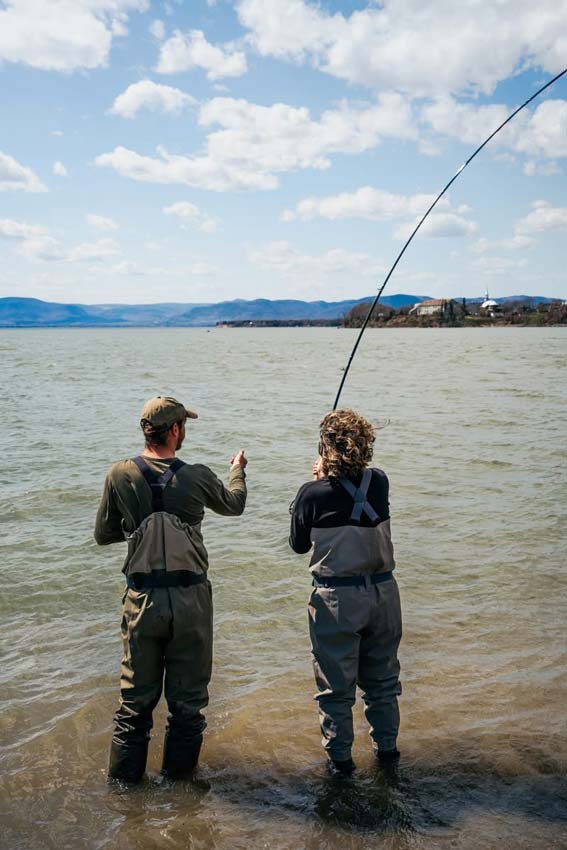
« Revenir au 50/50 pour une deuxième année avec l’équipe de la FSA avait une signification particulière pour moi, un peu comme une boucle qui se referme. Ce genre d’expérience me rappelle à quel point on peut rendre la conservation tangible pour les gens, peu importe leur niveau d’engagement, et confirme l’importance du travail de la FSA pour protéger le saumon sauvage pour les générations futures. » — Aimée Hopton, gestionnaire des programmes stratégiques de la FSA
Au-delà de la science et des programmes, ce sont les partenariats qui rendent ce travail possible. La présence de la FSA aux côtés de Sexton & Sexton, de la FQSA, des gestionnaires de rivières, des pêcheurs et des communautés locales illustre ce que peut accomplir une coalition large et engagée.
Dans un contexte où les enjeux qui touchent le saumon atlantique et ses rivières demeurent bien réels, le 50/50 rappelle que la conservation passe aussi par les communautés, l'éducation et le sentiment d'appartenance au territoire.
Et par le plaisir, surtout, d'être ensemble sur l'eau !
Québec (English)
Québec Program Director Caroline Côté shares highlights from a remarkable event that brings new anglers and conservationists into the fold.
Cascapédia–Saint-Jules: The 7th Edition of 50/50 On the Water
Last weekend, nearly 200 women, children, and volunteers gathered in Cascapédia–Saint-Jules for the 7th edition of 50/50 On the Water, an event created and organized by Lyne Sexton, of Sexton & Sexton.
What began as a fly-fishing weekend among women has grown, over the years, into a community built around a shared love of rivers and the passing on of a passion for Atlantic salmon fishing.
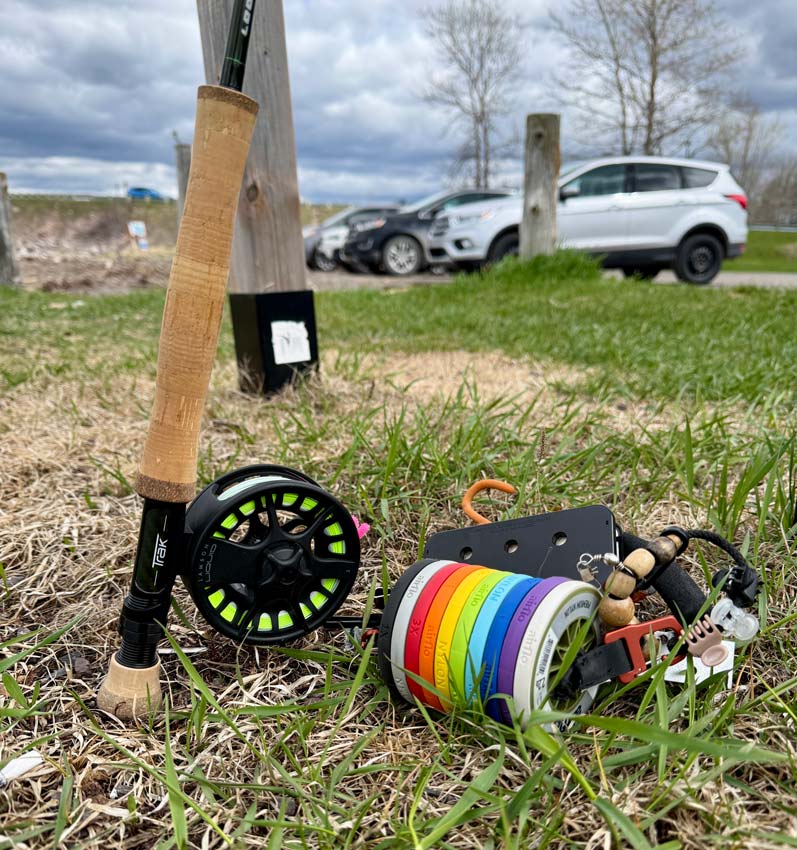
Over three days, women of all skill levels took part in workshops on single-hand casting, Spey introduction, fly tying, knots, reading water, safety, and catch-and-release best practices. Some attendees were holding a fly rod for the first time. Others were attending their sixth or seventh edition, returning as much to progress as to reconnect with friendships built over the years.
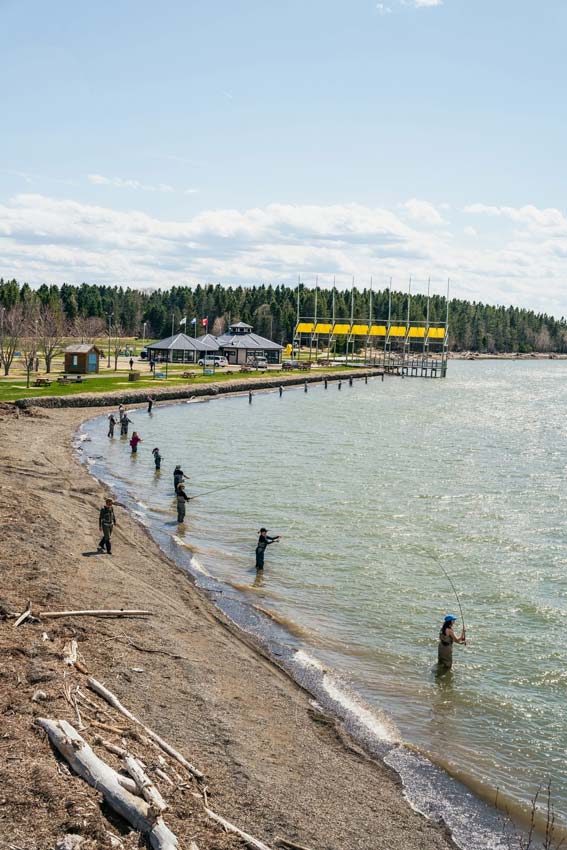
"There are women who have been coming back for seven years, and they bring another woman, who then brings another," explains Lyne Sexton. That organic growth is felt everywhere on site: around the tying tables, on the water, over meals, and in late-evening conversations.
For Marie-Eve, a participant attending her second edition after four years of fishing, this kind of space fills a specific need: "Fishing can be intimidating. Fishing with other women is more relaxed." Several participants said they likely would never have started fly fishing without an event like this one. Today, they organize their own trips and bring others into the sport.
One of the knot-tying workshops was led by Normand Fiset, president of the Fédération québécoise pour le saumon atlantique (FQSA), who stresses the importance of the turle knot—often overlooked because it's considered tricky. He'd also like to see more time devoted to best catch-and-release practices, such as using pinched barbs and knotless nets to protect the eyes of "a salmon, which has no eyelids." These practices also shorten the fight time, and therefore reduce the exhaustion of the fish.
The Atlantic Salmon Federation was on site throughout the weekend, meeting with participants and sharing its conservation work. Several programs were highlighted, including Wild Salmon Watersheds, which works to protect the healthiest salmon rivers in North America, and Headwaters, which focuses on restoring upstream habitat. ASF's scientific research from smolt tracking to marine studies also drew strong interest.
ASF's Strategic Programs Manager Aimée Hopton said, "Returning to 50/50 for my second year representing ASF felt especially meaningful, something of a full-circle moment. Experiences like these continue to show me how we can connect people at all levels to conservation in a tangible way, and reinforce the importance of ASF’s work in protecting wild salmon for future generations.”
Beyond science and programs, partnerships are what make this work possible. ASF's presence alongside Sexton & Sexton, the FQSA, river managers, anglers, and local communities reflects what a broad and committed coalition can accomplish.
At a time when the challenges facing Atlantic salmon and their rivers remain very real, 50/50 is a reminder that conservation also runs through community, education, and a sense of belonging to the territory.
And, above all, through the pleasure of being on the water together!
Wild Salmon Watersheds
Jordan Condon, Science Coordinator for Wild Salmon Watersheds, updates us on smolt-wheel operations around the region.
It’s been a challenging year for smolt wheels due to high flows, but on the bright side, seeing these rivers teeming with cold water is an encouraging sign for the beginning of the salmon angling season. The following is a brief update from three of the Wild Salmon Watersheds.
The Terra Nova River is currently facing significant high flows. The crew battled high water to deploy the wheel and begin operations, but water levels have continued to rise. As a result, the decision was made to suspend fishing until the wheel can be operated safety again.
The Chéticamp River had a more "typical" year for snowfall, meaning the discharge coming from the highlands is providing a quantity of cold water. The cooler water temperatures also mean that the smolt migration cues have been delayed, but in anticipation of upcoming warmer daytime temperatures, the smolt run should start ramping up soon.
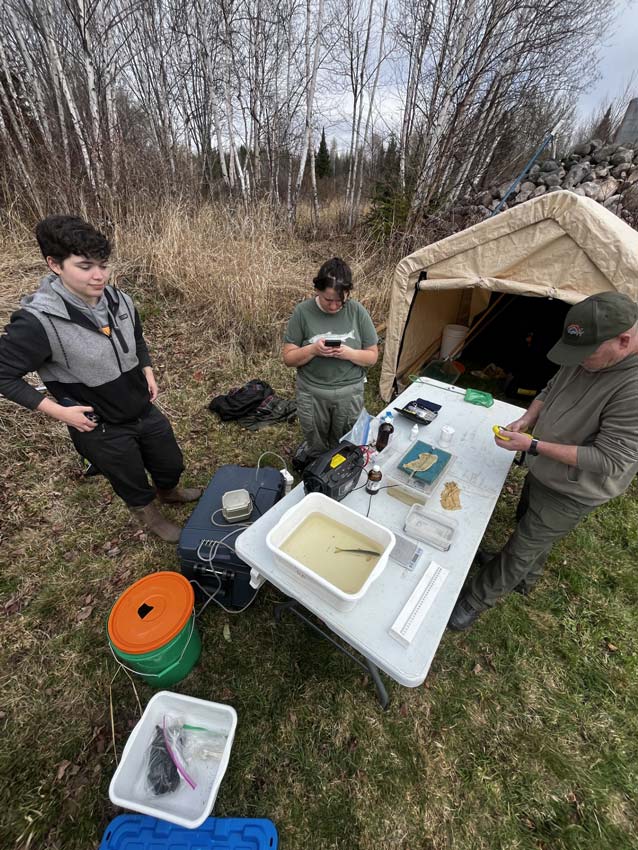
The Nepisiguit River experienced similar conditions to the Terra Nova, with high waters delaying the deployment until May 13. The water levels are currently much more favorable, allowing the wheel to be fished consistently with no issues beside eagerly waiting for larger numbers of smolts to pass through!
Research and Environment
Ellen Mansfield, of ASF's Research and Environment team shared stories of teams preparing for a season of collecting and analyzing data from rivers around the region.
When the River Doesn't Cooperate
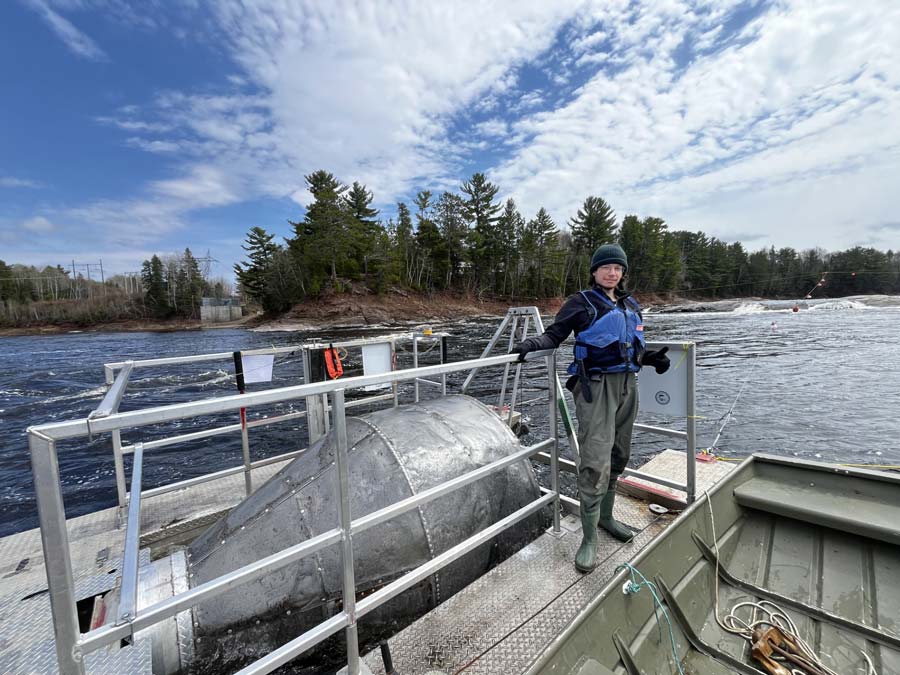
Kate Gingles is learning the ropes of being a field biologist, and among her tasks is monitoring the smolt run. Installing a rotary screw trap—a.k.a "smolt wheel"—just above a waterfall sounds straightforward on paper. In the field, it rarely is. High flows hit differently when you're chest-deep, anchoring a 2,400-pound steel frame to a riverbed that doesn't want it there. The trap has to sit precisely: if it's too far upstream, you miss fish using the margins; if it's too close to the drop, turbulence compromises gear integrity and crew safety. Every bolt tightened, every cable tensioned, every adjustment is made against a current actively pushing back. The river sets the schedule, not us. What that work produces for ASF's research and Wild Salmon Watersheds teams is critical: real counts of wild smolts, the only currency that tells us whether restoration investments are actually translating into more fish.
When the trap starts spinning and the first smolt hits the live box, the river suddenly feels a lot less angry.
And so it begins!
Aquatic Technician Kate Gingles and Senior Biologist Graham Chafe were at Ludlow near Boiestown on Tuesday to tag some of our compliment of 80 smolt for acoustic tracking of Southwest Miramichi salmon. It's our first year tagging at Ludlow. A big thank you to the staff from Miramichi Salmon Association (MSA), DNR and Axel Lerche from Country Haven for their hard work on the smolt wheels there and helping us out by sourcing and caring for the smolt until we were there to tag. Also thank you to Dan Cain for access, via his property, to the smolt wheel and allowing us to set up for tagging.
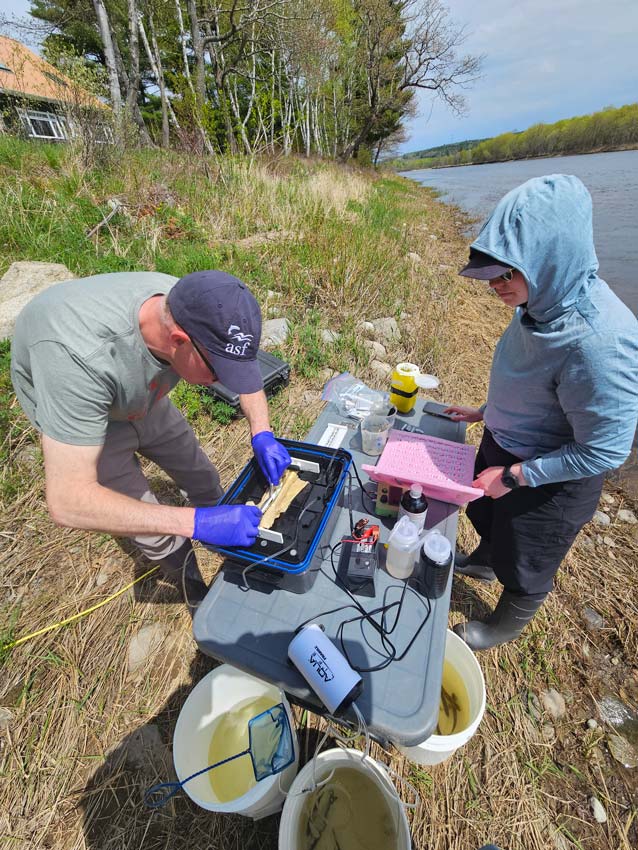
We tagged 51 smolt on the first day and will return likely today for the rest, depending on weather. Wednesday weather was expected to hit 30C, so to avoid extra stress on the fish, we skipped those conditions. While Graham has been tagging for years, this was Kate's first go at acoustic tagging, and after some instruction and observation she picked up the skill very well.
Starting Small, Thinking Big
Every year, crews fan out across Maine salmon rivers with buckets full of Atlantic salmon fry, each weighing about 0.2 grams (more or less). Valerie Ouellet is helping a Maine Department of Marine Resources (DMR) crew on the Narraguagus.
Why stock fry, rather than smolt? The trade-off is survival: fry face years of predation, drought, and thermal stress before they ever see salt water. That's exactly the point. Recovery doesn't come from shortcuts. It comes from rebuilding self-sustaining wild populations, river by river, cohort by cohort. From Downeast Maine to the Kennebec and Penobscot watersheds, partners including Maine DMR, Fish and Wildlife, and other volunteers continue working to restore the last wild U.S. populations of Atlantic salmon. Each fry released is a bet on habitat quality; on cold, clean water holding; and on the ocean not taking every single one of them. Most won't make it back.
The ones that do are the whole story and bring hope back to Maine with them.