





RiverNotes
ASF Rivernotes 6 May 2021
asf
mai 6, 2021
COMPILED BY TOM MOFFATT ~ TMOFFATT@ASF.CA
NOT ENOUGH HOURS IN THE DAY
Jonathan Carr, ASF Vice-President of Research and Environment, was on the Nepisiguit.
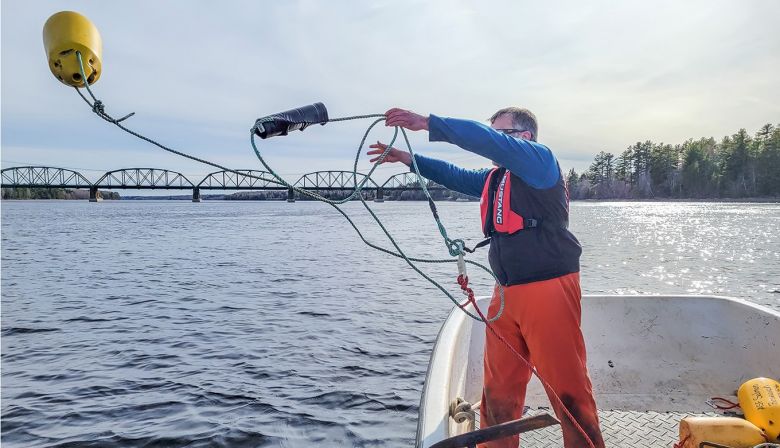
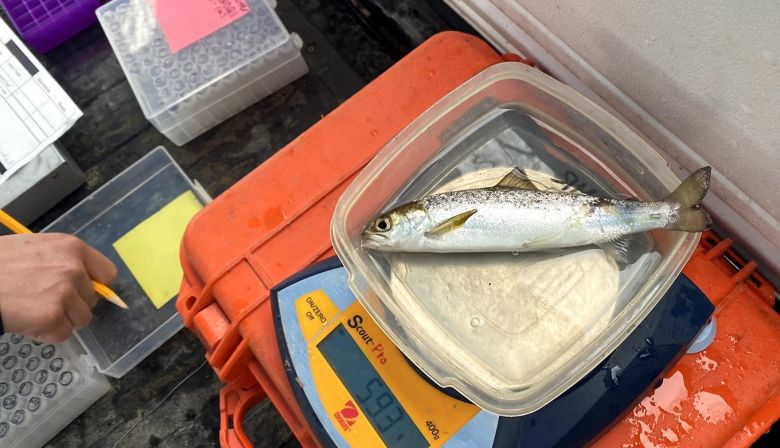
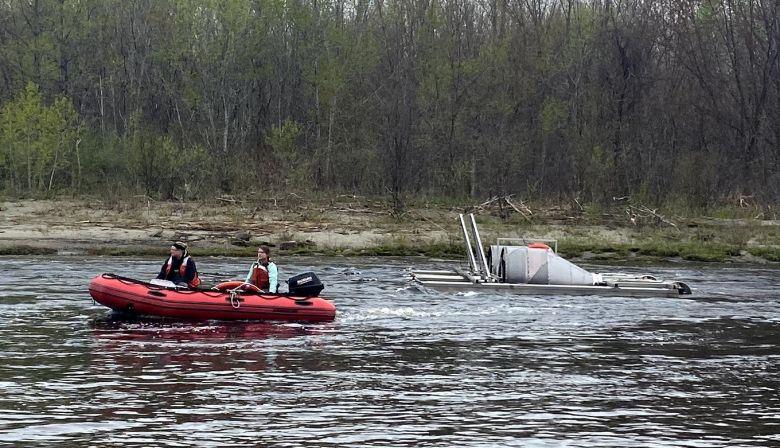
I had the opportunity to assist with kelt tagging on the Nepisiguit River last week being conducted in a wide-ranging Environmental Studies Research Program partnership involving Gespe’gewaq Mi’gmaq Resource Council (GMRC), Pabineau First Nation, the Nepisiguit Salmon Association, the Restigouche River Watershed Council, DFO, DNR and others. Everyone is pulling together to see this vital tracking research succeeds in understanding the charismatic wild Atlantic salmon.
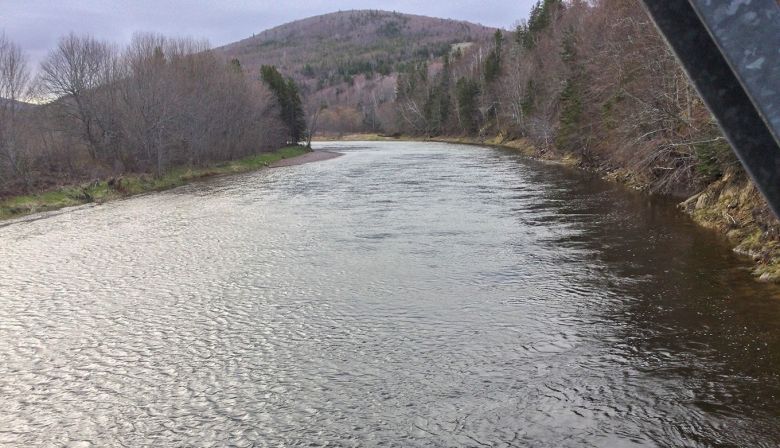
I personally benefitted through being able to explore the Nepisiguit River to become more familiar with the many initiatives led by the Nepisiguit Salmon Association (NSA).
Just a snapshot of some NSA activities includes use of drones to conduct redd counts and to identify siltation and habitat impediments in the river, collection of water temperature data for DFO/PFN/NSA, monitoring juvenile and adult populations, and operation of a stream side incubation unit for a fry supplementation program.
Special thanks to Michel Poitras (NSA Project Manager) and Billie Chiasson (NSA volunteer) for providing the river tour.
In the Miramichi River system, every day is important in getting the vital research underway.
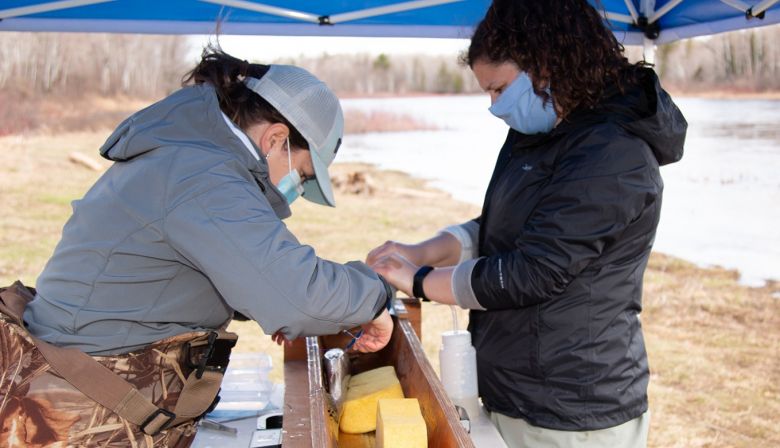
Earlier this week ASF Research staff were deploying acoustic receivers in the Miramichi system. The acoustic devices implanted in smolt in both the Northwest Miramichi and at Rocky Brook on the Southwest Miramichi transmit signals that are registered by the receivers as the fish pass by, providing identification information. The research also garners absolutely essential information on the predation by striped bass in the Miramichi estuary.
Jonathan Carr notes:
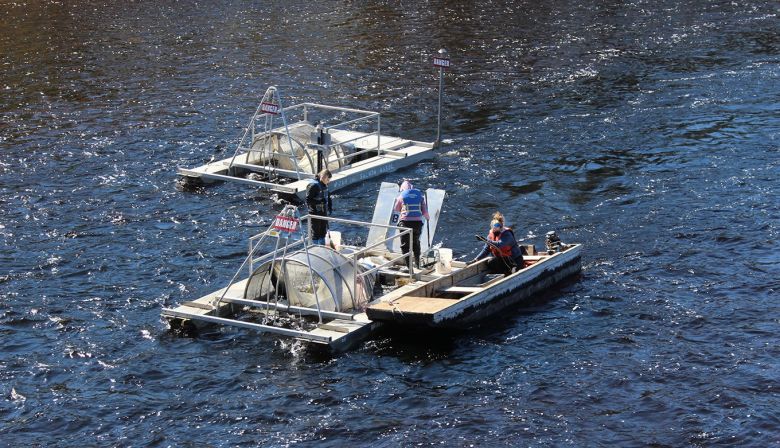
The Miramichi Salmon Association installed smolt wheels at Wayerton Bridge on the NW Miramichi on May 3, and acoustic tagging of smolt will begin soon on that river.
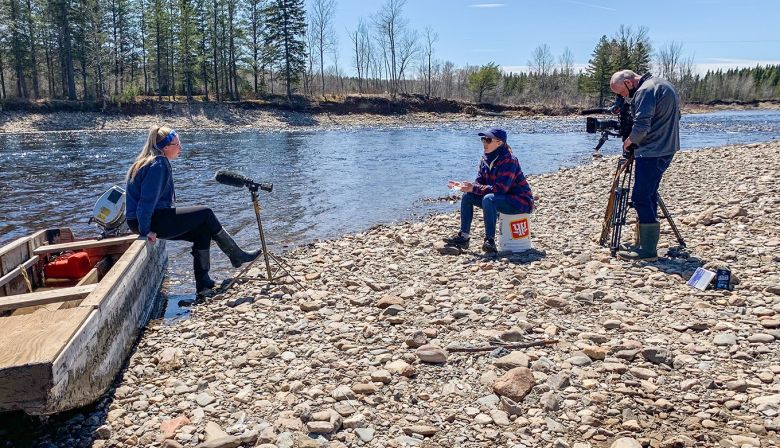
Neville Crabbe, ASF Director of Communications, visited the Northwest Miramichi on Tuesday of this week. He says:
The warming water has smolt on the move in the Northwest Miramichi.
I visted the river Tuesday with a crew from Radio Canada and CBC, highlighting the conservation work of ASF and its partners in the watershed. Watch for the story next week, including drone footage of the new cold-water enhancement project at Wildcat Brook.

Striped Bass
The upsurge in striped bass over the past decade has taken a toll on the number of Atlantic salmon smolt surviving their journey from stream to sea. The arrival of striped bass in the lower Miramichi system is not good news for these smolts.
For anglers, the striped bass have become a strong reason to visit this area, and certainly any reduction in their numbers is small but good news for Atlantic salmon.
The video below was taken this week on the Little Southwest Miramichi River.
https://vimeo.com/545493563
Petitcodiac
The river now flows under the first part of the newly constructed bridge, and will soon run completely free. Chris Bragdon’s drone view of the river on Apr. 28 gives cause for celebration.
Nathan Wilbur has been watching the Nashwaak River closely. There has been only very modest flooding this year, and the hope is that there will be sufficient flow during the summer months.
MAINE
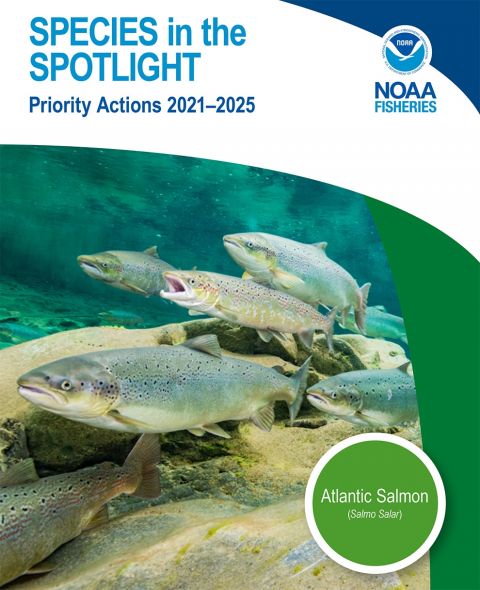
The 16-page document highlights the principal issues for Atlantic salmon in the U.S., with emphasis on the need to remove dams and improve fish passage, and the problem of reduced genetic diversity in the surviving population.
The report even features photos of adult Atlantic salmon in the Sandy River, one branch of the Kennebec.
The importance of connecting headwater streams is emphasized, something that ASF is very involved in through our Maine Headwaters Project.
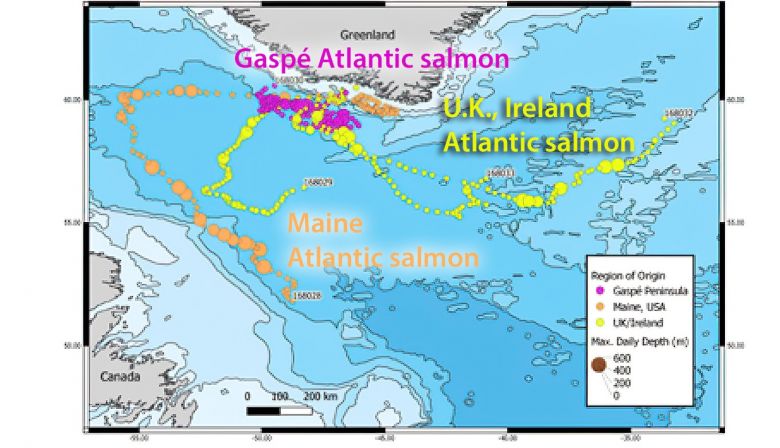
The document also highlights the importance of the tracking at sea being undertaken by NOAA, ASF and KNAPK to better understand the travel of Atlantic salmon returning from Greenland waters towards the U.S. in particular.
Penobscot
Jason Valliere, Scientist with Maine’s Department of Marine Resources, wrote on Apr. 30:
Been a bit of a roller coaster ride temperature-wise at Milford. Last few days we have been climbing again and more numbers of herring and more species have started showing up. No salmon yet but we expect to see one any day now.
Smolt traps are being operated by Maine Department of Marine Resources. Colby Bruchs is in charge of the Narraguagus and East Machias smolt wheels, while Jennifer Noll is handling the Sandy River smolt wheel.
Narraguagus
In the smolt wheel at the Snomobile Bridge just above Route 9 (the Airline), there were 279 smolts caught by May 4, all naturally reared.
East Machias
There were 50 smolts captured at Jacksonville Briddge, of which 49 were from the East Machias Hatchery and 1 was wild.
Sandy River
The smolt migration is picking up momentum. There were 474 smolts caught by May 4. This is the first time a smolt survey has been undertaken on this river, and the results are proving to be exciting.
NOVA SCOTIA
Alex Breckenridge notes that Atlantic salmon flies he sells from The Tying Scotsman shop he runs are normally placed outside the building, and folks play either with an etransfer or a debit card.
Naturally he also has a significant internet following.
THE LAST WORD
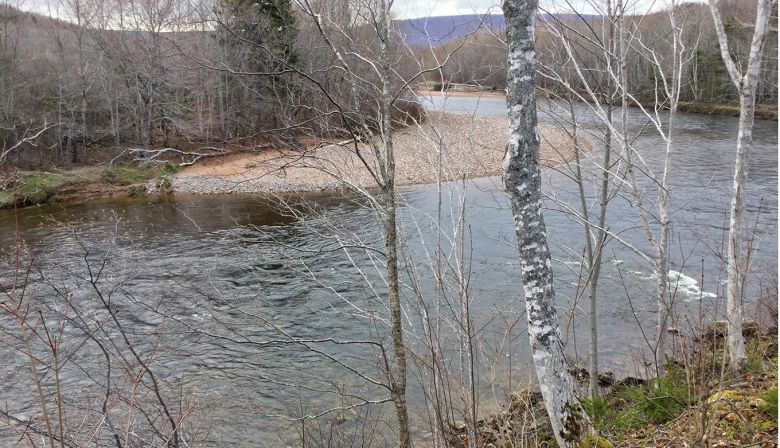
This is definitely a blow to all. Many in the rural areas surrounding Atlantic salmon rivers gain employment through the angling economy. And many of the greatest supporters of conservation and restoration of Atlantic salmon runs need to exercise even more patience. They need to find connections with their special rivers for the sake of the Atlantic salmon and their future.
~~~~~~~~~~~~~~~~k
To explore ways of gift planning and to join ASF’s Royal Wulff Society,
please click here