


Non classifié(e), RiverNotes
Rivernotes June 11, 2026
Kristen Noel
juin 11, 2026
Editor's Note
by Kristen Noel, ASF Director of Communications and Publications
Hi everyone, Kristen here! I'm stepping into the editor's chair while Phil is off this week. He's across the Atlantic, exploring Iceland, a country known for its stunning rivers, waterfalls, and salmon runs.
Welcome back to Rivernotes, our weekly roundup of news and information from around the world of Atlantic salmon—Québec, Atlantic Canada, and Maine.
Reminder: The row of buttons you see above will help you find exactly what you're looking for. Simply click a button and you'll be whisked directly to the section you want to read.
To start things off, ASF's Neville Crabbe has some good news about salmon returns so far in 2026:
Bill Taylor, ASF’s president for 29-years can find fish in water most people walk by, and spot trends in the data about Atlantic salmon catches and counts.
Bill has always said healthy numbers of early June salmon in the Penobscot River in Maine is a good sign for rivers to the north. So far this year, 714 Atlantic salmon have been counted entering the Penobscot, exceeding the total amount from 2025.
In 2011, when North American returns climbed over 850,000, the highest since 1989, early June salmon on the Penobscot were at record levels. The correlation holds in most years, but there is the rare exception, like 2024 when salmon flocked to the Penobscot in June, but North American returns hit a record low.
To account for this, Bill’s test has a second part: if Atlantic salmon returns don’t start strong on other rivers, the numbers will never catch up. In other words, if there’s an influx of fish on the Penobscot followed by solid, early June reports from places like the Gaspé, chances are it’s going to be a good or even great year for salmon angling.
2026 appears to be headed in the right direction. The ASF team spent some time on the Causapscal River in Quebec last week. The season just opened and anglers were reporting big fish in encouraging numbers.
So cancel your family vacation, load up the vehicle and find a river in salmon country. Hopefully the positive indicators translate to a solid season. If not, well, that’s fishing.
A Reward on the Restigouche
Dillon Hopur landed this impressive salmon while testing a new setup, featuring a Beulah 13-foot 8/9 weight rod and a delicate Scandi line. Fishing a PCI Special fly tied by his guide Thomas, he cast approximately 77 feet across the river. Almost immediately after the fly began its swing, a salmon rose and took it. After several powerful runs and five spectacular jumps, the fish was brought to hand and safely released into the cold, clean waters of the Restigouche.
![IMG_2544[18]](https://www.asf.ca/wp-content/uploads/2026/06/IMG_254418-610x813.jpeg "IMG_2544[18]")
News from NASCO
Parties to the North Atlantic Salmon Conservation Organization (NASCO) met in Aviemore, Scotland, from June 2–5, 2026. A key focus was the development of Conservation Commitment Reports (CCRs), which outline government actions to address major threats to wild Atlantic salmon.
While NASCO-accredited conservation organizations welcome the draft CCRs, they emphasize that the proposed measures are only a starting point. As governments finalize their plans by November 2026, they must commit to more ambitious, transformative action to address salmon declines, build climate resilience, and support urgent recovery efforts in rivers where populations are nearing extinction.
NASCO Accredited NGOs wrote a press release calling for more action.
Hot Off the Press
ASF members, keep an eye on your mailbox; your latest issue of the Atlantic Salmon Journal is on its way. Inside, you'll find a special foldout introducing ASF's most ambitious campaign yet. Be sure to take a look and learn how we're working to bring one million wild Atlantic salmon back to North American rivers.
Nova Scotia
Nova Scotia Program Director Matt Russell gives us his fishing forecast, along with some partnership shoutouts in Cape Breton.
Fishing Forecast
While our spring in most of the province has been characterized by consistent rain and cool conditions, the last few weeks in the Cape Breton Highlands have been pretty dry. Water levels have come down a lot from their peaks in early May, and anglers are back to playing the game of hoping for rain, a game we know far too well after the last couple of years.
That said, we're still a long way from hitting the panic button on the 2026 salmon season. Water levels are generally higher than they were at this time last year, and the season is still young. With any luck, we'll get the big rain we need and the rivers will come alive soon enough.
Learning from Each Other: Salmon, People, and Place
This past week, our two Nova Scotia Wild Salmon Watersheds teams, the Chéticamp River Salmon Association (CRSA) and the Margaree Salmon Association (MSA), hosted visiting professors and Sámi Elders from the University of Oulu in Finland and the Arctic University of Norway. They came to Atlantic Canada to learn more about the relationship between people and salmon in our communities.
The CRSA and MSA are just two of the many local groups across Nova Scotia that not only restore and conserve Atlantic salmon habitat, but also contribute heavily to their communities through derbies, ceremonies, learn-to-fish events, educational programs, and so much more. Salmon may be the reason these groups exist, but the impact they have reaches far beyond the riverbank.
Thank you to the Chéticamp River Salmon Association
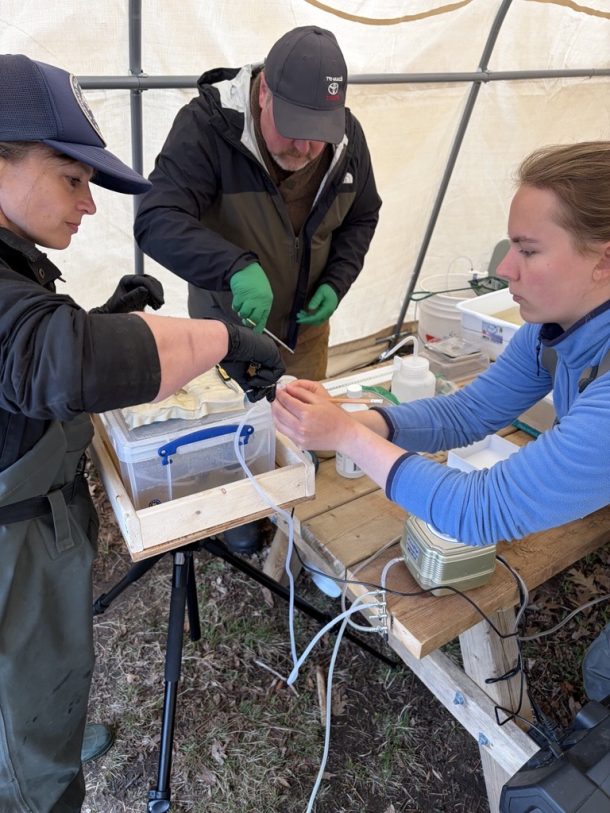
With the Nova Scotia smolt run beginning to wind down, I'd like to take a moment to send a special thank you to the small but resilient team at the Chéticamp River Salmon Association. Smolt wheel operation is a major undertaking. The wheel needs to be checked every day by a minimum of two to three people and often adjusted multiple times a day which is frequently the case in Chéticamp. This kind of operation can be a real challenge for even the most experienced and well-staffed organizations.
The team in Chéticamp has been operating their wheel for six weeks now with only two staff members and a small but highly capable volunteer base. Their efforts have paid off. So far this year, the team has tagged 670 smolt, a record high for our operations in the Chéticamp.
So, thank you to Jillian Baker, Luca Kordsmeyer, René AuCoin, Erich Muntz, and everyone else who lent a hand this year. Whether it was checking the wheel, helping with tagging, or simply showing up when needed, your efforts helped make this project such a success and I hope to see you back again next year.
Film Night
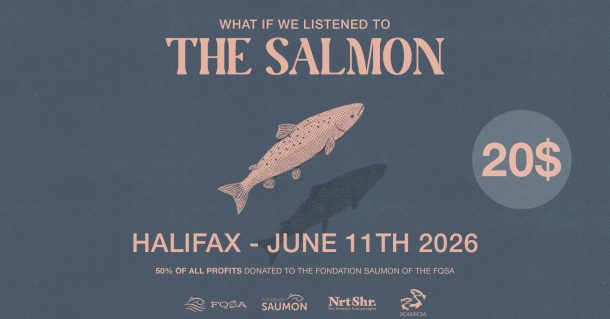
Don't miss out on the Halifax showing of What If We Listened to the Salmon tonight at the Bus Stop Theatre!
Québec
La directrice du programme du Québec, Caroline Côté, rend compte d'une nouvelle exposition dans un musée.
Quand l'art soutient une rivière
Lors de notre récente tournée en Gaspésie, nous avons eu le privilège de visiter le Musée de la rivière Cascapédia, un lieu où l’histoire de la rivière rencontre les efforts déployés aujourd’hui pour assurer son avenir.
En compagnie de Stacey Barter et de Darlene Sexton, nous avons découvert bien plus qu’une collection d’artefacts. Le musée raconte l’histoire des communautés qui ont façonné la Cascapédia, des premiers occupants mi'gmaq aux générations de guides, pêcheurs et gestionnaires qui continuent aujourd’hui de veiller sur cette rivière emblématique.
Cette histoire ne se limite pas au passé. Nos échanges ont également porté sur les nombreuses initiatives de conservation menées dans le bassin versant de la Cascapédia. La communauté mi'gmaq de Gesgapegiag, la Société Sipuminu, l’Atlantic Salmon Federation, l’Association de gestion halieutique autochtone Mi'gmaq et Wolastoqey, Pêches et Océans Canada, le gouvernement du Québec, la Fédération québécoise pour le saumon atlantique, la Fondation pour la conservation du saumon atlantique, les gestionnaires de rivière regroupés au sein de Saumon Québec et plusieurs autres partenaires collaborent afin de mieux comprendre, protéger et mettre en valeur cette rivière exceptionnelle.
L’Atlantic Salmon Federation contribue à cet effort par ses programmes de conservation et de restauration, ainsi qu’en appuyant les partenaires qui réalisent le suivi des saumoneaux en dévalaison, le marquage acoustique, le suivi des refuges thermiques et d’autres initiatives visant à améliorer nos connaissances sur le saumon atlantique et à renforcer la résilience de la rivière face aux changements climatiques.
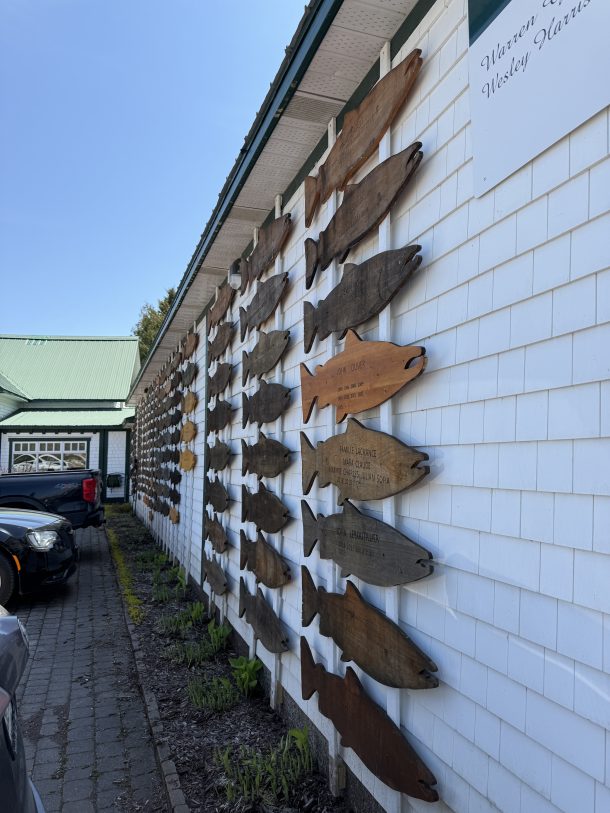
Le musée joue également un rôle important de sensibilisation et d’éducation. Ses expositions consacrées au cycle de vie du saumon atlantique, à l’histoire de la rivière et aux efforts de conservation permettent aux pêcheurs, aux résidents et aux visiteurs de mieux comprendre les enjeux auxquels le saumon fait face aujourd’hui. En créant un lien entre l’histoire, la science et le territoire, il contribue à renforcer l’engagement du public envers la protection de la Cascapédia.
Les visiteurs auront bientôt l’occasion de soutenir directement cette mission. Le 12 juin prochain, le Musée de la rivière Cascapédia accueillera le vernissage de Le temps des lucioles, une exposition présentée par la coopérative de solidarité d’artistes Sabi Luciole de Maria dans le Salon de thé Lady Amherst. En participant à l’exposition, les amateurs d’art contribueront également à préserver un lieu qui transmet l’histoire, la science et les valeurs de conservation associées à l’une des plus grandes rivières à saumon du monde.
Québec (English)
Québec Program Director Caroline Côté reports on a new museum exhibit.
When Art Supports a River
During our recent tour of the Gaspé Peninsula, we had the privilege of visiting the Cascapedia River Museum, a place where the river’s history meets the efforts being made today to secure its future.
Together with Stacey Barter and Darlene Sexton, we discovered much more than a collection of artifacts. The museum tells the story of the communities that shaped the Cascapedia, from the region’s Mi’gmaq roots to generations of guides, anglers, and river stewards who continue to care for this iconic watershed.
That story is still being written today. Our discussions focused on the many conservation initiatives taking place throughout the Cascapedia watershed. The Gesgapegiag Mi’gmaq community, Sipuminu Society, Atlantic Salmon Federation, the Mi’gmaq and Wolastoqey Indigenous Fisheries Management Association, Fisheries and Oceans Canada, the Government of Québec, the Québec Federation for Atlantic Salmon, the Atlantic Salmon Conservation Foundation, river managers represented through Saumon Québec, and many others are working together to better understand, protect, and enhance this remarkable river.
ASF contributes to these efforts through conservation and restoration programs, as well as by supporting partners involved in smolt monitoring, acoustic tagging, thermal refuge assessments, and other initiatives that help improve our understanding of Atlantic salmon and strengthen the river’s resilience in a changing climate.
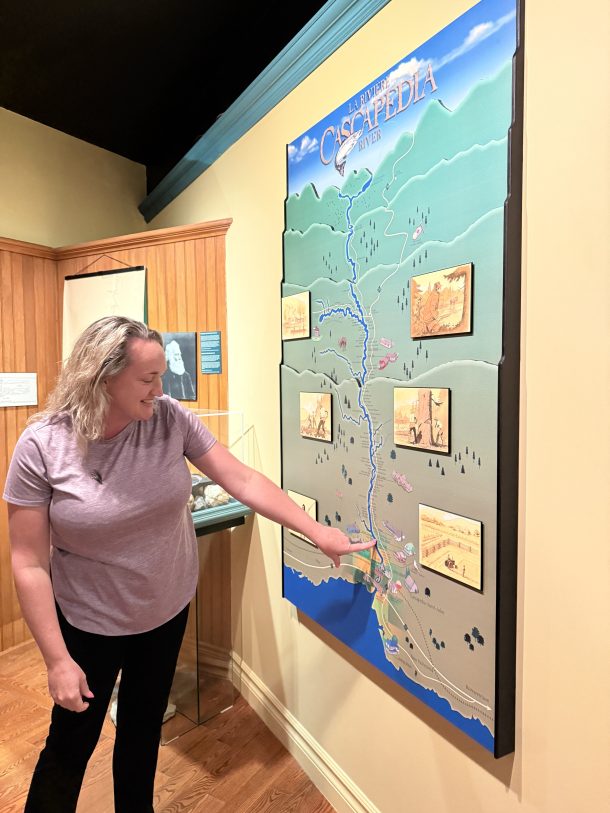
The museum also plays an important educational role. Exhibits dedicated to Atlantic salmon, their life cycle, and ongoing conservation efforts help anglers, residents, and visitors better understand the challenges facing wild salmon today. By connecting history, science, and place, the museum helps foster long-term stewardship of the river.
Visitors will soon have an opportunity to support this mission directly. On June 12, the museum will host the opening of Le temps des lucioles, an exhibition presented by the Sabi Luciole artists’ cooperative of Maria, Québec. By attending, visitors will not only celebrate local art but also help support a place that keeps the history, science, and conservation values of one of the world’s great salmon rivers alive.
Newfoundland and Labrador
Newfoundland and Labrador Program Director Kim Thompson provides updates on the angling season in Newfoundland and Labrador and writes about her experience at an important knowledge exchange.
Angling Season Update
We are now in the second week of the recreational salmon angling season in Newfoundland, with reports indicating that fish are beginning to move upstream on the Exploits River. In Labrador, anglers are preparing for the season opening on Monday, June 15. Angling season is also set to begin in Gros Morne National Park, where Parks Canada reminds visitors that salmon angling is permitted only on designated waters. These include the Lomond River (from the park boundary to the high tide mark at Bonne Bay), the East Branch Lomond River, and Deer Arm Brook (Eastern Arm Brook) from Deer Arm Pond to the high tide mark at Bonne Bay. Additional details on regulations are available through Parks Canada.
International Knowledge Exchange
It was a privilege to host a North-to-North learning exchange with Thora Herrmann of Oulu University, Finland, Project Lead for the BIRGEJUPMI project—an EU Horizon initiative focused on strengthening community engagement and environmental decision-making in Arctic coastal regions across Sápmi and Kalaallit Nunaat (Greenland). We were also honoured to welcome Sámi professor, Director of the Indigenous Voices Research Group at UiT, and Elder Jan Erik Henriksen, who leads two of the project’s work packages.
This exchange provided a meaningful opportunity to highlight Indigenous knowledge, leadership, and stewardship in Newfoundland and Labrador. Through the collaborative efforts of many partners, including Qalipu First Nation (QFN) representatives, we visited the Gander watershed. Glenwood Ward Councillor Francis (Frank) Skeard, River Guardians Justin Hodge and Danny Stanford, and Gander Bay Ward Councillor Calvin Francis facilitated open dialogue, sharing Indigenous approaches to conservation, watershed monitoring, and habitat protection. These conversations emphasized the critical role of community-based stewardship in sustaining freshwater ecosystems under growing environmental pressures.
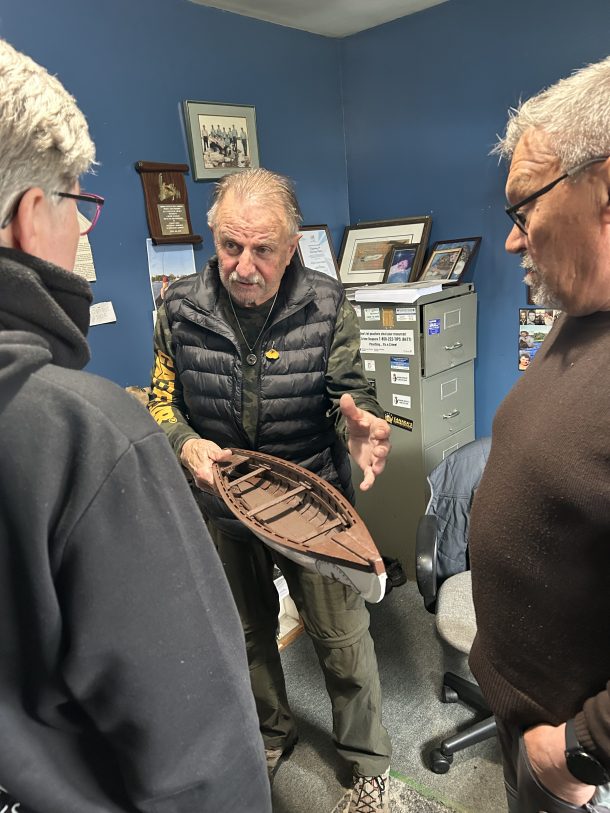
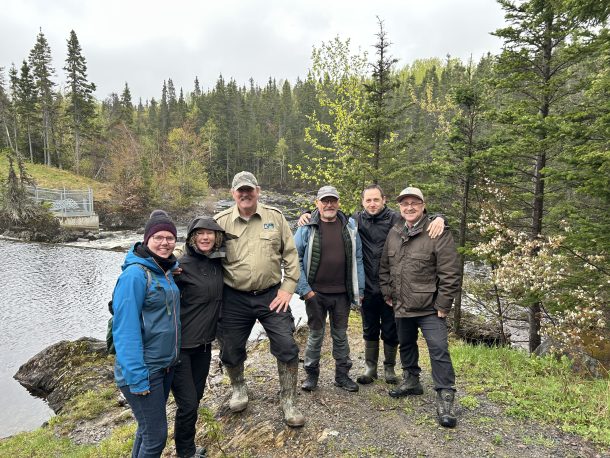
The visit also included a stop in Twillingate with educator Paul M. White, where discussions focused on engaging youth in conservation, wild Atlantic salmon, and fly fishing. His work highlights the importance of fostering environmental awareness and stewardship among the next generation.
Building on earlier experiences in Nova Scotia, where Thora and Jan Erik engaged with the Wild Salmon Watershed program on the Chéticamp River, it was valuable to showcase similar efforts in Newfoundland and Labrador. On the Terra Nova River, in partnership with the Freshwater Alexander Bays Ecosystem Corporation and ASF’s Wild Salmon Watersheds program lead Kris Hunter, discussions centered on habitat restoration, fish passage improvements, barrier mitigation, water quality and temperature monitoring, and strengthening long-term ecosystem resilience.
New Brunswick
New Brunswick Program Director David Roth reports on some monitoring efforts on the Miramichi as well as fishing conditions throughout the region.
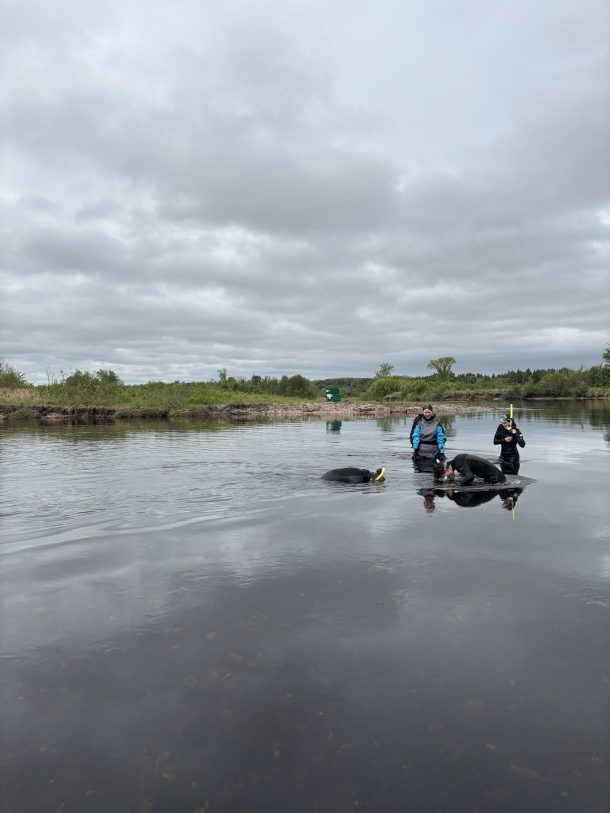
Last week, I was back on the Northwest Miramichi, where I joined colleagues from ASF’s research team along with partners from the Miramichi Salmon Association, Anqotum Resource Management, and the Canadian Rivers Institute. Together, we spent two days on and in the river installing our PIT monitoring array.
The array is a key component of the monitoring program associated with the Trap and Transport Project. Fish tagged as smolts during the 2024 and 2025 field seasons are now beginning to return to the river as adults, and this system will allow us to detect those individuals as they migrate upstream. By identifying whether a returning fish was part of the transported group or a control fish that migrated naturally, we can evaluate whether the project is resulting in increased adult returns. You can learn more about the project here.
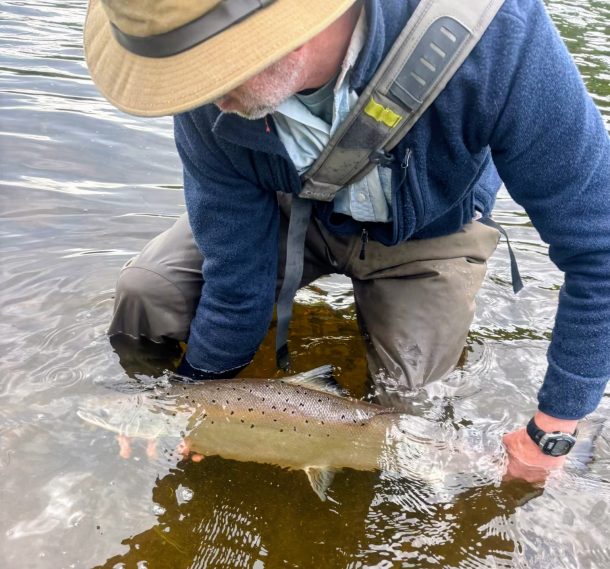
From the angling community, we continue to hear reports of increasing numbers of salmon being caught across the province. One particularly encouraging catch was this beautiful salmon landed by angler Harold Berry on the Southwest Miramichi while fishing with guide Colby Donovan from Country Haven. Based on its appearance, the fish is believed to be a maiden two-sea-winter salmon.
Many anglers are hopeful that we will see strong numbers of these larger maiden spawners returning this season following the excellent grilse run observed across New Brunswick rivers in 2025. The significance of these fish goes beyond their size. Two-sea-winter salmon have a much higher proportion of females than grilse, meaning they contribute substantially more eggs to the spawning population. If the strong grilse run from last year translates into a healthy return of maiden two-sea-winter fish this summer, it could provide a welcome boost to egg deposition across many rivers in the province.
For now, fingers crossed that more of these beautiful fish continue to make their appearance in the weeks ahead.
Maine
Vice President of U.S. Conservation John Burrows gives an update on migration in the Penobscot River.
The salmon run on the Penobscot River is on!
Over the last week, hundreds of fresh Atlantic salmon have been counted at the Milford Dam. Jason Valliere from the Maine Department of Marine Resources reports that there have been multiple days where more than 100 salmon have passed! The total run as of June 7 stands at 714 salmon, which is higher than the entire 2025 run. We should hit 1,000 salmon soon! Milford has also passed nearly 5.5 million alewives and blueback herring and more than 5,600 shad.
Last chance to sign up for our webinar!
Join us tomorrow at 11:00 a.m. EST (12:00 p.m. Atlantic) for a webinar with our U.S. project managers. If you're interested in the work being done to restore wild Atlantic salmon, don't miss it.
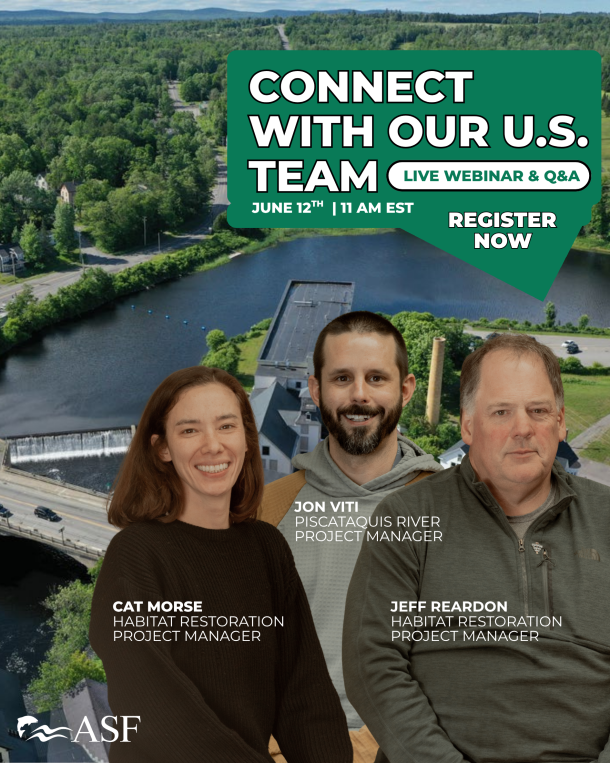
This panel discussion will highlight exciting river-restoration projects happening in Maine this summer, including on-the-ground work that is helping to open up habitat, improve river connectivity, and support the recovery of wild Atlantic salmon.
Wild Salmon Watersheds
Jordan Condon, Science Coordinator for Wild Salmon Watersheds, reports on the smolt wheel operations.
The smolt run on the Wild Salmon Watersheds are beginning to slow down and wrap up for the year on the Chéticamp and Nepisiguit rivers as the water temperatures increase. The Nepisiguit River wheel was removed this Monday with just under 200 smolts tagged. Thanks to Jon Carr for assisting in the final leg of the Nepisiguit season and an even bigger thanks to the staff and volunteers from the Nepisiguit Salmon Association and Pabineau First Nation for their assistance with operating the wheel throughout the run duration.
Water level conditions have improved on the Terra Nova allowing the wheel to be operated continuously (and safely). Temperatures increased the last few days of May and the smolt numbers followed natures cue and ~100 smolts were tagged in a few days, bringing the total to ~250.
It’s been an exciting season on the Chéticamp with great catch numbers (to date: 661 tagged) and an even better recapture rate of ~10%. The recapture rate is a key factor for estimating the run size; a higher recapture rate provides a more confident population estimate. Hats off to the Chéticamp River Salmon Association for taking the lead on the smolt wheel this season, and the amazing local support from the Margaree Salmon Association, the Nova Scotia Salmon Association, Parks Canada, and ASF's Matt Russell.
I’d like to personally thank all of our fantastic and dedicated partners. Without your support, our work wouldn’t be possible!
Research and Environment
Vice President of Research and Environment Valérie Ouellet lets us in on what the Research team has been up to this week.
Smolts, Moose, and Mutual Science
Karl Philips and Heather Perry from research picked up Dr. Jess Rodgers of the Atlantic Salmon Trust in Fredericton for a staff exchange with the Atlantic Salmon Trust based in Scotland.
Karl and Heather took Jess on a field trip centered around ASF work and Canadian wildlife. They visited the Mactaquac dam and observed bald eagles and turkey vultures feeding on the gaspereau piling up below the dam. They continued to the Miramichi, stopping along the way twice to observe moose grazing on the side of the highway and enjoy the nighthawks dancing through the evening sky.
The following day, we packed in a visit to the Wayerton smolt wheels. There, we watched the last two smolts collected for the 2026 season and then squeezed in a quick tour of the MSA hatchery. Our next stop was the site where smolts are transported from above the head of tide to Eel Ground, where they are loaded onto a barge. From there, the smolts are transported to the Barrier Islands and released in the outer bay, where there are significantly fewer striped bass.
From the outer bay, we continued to Saint Andrews to participate in meetings and training with the rest of the research team. It was a week packed with ideas about shared research priorities.
Packing for the English River (and everything that lives there)
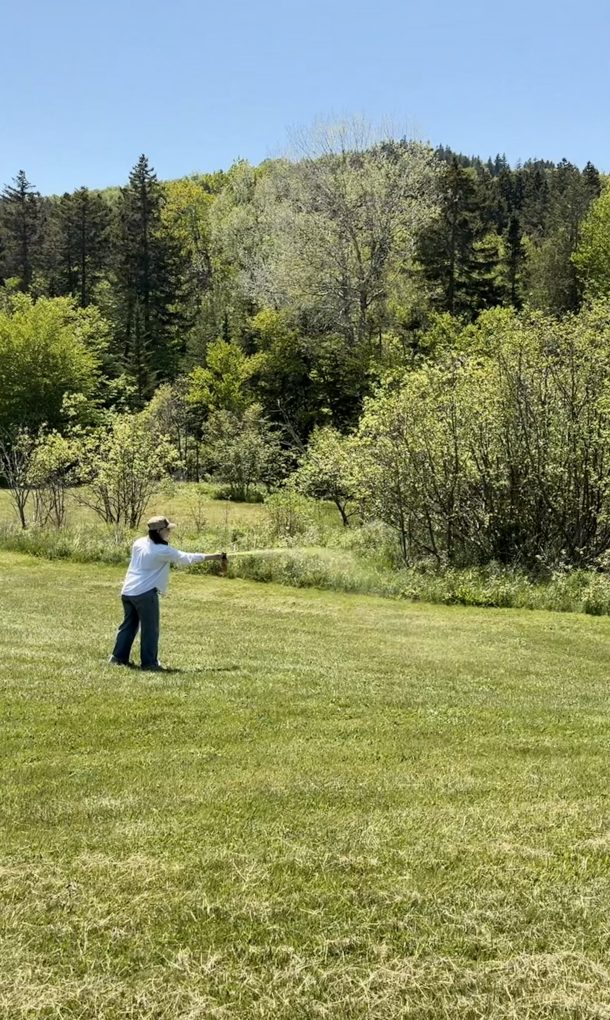
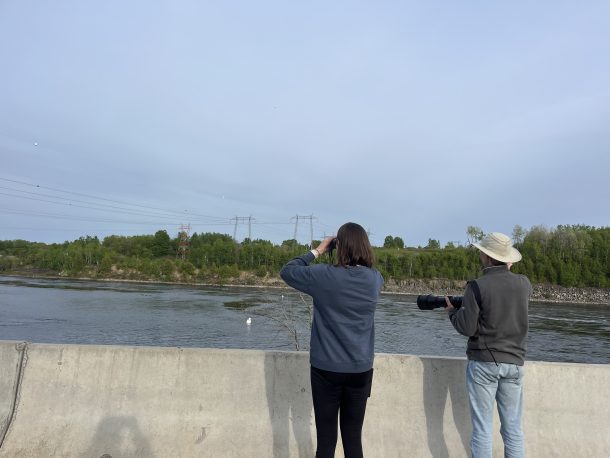
Northern Labrador doesn't ease you in as Kate and Karl are learning. We will be going there to tag smolt exiting the river with acoustic tags and predator tags to see how they move through Kaipokok bay. This is a project that is in collaboration with Dalhousie University, the Ocean Tracking Network, and the Nunatsiavut Government. The English River drains into a landscape that sees more black bears than people most of the year, and before a single crew member sets foot on that gravel bar, we run through the basics of remote field safety and bear encounters.
Bear 101 looks simple: make noise on the trail, store food and scented gear properly away from camp, carry bear spray and learn how to use it, travel in groups, never run. Black bears are generally conflict-avoidant, but a surprised bear is never a happy bear, especially if cubs are involved. We make sure that every person on the crew has their spray accessible, not buried in a pack, and knows how to use it.